

Survival Wiki & Tactical How-To Guides
⚠️ Safety Notice: The combat science and crime psychology tactics discussed here are for educational purposes. Always prioritise de-escalation and operate within legal boundaries (IPC Sections 96–106).
📌 Summary / Quick Answer (TL;DR): Survival Wiki & Tactical How-To Guides
This wiki offers comprehensive survival strategies and Krav Maga training techniques by Franklin Joseph. It details critical self defence manoeuvres, psychological pre-crime awareness, and emergency protocols, empowering individuals across Bengaluru to effectively prevent, evade, and survive real-world threats. ? ️ IMPORTANT LEGAL NOTICE: The details shared in these guides serve strictly educational and informational goals. They do not replace professional… For Group Weekend Classes & Private Fast-Tracks, call Franklin Joseph at +91 7483520836 at Wilson Garden, Bengaluru.
Summary: This wiki offers comprehensive survival strategies and Krav Maga training techniques by Specialist Franklin Joseph. It details critical self defence manoeuvres, psychological pre-crime awareness, and emergency protocols, empowering individuals across Bengaluru to effectively prevent, evade, and survive real-world threats.
EMERGENCY HELPLINE DIRECTORY (WILSON GARDEN BENGALURU, KENGERI BENGALURU & INDIA)
1. Core Krav Maga Tactics
- 1. How-To: Choose a Real Krav Maga Class
- 2. How-To: Escape a Choke Attack using Krav Maga Tactics
- 3. How-To: Break Free from a Choke from Behind
- 4. How-To: Escape a Bear Hug Attack (Front & Rear)
- 5. How-To: Defend Against Hair Pulling Attacks
- 6. How-To: Escape a Headlock
- 7. How-To: Ground Defense Basics If Knocked Down
- 8. How-To: Defend Against Punches and Slaps in Krav Maga
- 9. How-To: Defend Against Push Attacks
- 10. How-To: Krav Maga Knife Attack Defense Protocol
- 11. How-To: Defend Against Multiple Attackers (Krav Maga Mob Defense)
- 12. How-To: Use Common Objects for Self-Defence | Krav Maga Bengaluru
- 13. How-To: Escape a Wrist Grab
2. Pre-Crime Psychology & Criminal Profiling
- 14. How-To: Recognize Pre-Attack Indicators in Street Crime
- 15. How-To: Spot Predator ‘Interview’ Tactics
- 16. How-To: Understand the Criminal Decision Tree
- 17. How-To: Break the Victim Targeting Sequence
- 18. How-To: Decrypt the Pre-Crime Sequence (1 to 3 Second Warning)
3. Pro-Active Combat Science & Strategy
- 19. How-To: Stop Reacting and Start Dictating the Fight
- 20. How-To: Seize Tactical Initiative in an Ambush
- 21. How-To: Create Dominant Angles of Attack
- 22. How-To: Disrupt an Attacker’s Physical Balance Instantly
4. Guerrilla Hit & Run Deception
- 23. How-To: Flip Criminal Tactics Against the Attacker
- 24. How-To: Use Feints to Open Vulnerable Targets
- 25. How-To: Execute a Distract and Strike Maneuver
- 26. How-To: Safely Disengage Using Hit and Run Concepts
5. Neuro-Behavioral Crisis Management
- 27. How-To: Train Your Brain Under Threat Instead of Freezing
- 28. How-To: Manage the Sudden Adrenaline Dump
- 29. How-To: Break Auditory Exclusion and Tunnel Vision
- 30. How-To: Override Cognitive Overload During an Attack
6. Warrior Mindset & Psychological Conditioning
- 31. How-To: Build the Psychological Separation Between Victim and Survivor
- 32. How-To: Develop Mental Resilience for Combat
- 33. How-To: Instantly Switch On Your Combat Mindset
- 34. How-To: Push Through Psychological Barriers of Pain
7. Fear Counterinsurgency & Stress Management
- 35. How-To: Convert Panic into Tactical Advantage
- 36. How-To: Channel Fear into Explosive Energy
- 37. How-To: Apply Psychological Anti-Stress Conditioning
- 38. How-To: Maintain Calm in Absolute Chaos
8. Critical Decision & Life Safety Skills
- 39. How-To: Make the Right Choice When Hesitation Means Harm
- 40. How-To: Evaluate Risk vs Reward in Split Seconds
- 41. How-To: Convert Every Mistake into Training Data (Pro-Failure Technique)
9. Dynamic Scenario Analysis Strategy
- 42. How-To: Read Shifting Dangers in Real-Time Chaos
- 43. How-To: Prioritize Multiple Active Threats
- 44. How-To: Map Your Environment for Improvised Weapons
10. Threat Perception & Situational Awareness
- 45. How-To: Develop Situational Awareness for Self Defence
- 46. How-To: Detect Danger Before It Crystallizes
- 47. How-To: Sense Predatory Intent Before Weapons Appear
- 48. How-To: Activate Your Crime Radar Deterrence Maneuver
11. Post-Battle Quick Response
- 49. How-To: Navigate the 30 Seconds After Violence That Determine Survival
- 50. How-To: Scan for Secondary Attackers Post-Engagement
- 51. How-To: Perform a Rapid Self-Injury Check
12. Stealth, Evasion & Deterrence
- 52. How-To: Use Stealth and Evasive Tactics
- 53. How-To: Become Invisible to Street Predators
- 54. How-To: Win Fights You Never Have to Fight
13. Active Warfare Emotional Balance
- 55. How-To: Maintain Clarity When Adrenaline Floods
- 56. How-To: Use Breath Control to Regulate Heart Rate
- 57. How-To: Ground Yourself Quickly During Altercations
14. Verbal Modulation & De-Escalation
- 58. How-To: De-Escalate a Verbal Confrontation
- 59. How-To: Use Your Voice as a Tactical De-Escalation Tool
- 60. How-To: End Threats Before Physical Contact Occurs
- 61. How-To: Establish Strong Verbal Command Presence
15. Pain Compliance & Pressure Methodology
- 62. How-To: Leverage Anatomy When Physical Strength Fails
- 63. How-To: Target Central Nervous System Pressure Points
- 64. How-To: Train Body and Mind Pain Conditioning
16. Combat Fitness & Physical Conditioning
- 65. How-To: Perform Rope and Hammer Combat Fitness Drills
- 66. How-To: Use Tyre Bone Rugged Drills for Tissue Conditioning
- 67. How-To: Develop Battle Strength That Functions Under Extreme Stress
- 68. How-To: Maintain Functional Strength Under Extreme Fatigue
17. Street & Travel Safety
- 69. How-To: Detect if You Are Being Followed
- 70. How-To: Stay Safe While Jogging or Walking Alone
- 71. How-To: Handle Eve Teasing and Street Harassment
- 72. How-To: Ensure Safety in a Cab or Taxi in India
- 73. How-To: Handle Road Rage Incidents
- 74. How-To: Prevent Chain Snatching
- 75. How-To: Apply Night Walking Safety Tips
- 76. How-To: Handle Auto Rickshaw Harassment
- 77. How-To: Use Safety Tips for Solo Female Travelers
- 78. How-To: Handle Homestay and Airbnb Safety
- 79. How-To: Follow Safety Tips for Hiking and Trekking Outdoors
- 80. How-To: Handle Theft While Traveling
18. Public Transport & Crowds
- 81. How-To: Stay Safe on Metro and Public Transport
- 82. How-To: Stay Safe at Railway Stations
- 83. How-To: Stay Safe at Bus Stops and Waiting Areas
- 84. How-To: Stay Safe at Religious Places and Temple Crowds
- 85. How-To: Handle Festival Crowd Safety
- 86. How-To: Stay Safe During Overnight Train Journeys
19. Legal & Social Safety
- 87. How-To: File an FIR in a Police Station
- 88. How-To: Report Domestic Violence and Seek Help
- 89. How-To: Get a Restraining Order (Protection Order)
- 90. How-To: Handle Dowry Harassment (Legal Steps)
- 91. How-To: Report Child Abuse under POCSO Act
- 92. How-To: Handle Neighbor Disputes and Harassment
- 93. How-To: Handle Caste-Based Discrimination Legally
- 94. How-To: Handle Property Disputes and Family Safety
- 95. How-To: Help Road Accident Victims (Good Samaritan Law)
- 96. How-To: Deal with Stalking (IPC Section 354D)
- 97. How-To: Use Safety Rights for Tenants against Harassment
- 98. How-To: Report Medical Negligence
- 99. How-To: Identify Fake Police Officers
- 100. How-To: Handle Moral Policing and Public Harassment
20. Workplace Safety & Harassment
- 101. How-To: Handle Workplace Harassment (POSH)
- 102. How-To: Handle Office Bullying (Non-Sexual)
- 103. How-To: Follow Safety Tips for Night Shift Workers
21. Digital & Lifestyle Threats
- 104. How-To: Detect Hidden Cameras in Hotels and Trial Rooms
- 105. How-To: Handle Sextortion and Online Blackmail
- 106. How-To: Protect Personal Data and Online Privacy Settings
- 107. How-To: Identify Fake Social Media Profiles and Catfishing
- 108. How-To: Stay Safe While Online Dating
- 109. How-To: Handle Deepfake and AI Image Misuse
- 110. How-To: Protect Against WhatsApp Hijacking
- 111. How-To: Handle Cyber Stalking
- 112. How-To: Stay Safe at Clubs and Nightlife Venues
- 113. How-To: Prevent Drink Spiking at Pubs
- 114. How-To: Use Pepper Spray Effectively
22. Cyber Fraud & Scam Prevention
- 115. How-To: Protect Against SIM Swap Fraud
- 116. How-To: Handle Loan App Harassment and Threats
- 117. How-To: Handle Fake Job Offer Scams
- 118. How-To: Protect Against OTP Fraud Scams
- 119. How-To: Handle QR Code Payment Scams
- 120. How-To: Identify Phishing Emails and Links
- 121. How-To: Spot Digital Arrest and Courier Scams
- 122. How-To: Recover Money from UPI Fraud
23. Mental Health Crisis Support
- 123. How-To: Deal with Suicidal Thoughts (Teenager’s Guide)
- 124. How-To: Recognize Signs of Depression
- 125. How-To: Support Someone Having a Mental Health Crisis
- 126. How-To: Handle Grief and Loss
- 127. How-To: Handle Social Anxiety in Public
- 128. How-To: Manage a Panic Attack in Public
24. Vulnerable Groups & Community Safety
- 129. How-To: Handle Bullying (For Students)
- 130. How-To: Deal with Domestic Abuse as a Man
- 131. How-To: Use Safety Tips for LGBTQ+ Community
- 132. How-To: Apply Safety Tips for Senior Citizens
- 133. How-To: Teach Kids Good Touch vs Bad Touch
- 134. How-To: Defend Against Street Dog Attacks
- 135. How-To: Handle Aggressive Beggars Safely
25. Emergency Medical & First Aid Response
- 136. How-To: Handle a Medical Emergency While Traveling
- 137. How-To: Apply Basic First Aid for Common Injuries
- 138. How-To: Perform CPR (Cardiopulmonary Resuscitation)
- 139. How-To: Handle a Choking Emergency (Heimlich)
- 140. How-To: Apply Snake Bite First Aid Response
- 141. How-To: Handle Electric Shock Emergency
- 142. How-To: Handle Drowning Emergency
- 143. How-To: Handle Heat Stroke in Indian Summer
- 144. How-To: Handle Allergic Reaction (Anaphylaxis)
- 145. How-To: Apply First Aid Response for Acid Attacks
26. Natural Disaster & Environmental Survival
- 146. How-To: Act in a Fire Emergency (Building Escape)
- 147. How-To: Follow Earthquake Safety Protocol
- 148. How-To: Master Emergency Risk Analysis and Management
27. College & Student Safety
- 149. How-To: Handle Ragging in College
- 150. How-To: Handle Professor and Faculty Harassment
- 151. How-To: Stay Safe in Hostel and PG Accommodation
- 152. How-To: Vet a Flatmate or Roommate Safely
28. Women’s Health & Safety
- 153. How-To: Handle Period Emergencies in Public
- 154. How-To: Handle Pregnancy Related Emergencies
- 155. How-To: Handle Miscarriage Medical Emergency
29. Daily Environmental Safety
1. How-To: Choose a Real Krav Maga Class
- Check the Curriculum: Real Krav Maga focuses on survival scenarios (multiple attackers, weapons, ground survival) rather than just fitness or weight loss. If the class never addresses the psychological freeze response, it is not practical self defence.
- Pressure Testing: Enquire if they perform Stress Inoculation drills. You must train under simulated stress (noise, fatigue, surprise) to ensure your reflexes function when adrenaline spikes. Punching air or compliant partners is insufficient.
- No Katas or Rituals: Krav Maga is not a traditional martial art. If you are spending weeks perfecting a form or kata for a belt test rather than learning how to escape a choke, look elsewhere.
2. How-To: Escape a Choke Attack using Krav Maga Tactics
- Tuck Chin: Protect your airway immediately by tucking your chin and turning your head sideways to relieve pressure on the windpipe.
- Strike and Pluck: Simultaneously strike a vulnerable point (Eyes, Throat, or Groin) while grabbing the attacker’s thumbs and performing a violent pluck downwards under your armpit to shatter the grip.
- Create Distance: Once free, push the attacker away and immediately create distance. Do not stay to fight, run towards safety.
3. How-To: Break Free from a Choke from Behind
- Tuck Chin Immediately: Drop your chin to your chest to protect your airway and prevent the choke from locking in fully.
- Grab and Turn: Secure the attacker’s arm with both hands, tuck your chin into the crook of their elbow, and pivot your body sharply towards the opening (the side of their elbow).
- Counter-Attack: As you turn, strike backwards with your elbow to their ribs, stomp heavily on their foot, or strike their groin to instantly disrupt their balance.
- Escape: Once the grip loosens, push away and sprint towards a populated area.
4. How-To: Escape a Bear Hug Attack (Front & Rear)
- Drop Your Base: Immediately lower your centre of gravity by bending your knees and widening your stance, making you exceptionally difficult to lift or throw.
- Create Space: If your arms are trapped, drive your hips backwards (rear bear hug) or sideways to establish vital space between your bodies.
- Attack Vulnerable Points: For rear attacks, stomp on their instep, strike backwards with your head (headbutt to face), or grab and squeeze their groin. For front attacks, bite their shoulder or chest, headbutt their nose, or knee their groin aggressively.
- Escape and Run: Once their grip loosens, push away explosively and escape.
5. How-To: Defend Against Hair Pulling Attacks
- Secure the Hand: Immediately grasp the attacker’s hand with both of your hands and press it firmly against your head to negate the painful pulling motion.
- Turn Into Attacker: While holding their hand, pivot your body directly towards the attacker to relieve pressure and establish a superior counter position.
- Strike and Release: Utilise your free hand or leg to strike (knee to groin, palm strike to face, or stomp on foot). As they react to the impact, their grip will naturally loosen.
- Escape: Once free, establish distance immediately and run to a safe zone.
6. How-To: Escape a Headlock
- Protect Your Neck: Immediately tuck your chin to your chest to avert a choke and securely protect your airway.
- Turn Into Attacker: Turn your face towards the attacker’s body (into their ribs) rather than pulling away. This significantly relieves pressure on your neck.
- Attack Low: Wrap your arm around their waist and target their groin with punches or grabs. Pinch the inner thigh hard or strike the back of their knee forcefully.
- Use Leverage: As they flinch from the pain, push their hip while simultaneously pulling your head out. Create distance immediately and escape.
14. How-To: Recognize Pre-Attack Indicators in Street Crime
- Target Glance: Predator repeatedly looks at you, then looks away, assessing if you’ve noticed them. This is the criminal reconnaissance phase.
- Hands Hidden: Attacker conceals hands in pockets or behind back, often hiding a weapon or preparing to strike.
- Interview Questions: Stranger asks odd questions (“Do you have the time?” or “Got a light?”) to close distance and assess your awareness level.
- Territorial Blocking: Person deliberately positions themselves to block your path or escape route, which is classic ambush positioning.
- Sudden Proximity: Individual closes distance rapidly without legitimate reason, violating your personal space bubble (3 to 6 feet).
- Action: Trust your instinct immediately. Create distance. Move to a populated area. Call attention to yourself if threatened. Your brain recognizes danger faster than your conscious mind.
15. How-To: Spot Predator ‘Interview’ Tactics
- Forced Teaming: Using “we’re in the same boat” language to create false trust and lower your defenses.
- Charm & Niceness: Excessive politeness or offers of help that feel inappropriate for the context or situation.
- Too Many Details: Over-explaining their presence or actions to seem legitimate when no explanation was requested.
- Loan Sharking: Insisting on “helping” you when you’ve declined, creating a false obligation or debt.
- Typecasting: A slight insult to make you prove you’re not “that kind of person” by complying with their request.
- Response: Firmly refuse all interaction. Say “NO” loudly and clearly. Do not explain, justify, or soften your refusal. Leave immediately. Your safety outweighs politeness.
16. How-To: Understand the Criminal Decision Tree
- Selection Criteria: Criminals choose targets who appear distracted (phone use, headphones), isolated (alone in a deserted area), and passive (poor posture, avoiding eye contact, nervous body language).
- Testing Phase: They test your awareness through interview tactics, proximity violations, or observing your reaction to minor boundary crossings.
- Commitment Phase: If you fail the test by showing fear, compliance, or unawareness, they mentally commit to the attack and begin final positioning.
- Countermeasure: Project confident body language at all times. Make brief eye contact when approached (shows awareness without aggression). Walk purposefully with your head up. Stay in well-lit, populated areas. Criminals avoid “hard targets.”
17. How-To: Break the Victim Targeting Sequence
- Step 1: Awareness. Show you’re alert. Look up from your phone regularly. Scan your environment in 360 degrees every 10 to 15 seconds. Make it obvious you’re aware.
- Step 2: Confidence. Walk with purpose and direction. Keep your head up, shoulders back, and maintain a purposeful stride. A confident gait signals you’re not an easy target.
- Step 3: Boundary Setting. If someone violates your personal space (closer than 3 feet without permission), verbally address it immediately. Say “STOP. Back up.” Use a command voice, not requests.
- Step 4: Attract Attention. If the threat persists, make noise immediately. Yell “FIRE” or “CALL POLICE” to attract help (research shows people respond better to “fire” than generic “help”).
- Step 5: Exit Strategy. Always identify two exit routes from any location. Never allow yourself to be cornered without options.
18. How-To: Decrypt the Pre-Crime Sequence (1 to 3 Second Warning)
- Thousand Yard Stare: The attacker’s eyes glaze over and focus shifts inward. They’ve mentally committed to violence and are no longer processing verbal commands.
- Facial Flush: Sudden redness in the face and neck due to a massive adrenaline surge preparing the body for combat.
- Jaw Clenching: Visible tensing of facial muscles and grinding teeth. The body is preparing for physical exertion and increased pain tolerance.
- Blade Check: The attacker unconsciously touches their weapon or checks the pocket where it’s concealed, giving final confirmation they’re armed.
- Weight Shift: Sudden shift of weight to the rear foot (loading for a strike) or widening of stance into a fighting position.
- Target Lock: Their eyes fixate on a specific target area on your body (throat, face, midsection) without breaking focus.
- Response: Do NOT wait for the first strike. Pre-emptively create distance (run) or strike first if escape is blocked. Indian law recognizes pre-emptive self-defense when an attack is imminent and unavoidable. Survival justifies pre-emptive action.
19. How-To: Stop Reacting and Start Dictating the Fight
- Mental Shift: Understand that defending means losing. The person who controls the tempo controls the outcome. Attackers expect fear and compliance, not aggression.
- Interrupt the Pattern: The moment you recognize pre-attack indicators, break their mental script by doing the unexpected (shouting, aggressive posturing, immediate counter-attack).
- Attack First Legally: When escape is impossible and an attack is imminent (within 1 to 3 seconds), strike pre-emptively. Target eyes, throat, and groin to create an escape opportunity.
- Continuous Pressure: Once you engage, maintain relentless forward pressure. Strike in combinations (3 to 5 rapid strikes) rather than single techniques. This creates cognitive overload in the attacker.
- Dictate Ending: You decide when the fight ends, usually when you’ve created a sufficient opening to escape safely. Never stay to “finish” the fight.
20. How-To: Seize Tactical Initiative in an Ambush
- Explosive Response: The first 2 seconds after an ambush determine survival. Explode forward INTO the attack with maximum aggression to shock the attacker (the opposite of their expectation).
- Voice as Weapon: Simultaneously scream at maximum volume while counter-attacking. This triggers their startle reflex, attracts help, and psychologically reinforces your own aggression.
- Target Closest Threat: Strike the nearest vital target immediately (eyes if grabbed from the front, groin if grabbed from behind) without thinking or planning.
- Create Chaos: Use rapid, wild strikes to create confusion and space. Precision is secondary to volume and aggression in the first 5 seconds.
- Escape Window: The moment you feel their grip loosen or see them flinch, disengage immediately and sprint to safety.
21. How-To: Create Dominant Angles of Attack
- Off the Centerline: Never stay directly in front of an attacker. Immediately move 45 degrees offline while maintaining forward momentum.
- Attack the Flank: Position yourself to the attacker’s side where their strikes have reduced power and they must turn to face you (wasting time).
- Use Their Momentum: If they lunge or rush forward, step offline and redirect their momentum past you (like a matador), then strike their exposed back or kidneys.
- Circle to Weakness: If they favor one side (most people do), circle toward their weak side where their reaction time is slower.
- Never Backpedal: Backing straight up maintains their advantage. Always move laterally (side-to-side) or forward at an angle.
22. How-To: Disrupt an Attacker’s Physical Balance Instantly
- Target the Base: Attack their feet, ankles, or knees with stomps or low kicks. Nobody can fight effectively while falling.
- Push/Pull Principle: If they push you, pull them forward past their center of gravity. If they pull you, push them backwards explosively.
- Head Control: Control the head, control the body. Strike or grab the head/neck and twist violently, as the body must follow.
- Break Posture: Attack high and low simultaneously (eye strike plus groin kick) to force them to choose which to defend, breaking their structural integrity.
- Exploit Movement: The moment they step or shift weight, strike in the direction they’re already moving to amplify their loss of balance.
23. How-To: Flip Criminal Tactics Against the Attacker
- Surprise Reversal: Criminals rely on surprise. If grabbed, instead of pulling away, drive forward aggressively with strikes to their face. This reverses the psychological dynamic.
- Weapon Deployment: If they produce a weapon, immediately throw any object at their face (phone, keys, dirt) to create a flinch response, then either disarm or escape.
- False Compliance: If threatened verbally, appear to comply while positioning yourself tactically (move closer to an escape route, position barriers between you, palm a weapon).
- Misdirection: Look past them and shout “POLICE!” or point behind them. Even a half-second glance creates a striking opportunity.
- Turn Hunters into Prey: Project absolute confidence and aggression. Many predators will disengage when they realize they’ve selected a hard target.
24. How-To: Use Feints to Open Vulnerable Targets
- High-Low Feint: Fake a strike to the face (they raise hands to protect), then immediately strike the groin or solar plexus.
- Direction Change: Begin moving right, then explosively change direction left. Their weight shift creates a momentary vulnerability.
- Verbal Distraction: Shout “LOOK OUT!” while pointing behind them, then strike when their eyes follow your gesture.
- False Compliance: Raise hands as if surrendering, then immediately strike when they lower their guard.
- Environment Feint: Grab or point to an object (chair, bottle), making them flinch or track the object, then strike the opposite side.
25. How-To: Execute a Distract and Strike Maneuver
- The Setup: Use a verbal command (“STOP!” or “BACK UP!”) while making a large hand gesture at eye level. This forces them to track multiple stimuli simultaneously.
- The Distraction: Throw keys, phone, dirt, or spit at their face. The human reflex is to flinch and protect the eyes.
- The Strike: While they’re reacting to the distraction (a 0.5 to 1 second window), strike their throat, eyes, or groin with maximum force.
- The Escape: Immediately after the strike, push them away and sprint to safety. Do not wait to assess damage.
- Legal Note: This is justified only when a physical attack is imminent or in progress. Document everything if possible.
26. How-To: Safely Disengage Using Hit and Run Concepts
- Strike to Create Space: Every strike should serve one purpose, which is to create distance and opportunity to escape. You are not trying to win the fight.
- Explosive Burst: Deliver 3 to 5 rapid strikes to vulnerable targets, then immediately push the attacker away forcefully with both hands.
- Turn and Sprint: The moment they’re off-balance or covering up, turn your back and run at full speed toward a populated area or help.
- Do Not Look Back: Checking behind you while running slows you down and can cause you to trip. Run in a straight line to the nearest safe haven.
- Call for Help: Yell “CALL POLICE!” repeatedly while running to alert others and create witnesses.
- Mental Discipline: Overcome ego. Survival means escape, not dominance. The best fight is one you never have.
27. How-To: Train Your Brain Under Threat Instead of Freezing
- Understand the Freeze: Freezing is a survival mechanism when the brain detects an overwhelming threat. It’s biological, not a weakness. Recognizing this removes self-judgment.
- Stress Exposure Training: Regularly train under simulated stress (loud noise, time pressure, fatigue, surprise scenarios) to desensitize your nervous system.
- Default Action Protocol: Program a simple default response for when your brain freezes. For example: “Hands up, loud voice, move backwards.” This requires no thought.
- Breath Anchor: Practice tactical breathing during training (4 count in, 4 count hold, 4 count out). Under real threat, this becomes your anchor to conscious thought.
- Mental Rehearsal: Visualize threat scenarios daily and mentally rehearse your response. This pre-programs neural pathways for automatic action.
- Progressive Exposure: Start with mild stress in training, gradually increase intensity. This builds tolerance without overwhelming your system.
28. How-To: Manage the Sudden Adrenaline Dump
- Recognize Symptoms: Tunnel vision, auditory exclusion, time distortion, loss of fine motor skills, shaking, nausea. These are normal, not panic.
- Gross Motor Focus: Under adrenaline, fine motor skills fail. Use gross motor techniques only: palm strikes (not fists), pushing, pulling, and large movements.
- Tactical Breathing: Force yourself to exhale forcefully before striking. This momentarily lowers your heart rate and restores oxygen to the brain.
- Voice Activation: Yelling during strikes forces breathing and reduces adrenaline impact on coordination.
- Expect Degradation: Accept that your techniques will be sloppy. Train “sloppy” techniques under stress so they work when you need them.
- Post-Incident: After the threat passes, an adrenaline crash occurs (shaking, crying, weakness). This is normal. Sit down, breathe, and call a trusted person.
29. How-To: Break Auditory Exclusion and Tunnel Vision
- Forced Scanning: During high stress, consciously force yourself to look left, right, and behind every 3 to 5 seconds. Make it a verbal command: “Check left, check right.”
- Auditory Discipline: Train with loud noise (yelling, music, alarms) so you learn to filter important sounds (footsteps, voices) from the chaos.
- Peripheral Training: Practice situational awareness drills. Walk in public and count specific items (red cars, women in groups) without directly looking at them.
- Combat Stance: Maintain a side-facing stance (not square) during a confrontation. This naturally keeps one eye scanning the periphery while the other tracks the primary threat.
- Verbalize Threats: Say out loud what you see, “Two men approaching from the left, one behind me.” This forces conscious processing of the environment.
30. How-To: Override Cognitive Overload During an Attack
- One Task Only: Your brain can handle ONE decision under extreme stress. Make it simple, “Escape” or “Strike to escape.” That’s it.
- Eliminate Choices: Do not debate multiple options. Pre-decide your response to common scenarios. Grabbed from behind means elbow strikes, stomp, escape.
- Action Over Analysis: Any action is better than freezing. Even a wrong technique executed aggressively is better than perfect technique never started.
- Rhythm and Repetition: Train techniques in simple combinations (palm, palm, knee, not complex sequences). Under stress, you’ll default to whatever you’ve repeated most.
- External Focus: Focus on the TARGET (their eyes, their throat), not your TECHNIQUE. This simplifies processing.
31. How-To: Build the Psychological Separation Between Victim and Survivor
- Victim Mindset: “Why me? This isn’t fair. Maybe if I comply they’ll leave me alone.” This mindset leads to passivity and increased harm.
- Survivor Mindset: “This is happening. I will do whatever necessary to get home alive. I accept the fight.” This mindset activates survival responses.
- Identity Declaration: Daily affirmation, “I am not a victim. I am a protector. I will survive.” This rewires your self-concept.
- Scenario Ownership: Mentally rehearse violent scenarios and see yourself WINNING, escaping, and protecting loved ones. Your brain doesn’t distinguish mental rehearsal from reality.
- Kill the Ego: The victim mindset cares about “fair” or “right.” The survivor mindset cares only about “alive.” Ego is a luxury you cannot afford in violence.
- Permission to Act: Many freeze because they’ve never given themselves permission to hurt another human. Grant yourself that permission NOW for legitimate defense.
32. How-To: Develop Mental Resilience for Combat
- Embrace Discomfort: Regularly expose yourself to controlled discomfort (cold showers, intense exercise, fasting). This builds tolerance for stress.
- Pain Tolerance: Understand that pain is temporary, death is permanent. Train through minor pain (muscle fatigue, light contact) to normalize it.
- Failure Inoculation: Practice failing in training. Get hit. Get taken down. Get exhausted. Then continue anyway. This teaches your brain that failure isn’t fatal.
- Purpose Connection: Know WHY you’re training. Not abstract philosophy, concrete people (your children, your spouse, yourself). This “why” fuels action when fear says “quit.”
- Stoic Philosophy: What you control is your response. What you don’t control is the attack. Focus energy only on what you control.
33. How-To: Instantly Switch On Your Combat Mindset
- Physical Anchor: Choose a physical gesture (clenching fists, specific breathing pattern, biting cheek). Practice this ONLY during intense training. Your brain will associate it with combat readiness.
- Verbal Trigger: Create a personal command word (“GO!” “FIGHT!” “NOW!”). Yell it during training strikes. Under real threat, this word activates the trained response.
- Visualization Switch: Practice instantly visualizing loved ones in danger, then immediately striking the training pad. This emotional trigger bypasses conscious hesitation.
- Controlled Anger: Anger is fuel. Learn to summon controlled, directed anger (not rage) by thinking about injustice and threats to loved ones. Channel it into explosive action.
- Binary Decision: Train yourself to see violence as binary, ON or OFF. No gradual escalation. The moment you decide action is necessary, you go 100% immediately.
34. How-To: Push Through Psychological Barriers of Pain
- Reframe Pain: Pain is information, not instruction. It tells you you’re injured, not that you must stop. Under immediate threat, survival overrides pain.
- Train Injured: Practice techniques with minor discomfort (muscle soreness, light bruising). This normalizes performing under pain.
- Adrenaline Advantage: Understand that during a real attack, adrenaline naturally suppresses pain for 5 to 20 minutes (enough time to escape). Trust this biological response.
- Focus Shift: When pain hits, immediately shift focus to an external task, “Get to that door. Reach that person. Strike his throat.” This overrides pain processing.
- Compartmentalize: Tell yourself, “Deal with pain AFTER I’m safe.” This creates mental permission to defer pain processing.
- Examples in Mind: Remember stories of people fighting with broken bones or gunshot wounds. If they did it, you can. This isn’t movie heroics, it’s documented reality.
35. How-To: Convert Panic into Tactical Advantage
- Recognize Panic: Rapid heartbeat, hyperventilation, shaking, nausea. These are not weakness, they’re your body preparing for explosive action.
- Tactical Breathing Override: Force 3 sharp exhales through the mouth (like blowing out candles). This interrupts the hyperventilation cycle and restores oxygen to the brain.
- Channel the Energy: All that adrenaline means raw explosive power. Use it. Every muscle is primed. Strike with full body weight, not technique.
- Verbalize to Control: Yelling forces breathing regulation and gives your brain a concrete task. Scream while attacking. This is tactical, not emotional.
- Accept the Chaos: Stop fighting the panic. Ride it like a wave. Say internally, “I’m terrified AND I will act.” Both can be true simultaneously.
36. How-To: Channel Fear into Explosive Energy
- Biological Truth: Fear means adrenaline plus cortisol, resulting in increased strength, pain tolerance, and speed. This is an evolutionary advantage, not a disadvantage.
- Instant Conversion: The moment you feel fear, immediately move. Take ANY action (step back, raise hands, yell). Movement converts fear chemistry into a functional response.
- Explosive Striking: Don’t try to be calm or technical. Use fear-fueled strikes with 100% commitment. One full-power blow is worth ten hesitant ones.
- Fear = Permission: Reframe, “I feel fear, meaning the threat is real, giving me permission to do WHATEVER necessary.” Fear becomes your legal and moral justification.
- Train Scared: Practice techniques while intentionally thinking fearful thoughts. This creates a neural pathway between fear and action (instead of fear and freeze).
37. How-To: Apply Psychological Anti-Stress Conditioning
- Startle Reflex Training: Have training partners randomly yell or grab you during mundane activities. This desensitizes the startle response.
- Scenario Realism: Train in realistic clothing (jeans, work clothes, shoes), realistic locations (parking lots, stairwells), with realistic aggression (yelling, pushing).
- Time Pressure Drills: Practice techniques with a countdown timer (5 seconds to escape or your training partner ‘stabs’ you). This creates decision-making urgency.
- Fatigue Training: Practice techniques AFTER intense exercise when you’re exhausted and your heart rate is elevated. This simulates post-adrenaline dump conditions.
- Sensory Overload: Train with loud music, strobe lights, and multiple people yelling. This normalizes chaos so real violence isn’t overwhelming.
- Post-Training Debrief: After each intense drill, spend 2 minutes in controlled breathing and positive self-talk. This teaches the nervous system to recover quickly.
38. How-To: Maintain Calm in Absolute Chaos
- Redefine Calm: You will NOT be emotionally calm during violence. Functional calm equals making decisions and acting despite internal chaos.
- Single Task Focus: Identify ONE immediate goal, “Reach that exit.” Everything else is noise. This creates mental simplicity in physical chaos.
- Trust Your Training: Don’t think about HOW to execute techniques. Your body knows. Consciously direct WHERE to strike, let muscle memory handle HOW.
- Embrace Ugly: It will be messy, sloppy, and terrifying. Perfect technique is impossible. Aggressive imperfection wins over perfect hesitation.
- External Focus: Focus on the environment and threats, not your internal state. Asking “Am I calm?” makes you less calm. Asking “Where’s the exit?” enables action.
- Physiological Anchors: Create physical anchors during training (squeeze fist means initiate action). Under stress, these anchors bypass overthinking.
39. How-To: Make the Right Choice When Hesitation Means Harm
- Pre-Decided Responses: Decide NOW (not during attack) your response to common scenarios. “If grabbed from behind, I immediately strike backwards, stomp, and escape.”
- Binary Simplification: Reduce every decision to binary. Can I escape? If yes, run. If no, fight. Eliminate all middle options.
- Default to Action: When in doubt, ACT. Any action (even suboptimal) is better than freezing while you deliberate.
- Escalation Awareness: If verbal de-escalation isn’t working within 5 to 10 seconds, it won’t work. Switch to a physical response.
- Loved Ones Test: Ask, “If my child/spouse were watching, would they want me to wait or act?” This clarifies appropriate urgency.
- Post-Incident Peace: Better to face legal questions about why you acted than medical questions about why you didn’t. Your safety is the priority.
40. How-To: Evaluate Risk vs Reward in Split Seconds
- Threat Level Assessment: Low means verbal and posturing. Medium means physical contact with no weapon. High means weapon, multiple attackers, or escape blocked. Your response must match or exceed the threat level.
- Compliance Risk: Evaluate, “If I comply (give wallet, get in car), does my risk increase or decrease?” If increase, fight immediately. Property is replaceable, life is not. BUT a secondary location equals extreme danger.
- Witness Factor: More witnesses mean more help BUT also more legal scrutiny. In isolated areas, you may need to escalate faster as help won’t arrive.
- Escape Math: Can I cover distance to safety before they catch me? If yes, run. If no, turn and fight immediately (don’t get struck while running away).
- Injury Tolerance: Minor injury during escape is acceptable. Serious injury during compliance is not. Better scraped knees from running than a kidnapping.
- Trust Gut: If every instinct screams danger, your subconscious has processed threat indicators faster than your conscious mind. ACT on that intuition.
41. How-To: Convert Every Mistake into Training Data (Pro-Failure Technique)
- Reframe Failure: Failure in training is a cheap lesson. Failure in real violence is an expensive lesson (injury, trauma, death). Seek failure in training aggressively.
- Immediate Debrief: After every training failure, ask, “What went wrong?” and “What do I do differently next time?” Write it down.
- Repeat the Failure: Immediately retry the exact scenario that caused failure. This prevents fear of that scenario from taking root.
- Seek Harder Scenarios: If you’re succeeding consistently in training, you’re training too easy. Request harder scenarios, faster partners, more chaos.
- Public Failure: Practice failing in front of training partners. This removes ego from the equation and normalizes failure as part of the learning process.
- Mental Library: Build a mental catalogue of “things that don’t work for me” so you don’t attempt them under real stress. This is as valuable as a technique library.
42. How-To: Read Shifting Dangers in Real-Time Chaos
- Primary Threat First: Identify the most immediate danger (closest person, person with weapon, person blocking exit) and address it first.
- Continuous Scan: Even while engaging the primary threat, force yourself to glance left and right every 2 to 3 seconds. New threats appear constantly.
- Threat Priority Shift: If a new threat emerges that’s MORE dangerous than the current engagement, disengage immediately and address the new threat.
- Environmental Changes: Monitor for environmental shifts, like a crowd dispersing (bad, losing witnesses), police arriving (good, help coming), or more attackers arriving (bad, escalation).
- Verbal Updates: If with others, verbally announce threats, “Two more behind us!” This forces conscious processing and alerts companions.
43. How-To: Prioritize Multiple Active Threats
- Weapon Bearer First: A person with a visible weapon is always priority 1, even if they’re further away than an unarmed attacker.
- Closest Second: After weapon threats, engage whoever can reach you fastest (usually the closest person).
- Aggressor Third: Among unarmed attackers at a similar distance, engage whoever is actively advancing or attacking first.
- Exit Blocker Priority: If someone is blocking your only escape route, they become the priority regardless of the above rules.
- Re-Evaluate Constantly: Priorities shift every second. The closest person becomes the priority when they close the distance. Reassess after every strike.
44. How-To: Map Your Environment for Improvised Weapons
- Enter-and-Scan Protocol: When entering any new location (restaurant, office, parking lot), immediately identify 3 things: exits, cover, and improvised weapons.
- Weapon Categories: Impact weapons (bottles, chairs, laptop), projectiles (phone, keys, hot coffee), barriers (tables, trash cans), entanglement (jacket, belt).
- Accessibility Test: Can you reach it in under 2 seconds? If not, it’s not tactically viable during a surprise attack.
- Dual-Purpose Items: A phone acts as a projectile and alarm (dial emergency). Keys act as a striking tool and eye rake. A pen acts as a stabbing weapon.
- Environmental Barriers: Position yourself with furniture or obstacles between you and potential threats. It makes their approach predictable and slows them down.
- Practice Drills: Regularly practice the “What would I use?” mental drill in different locations. This creates automatic awareness under stress.
45. How-To: Develop Situational Awareness for Self Defence
- Cooper Color Codes: White indicates oblivious (avoid this). Yellow indicates relaxed awareness (default state). Orange indicates specific alert (potential threat identified). Red indicates immediate threat (action required).
- Baseline Establishment: When entering an environment, establish “normal” (crowd flow, noise level, typical behavior). Deviations from the baseline signal potential threats.
- 10-Second Scan Cycle: Every 10 seconds, perform an abbreviated scan of the front, left, right, and behind. Make it habitual like checking mirrors while driving.
- Phone Discipline: When using a phone in public, maintain a heads-up position (not heads-down). Glance at the phone, then scan the environment, and repeat.
- Predictive Positioning: Position yourself to see maximum area (back to wall, face toward entrance or crowds). Avoid positions where you can be approached from behind.
- Anomaly Recognition: Person watching you, person not engaged with a phone or companion, person moving against crowd flow, or person wearing inappropriate clothing for the weather (concealing a weapon).
46. How-To: Detect Danger Before It Crystallizes
- Behavioral Clusters: A single indicator means possibly innocent. Three or more indicators simultaneously mean high probability threat. Look for clusters, not isolated behaviors.
- Timeline Awareness: Attacks have phases: target selection (scanning), approach (closing distance), interview (testing), attack. Intervene at ANY phase before the attack.
- Context Violations: Behavior that doesn’t match context. A businessman in a business district at 3pm is normal. The same man in a residential area at 3am is an anomaly.
- Forced Interaction: A stranger who persists in interaction after you’ve declined once is testing your boundaries and compliance.
- Intuition Validation: If you feel uncomfortable, you ARE uncomfortable. Don’t rationalize away discomfort to avoid seeming “paranoid.” Leave immediately.
- Pre-Emptive Escape: The best fight is one you avoid. If a situation feels wrong at ANY point, leave immediately without explanation or apology.
47. How-To: Sense Predatory Intent Before Weapons Appear
- Predatory Gaze: Extended eye contact without expression (not curiosity or attraction, but cold assessment). They’re measuring you like an object, not engaging like a person.
- Sudden Calm: A person who was agitated suddenly becomes very calm and focused, meaning they’ve made the decision to act violently.
- Proxemic Violation: Deliberate invasion of personal space (closer than 3 feet) while maintaining eye contact is a dominance test and attack setup.
- Pack Behavior: Multiple people positioning themselves around you (flanking) while one engages you in conversation is a coordinated attack setup.
- Concealment Check: Repeated touching of the waistband, pocket, or under jacket. They are checking weapon placement before drawing.
- Emotional Escalation: Rapid escalation from calm to aggressive with no provocation from you is a manufactured justification for a pre-planned attack.
- Response Protocol: At the first sign of predatory intent, create distance immediately. Cross the street, enter a store, or approach uniformed security and police.
48. How-To: Activate Your Crime Radar Deterrence Maneuver
- Head Up, Eyes Up: Walk with your head level (not down at a phone), scanning the environment naturally. This signals “I see everything.”
- Purposeful Stride: Walk with direction and confidence, even if you’re lost. Predators target people who appear uncertain or distracted.
- Acknowledge Presence: When you notice someone watching you, make brief eye contact and a slight nod. This signals “I see you” without aggression.
- Confident Posture: Shoulders back, chest open, hands visible and ready (not in pockets). This posture signals physical capability.
- Voice Projection: If on the phone, speak in a strong, clear voice (not a timid whisper). This demonstrates confidence and attracts witness attention.
- Strategic Positioning: Walk in well-lit areas, near groups (not alone in dark areas). Cross the street if you sense someone following.
- Fake Phone Call: If uncomfortable, fake a phone call: “I’m two minutes away, can you see me yet?” This signals you’re expected and tracked.
49. How-To: Navigate the 30 Seconds After Violence That Determine Survival
- Create Distance Immediately: The moment an attacker is neutralized or stunned, create maximum distance. Run 20 to 30 meters minimum before stopping.
- Scan for Secondary Threats: Do NOT assume the fight is over. Scan 360 degrees for additional attackers, an attacker recovering, or witnesses who might intervene.
- Call Police Immediately: Dial 112 (India emergency) or 100 (police) immediately. Being first to call establishes you as the victim, not the aggressor.
- Statement Protocol: Say ONLY, “I was attacked and defended myself. I want to file a complaint. I will cooperate fully after speaking with my lawyer.”
- Preserve Evidence: Do NOT clean up, change clothes, or leave the scene unless in immediate danger. Document injuries (photos) and identify witnesses.
- Medical Check: Adrenaline masks injury. Check yourself for bleeding, fractures, and head trauma. Seek medical attention even if you feel fine.
- Legal Preparation: Contact a lawyer before giving a detailed statement. You have the legal right to counsel. Do not elaborate without legal advice.
50. How-To: Scan for Secondary Attackers Post-Engagement
- Assume Multiple Threats: Default assumption is never just one attacker. Even if you only saw one, others may be present.
- 360-Degree Sweep: Immediately after disengaging, perform a full 360-degree scan. Turn your entire body, don’t just look over your shoulder.
- Check Hiding Spots: Scan behind vehicles, doorways, corners, and anywhere additional threats could be concealed.
- Monitor Primary Threat: While scanning for new threats, keep the primary attacker in your peripheral vision. They may recover and re-engage.
- Verbal Commands: Yell “STAY BACK!” while scanning. This warns potential secondary attackers and attracts witness attention.
- Move to Cover: While scanning, move toward cover (vehicle, wall, building) so you can’t be attacked from behind.
- Continuous Assessment: Keep scanning every 3 to 5 seconds until police arrive or you reach a safe location. A threat can emerge at any moment.
51. How-To: Perform a Rapid Self-Injury Check
- Head Check: Run hands over your scalp feeling for bleeding or soft spots (skull fracture). Check your face for dental damage or eye injury.
- Torso Scan: Run hands over your chest, abdomen, and back feeling for wetness (bleeding), sharp pain (broken ribs), and penetration wounds (stabbing).
- Extremity Check: Verify all fingers and toes can move. Check joints (shoulders, elbows, knees) for function. Look for deformity or unnatural angles.
- Bleeding Assessment: Check your hands for blood (yours or the attacker’s). If bleeding, apply direct pressure immediately with a cloth or shirt.
- Consciousness Check: Note the time and try to recall what just happened. Memory gaps or confusion may indicate a concussion.
- Don’t Minimize: Seek medical evaluation even for minor injuries. Internal bleeding, concussion, and shock can be delayed and life-threatening.
- Document Everything: Take photos of ALL injuries immediately. These become critical evidence for legal defense and insurance claims.
52. How-To: Use Stealth and Evasive Tactics
- Sound Discipline: Remove jingling keys, silence your phone, walk heel-to-toe (quieter than normal walking). Sound attracts predators in isolated areas.
- Shadow Movement: When walking at night, stay in shadows between streetlights rather than well-lit areas. It makes it harder to track your movement.
- Indirect Routes: If you suspect you’re being followed, take 4 right turns (complete circle). If the person is still behind you, they’re following.
- Threshold Pause: Before entering an isolated area (parking garage, stairwell), pause and listen for 10 seconds. Hearing footsteps or heavy breathing means don’t enter.
- Reflections: Use car windows, store windows, or your phone screen (pretend to check your phone) to observe behind you without obvious head-turning.
- Crowd Blending: In public, stay near groups without joining them. You benefit from their witness potential without social interaction.
- Unpredictability: Vary your routes and schedules. Predators rely on patterns (like taking the same path daily at the same time). Random equals a harder target.
53. How-To: Become Invisible to Street Predators
- Gray Man Principle: Blend in completely. Avoid flashy jewelry, expensive phones on display, and designer bags. Look average and unremarkable.
- Confident Movement: Walk like you belong, even in unfamiliar areas. Predators target tourists and outsiders who look lost.
- Group Mimicry: When alone, walk near groups and match their pace and direction. You appear to be part of the group without interaction.
- Local Knowledge Projection: Carry a local newspaper, wear local team colors, and know basic landmarks. This signals “resident” not “visitor.”
- Time Awareness: Avoid high-risk times (2 to 4am, rush hour) in high-risk locations (deserted parking lots, isolated ATMs).
- Value Concealment: Keep your phone in your pocket (not in your hand), jewelry under clothing, and cash in your front pocket (not a back pocket or purse).
- Alert Projection: Even while blending in, maintain situational awareness. Predators can spot awareness, and they’ll choose an easier target.
54. How-To: Win Fights You Never Have to Fight
- Pre-Planning: Research the area before visiting. Identify safe routes, police stations, and 24-hour businesses (safe havens). A plan equals preparation.
- Time Selection: Conduct high-risk activities (ATM visits, walking alone) during high-traffic times (early evening, not late night).
- Companion Advantage: Whenever possible, travel with a companion. Predators overwhelmingly target solo individuals.
- Ride-Share Protocols: Use only verified ride-share apps (Uber/Ola). Share trip details with a friend. Sit behind the driver (harder to attack). Verify plate number before entering.
- Parking Strategies: Park near the entrance, under lights, and near security cameras. It’s worth walking further to the store for a safer car location.
- Routine Disruption: Never establish predictable patterns that allow predators to plan ambushes. Vary routes, times, and methods.
- Trusting Instinct: If an area or situation feels wrong, LEAVE. Don’t rationalize. Your subconscious processing is faster and often more accurate than conscious thought.
55. How-To: Maintain Clarity When Adrenaline Floods
- Expect the Flood: The adrenaline dump is automatic and not controllable. Accepting it prevents you from panicking about the panic.
- Simplify Decisions: Under adrenaline, your IQ drops significantly. Pre-decide your responses. For example, being grabbed means throwing elbow strikes. There is no complex problem-solving during a crisis.
- External Focus: Focus on the external environment (exits, threats, targets) and not your internal state (fear, shaking, nausea). An external focus maintains your functionality.
- Forced Breathing: Adrenaline causes hyperventilation. Force 3 deep exhales to restore your CO2 balance and bring oxygen back to the brain.
- Movement Activation: Adrenaline prepares you for movement. USE IT. Take action (any action) to convert the chemistry into a functional response.
- Verbal Commands: Give yourself simple verbal commands out loud like “MOVE!” or “STRIKE!” This bypasses overthinking and triggers an automatic response.
56. How-To: Use Breath Control to Regulate Heart Rate
- Box Breathing (Pre-Threat): Inhale for 4 counts, hold for 4 counts, exhale for 4 counts, and hold for 4 counts. Repeat for 3 cycles. This lowers your baseline heart rate before anticipated stress.
- Combat Breathing (During Threat): Execute a sharp exhale through the mouth 3 times to interrupt hyperventilation, then return to normal breathing. This restores oxygen without lowering alertness.
- Physiological Sigh: Take two quick inhales through the nose followed by one long exhale through the mouth. This is the most efficient method to reduce stress in under 5 seconds.
- Tactical Breathing: Breathe in through the nose for 4 counts, hold for 4 counts, exhale through the mouth for 4 counts, and hold for 4 counts. Repeat until your heart rate drops below 150bpm.
- Why It Works: Controlled breathing activates the parasympathetic nervous system (rest and digest) which opposes the sympathetic nervous system (fight or flight), lowering your heart rate and restoring fine motor skills.
- Training Integration: Practice breathing techniques during physical training so they become automatic under real stress.
57. How-To: Ground Yourself Quickly During Altercations
- Physical Anchor: Stomp your foot hard, slap your thigh, or bite your cheek. Physical sensation pulls focus from panic back to your body, restoring presence.
- 5-4-3-2-1 Technique (Modified): Identify 3 things you see (threats, exits, weapons) and 2 things you hear (footsteps, yelling). This forces conscious observation and breaks the panic loop.
- Self-Talk: Use simple command phrases like “You’re okay. Do the drill. Strike and escape.” Verbal processing engages the conscious brain.
- Posture Reset: Consciously plant your feet shoulder-width apart, drop your shoulders, and unclench your jaw. Physical posture directly influences your mental state.
- Tactical Pause: If you have 1 to 2 seconds before contact, force yourself to take one deep breath while assessing the situation. This micro-pause prevents reactive mistakes.
- Post-Crisis Grounding: After the threat passes, physical grounding is critical. Sit down, touch the ground, and feel your feet on the floor. This prevents shock and dissociation.
58. How-To: De-Escalate a Verbal Confrontation
- Non-Threatening Posture: Keep your hands visible at chest level (palms facing them means you are non-threatening but ready to defend). Maintain an angled stance (not squared up) and keep 6 or more feet of distance.
- Calm Tone: Speak slower and quieter than the aggressor. A raised voice escalates the situation, while a calm voice can de-escalate it. A low, steady tone projects control.
- Agree and Redirect: Say things like, “You’re right, this is frustrating. Let’s figure this out.” Agreement defuses ego, and redirection offers a solution path.
- Empathy Statements: Saying “I understand you’re upset” does not mean you agree with them, it just acknowledges their emotional state.
- Offer Exit: Give them a way to save face. Say, “I think we both need to cool down. Let’s walk away.” People tend to escalate when they feel cornered.
- Don’t Take Bait: Ignore insults, don’t defend yourself verbally, and don’t correct them. Your goal is escape, not winning an argument.
- Time Limit: If de-escalation doesn’t work in 30 to 60 seconds, it won’t work at all. Prepare for a physical response or an escape.
59. How-To: Use Your Voice as a Tactical De-Escalation Tool
- Command Voice: Use a deep, loud, and firm voice. Shout “STOP. BACK UP.” This voice triggers an authority response in most people (conditioned from childhood).
- Broken Record: Repeat the same phrase calmly. “I don’t want trouble. I’m leaving now.” Repetition without escalation maintains a boundary without engaging in an argument.
- Loud Boundary Setting: If they violate your space, yell loudly, “DON’T TOUCH ME!” This attracts attention (witnesses equal safety) and legally establishes non-consent.
- Tone Matching (Carefully): If they’re loud and aggressive, use a firm (not aggressive) tone. If they’re manipulative and calm, use a businesslike (not friendly) tone.
- Questions vs Commands: “Could you step back?” is a request and easy to ignore. “Step back now” is a command and much harder to ignore.
- Witness Appeal: If in public, speak TOWARD the witnesses. “This person is harassing me. Someone call the police.” This recruits help and creates pressure on the aggressor.
60. How-To: End Threats Before Physical Contact Occurs
- Immediate Boundary: The moment someone approaches aggressively, establish a boundary. Say, “That’s close enough. Stop there.” Use a command voice and a hand-up gesture (the stop sign).
- Recruit Witnesses: Make noise. Yell, “This person is threatening me! Someone call the police!” Even if witnesses don’t intervene, their presence often deters violence.
- Exit Announcement: Clearly state, “I’m leaving now” and then walk away purposefully. Don’t ask permission, simply announce your decision and act.
- Compliance vs Safety: If a demand is non-threatening (like moving your car or turning down music), comply if it ends the confrontation. Your ego is not worth violence.
- Document Openly: Pull out your phone and say, “I’m recording this.” Many aggressors will leave when their actions are being documented.
- Authority Invocation: Stating “Police are on their way” (even if not true) often ends a confrontation, as predators avoid police attention.
- Know When It Fails: If they continue advancing after 2 or 3 verbal boundaries, words won’t work. Prepare for a physical response immediately.
61. How-To: Establish Strong Verbal Command Presence
- Diaphragm Projection: Speak from your diaphragm (taking a deep belly breath), not your throat. This creates a deeper, more authoritative tone that carries further.
- Direct Language: Say “Stop” instead of “Could you please stop?” Say “Back up” instead of “I’d appreciate if you gave me space.” Use direct commands rather than requests.
- Eye Contact: Maintain brief eye contact (2 to 3 seconds) while speaking the command, then look past them. This balances authority with non-aggression.
- Posture Alignment: Stand tall, keep your shoulders back, and place your feet shoulder-width apart. Physical confidence directly reinforces verbal confidence.
- No Apologies: Don’t apologize for setting boundaries. “Sorry, but could you…” is weak. “Move back now” is strong.
- Repetition Without Escalation: If ignored, repeat the same command in the exact same tone. Escalating shows you’re losing control. Consistency shows discipline.
- Action Follows Words: If you say “I’m leaving,” you must actually leave immediately. Giving commands without action trains them to ignore you.
62. How-To: Leverage Anatomy When Physical Strength Fails
- Joint Manipulation: Joints only bend in one direction. Hyperextend a finger, wrist, or elbow in the OPPOSITE direction of its natural movement. A small force creates a large amount of pain.
- Leverage Points: A small person pushing on a long lever (like an arm or leg) can move a large person. Grab their wrist and rotate to force their whole body to turn.
- Balance Disruption: Push or pull their head violently left and right. A head weighs 10 to 12 lbs, and displacing it forces the whole body to follow to maintain balance.
- Structural Weak Points: Knees bend forward only. A strike from the side causes a structural collapse regardless of their strength. The same applies to ankles and elbows.
- Physiological Responses: Eyes, throats, and groins respond to pressure equally in all humans. Pain compliance works when physical strength doesn’t.
- Two-Hand Advantage: Use both of your hands against their one limb. A 2-versus-1 leverage situation always wins. Grab their one wrist with both of your hands and twist.
63. How-To: Target Central Nervous System Pressure Points
- Eyes: Gouging, raking, or striking the eyes causes immediate temporary blindness and overwhelming pain. No strength is required, making it always effective.
- Throat: Strikes to the throat (the front of the neck) disrupt breathing and cause panic. Even light pressure creates a strong compliance response.
- Base of Skull: Where the neck meets the skull (the back of the neck). Strike downward with a hammer fist or forearm to disrupt equilibrium and cause disorientation.
- Brachial Plexus: The side of the neck where the shoulder meets. A hard strike with the edge of the hand causes temporary paralysis of the arm and a stunning effect.
- Solar Plexus: The center of the chest below the sternum. A strike here disrupts breathing and causes temporary paralysis of the diaphragm.
- Common Peroneal Nerve: The side of the leg just below the knee. A kick or stamp here collapses the leg and is extremely painful.
- Caution: These targets are taught for life-threatening situations only. Legal justification is required, so document everything.
64. How-To: Train Body and Mind Pain Conditioning
- Controlled Exposure: Start with mild discomfort (like an ice bath or intense exercise) and gradually increase intensity over weeks or months. This raises your pain tolerance threshold.
- Contact Training: Train with progressive contact levels. Start with light taps, then build up to medium strikes (while wearing protection). The body adapts to impact.
- Mental Reframing: Train yourself to interpret pain as “information” rather than “instruction.” Pain tells you you’re hurt, not that you must stop entirely.
- Breath Through Pain: When experiencing training pain, focus on maintaining controlled breathing. This teaches your nervous system that pain doesn’t equal death.
- Post-Pain Function: After a painful drill (hard sparring, intense exercise), immediately perform a technical drill. This trains the brain to say, “I can function despite the pain.”
- Reality Check: You will NEVER be immune to pain. The goal is functional tolerance (meaning you can act despite pain), not absolute immunity.
- Medical Wisdom: Distinguish training pain (muscle soreness and light bruising are acceptable) from injury pain (sharp joint pain and numbness mean you must stop immediately).
65. How-To: Perform Rope and Hammer Combat Fitness Drills
- Battle Rope Drills: Hold a thick rope (1.5 to 2 inches in diameter) and create waves by moving your arms alternately up and down. Perform 30-second bursts at maximum intensity, then rest for 30 seconds. Repeat this for 10 cycles. This builds shoulder power, grip strength, and anaerobic capacity.
- Hammer Strikes: Using an 8 to 10 lb sledgehammer, strike a large tire repeatedly (simulating ground strikes). Do 3 sets of 20 strikes with each arm. Rest 90 seconds between sets to build rotational power and striking force.
- Rope Climbs: Climb a thick rope (15 to 20 feet) using both hands and legs. Perform 5 climbs with a 2-minute rest in between. This develops grip, core, and explosive leg power.
- Wave Patterns: Create synchronized waves with the battle rope. This requires timing, coordination, and sustained power output. Do 20 seconds on, 10 seconds off, for 8 cycles.
- Progression: Start with a lighter rope and hammer, then increase the weight as your strength improves. This is brutal but effective combat-specific conditioning.
66. How-To: Use Tyre Bone Rugged Drills for Tissue Conditioning
- Tire Strikes: Strike a large tire with bare knuckles (with wrapped hands), shins, and forearms repeatedly. Start light and progress to harder strikes. This conditions the tissue to accept impact without injury.
- Progressive Intensity: For Week 1, use light strikes (50% power) for 100 strikes. For Week 2, use medium strikes (70% power) for 100 strikes. For Week 3, use hard strikes (90% power) for 50 strikes. This prevents injury while building adaptation.
- Bone Remodeling: Repeated impact causes micro-fractures in the bone. The body repairs this by adding mineral density. The result is stronger bones that can deliver and absorb more power.
- Heavy Bag Work: Use a similar principle with a heavy bag (100+ lbs). Punch and kick with progressive intensity. A heavy bag absorbs impact better than a tire, so it is safer for beginners.
- Forearm Conditioning: Roll your forearms on a PVC pipe while applying pressure. It sounds like torture but conditions your forearms for blocking and striking.
- Joint Preparation: Before impact work, spend 5 minutes warming up your wrists, ankles, and shoulders with mobility drills. Cold tissue gets injured easily.
67. How-To: Develop Battle Strength That Functions Under Extreme Stress
- Compound Movements: Focus on multi-joint exercises like squats, deadlifts, push-ups, and rows. These build integrated strength (the whole body working together) versus isolated muscle strength.
- Explosive Training: Include plyometrics like jump squats, clapping push-ups, and box jumps. Combat requires explosive bursts of power, not slow and controlled strength.
- Unbalanced Load Training: Carry a heavy object unevenly (like a one-arm farmer carry or an offset loaded backpack). This simulates real combat imbalance and trains stabilizer muscles.
- Fatigue Training: Train AFTER exhaustion, not before. Perform strength exercises after your cardio when your fresh strength is depleted. This trains the CNS to produce power despite fatigue.
- Stress Training: Train under pressure (using time limits, increased difficulty, or an audience). Laboratory studies show strength drops 20 to 30% under psychological stress, and training under stress prevents this degradation.
- Movement Specificity: Include pushing, pulling, twisting, and carrying movements that simulate actual combat scenarios. Machine training is useless for real-world strength.
68. How-To: Maintain Functional Strength Under Extreme Fatigue
- Lactate Threshold Training: Perform intense exercise until your muscles burn (indicating lactate buildup). Rest minimally (30 to 60 seconds), then perform a strength exercise. This trains your ability to access power despite muscle fatigue.
- Extended Duration Training: Perform 30 to 45 minute intense training sessions (not typical 20-minute workouts). Real confrontation exhaustion feels entirely different than 20-minute exhaustion.
- Technique Under Fatigue: Practice martial techniques when fresh to see that they work. Then practice the exact same techniques after 20 minutes of intense cardio. This reveals your true technique capability.
- Mental Toughness Integration: Fatigue is 90% mental. When your muscles are burning, continue pushing anyway. Train your brain to interpret fatigue as a “challenge,” rather than a “stop signal.”
- Recovery Protocols: Between intense intervals, use active recovery (like walking or easy movement) instead of complete rest. This maintains your power output across a longer duration.
- Realistic Scenario Duration: Most self-defense scenarios last 5 to 15 seconds of intense action. However, the 10 minutes of running to safety afterward requires serious endurance.
69. How-To: Detect if You Are Being Followed
- The 4-Turn Test: Make 4 right turns to complete a circle. If the person is still behind you, they’re deliberately following. Note their appearance, vehicle description, and direction of travel.
- Pattern Recognition: One person behind you is a coincidence. The same person appearing 3 or more times in different locations means you are being followed. Trust pattern recognition.
- Distance Assessment: Note how they maintain distance. Predators often maintain 10 to 30 feet of spacing (close enough to follow, but far enough to deny following). This distance is highly suspicious.
- Immediate Response: Head to the nearest police station, hospital, fire department, or crowded business (like a shopping mall). Do NOT go home because it reveals your address.
- Call for Help: Call 112 (India emergency) while moving to a safe location. Provide a description of your follower and your real-time location.
- Vehicle Following: If followed by a vehicle, drive to a police station or fire department (never an isolated area). Other indicators include them matching your speed changes and never passing when an opportunity exists.
- Documentation: If safe, photograph or record your follower (their license plate, face, or vehicle). This becomes vital evidence for a police report.
70. How-To: Stay Safe While Jogging or Walking Alone
- Route Planning: Choose well-lit, populated routes. Loop routes are better than linear paths because it is easier to backtrack if threatened. Vary your routes daily to prevent predictable patterns.
- Time Selection: Early morning (6 to 8am) or early evening (6 to 8pm) are the safest times. Avoid the 10pm to 5am window when predators are most active.
- Carry Options: Carry pepper spray (legal in India with some restrictions), a personal alarm, or a phone on speed dial for emergencies. Do NOT carry earbuds in both ears because you need to hear your surroundings.
- Clothing Consideration: Avoid loose clothing that’s easy to grab. Wear bright colors for visibility. Running in parks displays a visible fitness level that may deter an approach.
- Companion Advantage: Running with a partner is significantly safer. If you must run alone, text a trusted person your route and expected return time.
- Awareness Maintenance: Check behind you every 30 to 60 seconds and glance side-to-side regularly. Keep your heart rate moderate enough to hear and react quickly rather than maintaining a maximum sprint the entire time.
- Trust Instinct: If someone is following or threatening you, immediately change your route toward a populated area or police station. Do not worry about being polite regarding your safety.
71. How-To: Handle Eve Teasing and Street Harassment
- First Offense Response: Set an immediate, loud, and firm boundary. Say “STOP. Leave me alone.” Use a command voice rather than a request tone to draw the attention of bystanders.
- Public Announcement: Speak loud enough for others to hear. Say, “This person is harassing me.” Bystanders often intervene when the harassment is public knowledge.
- Document Details: Remember their appearance, the location, and the time. File a complaint at the police station even if it feels minor. It establishes a pattern that helps prosecution if the situation escalates.
- Never Engage: Do not argue, explain, or try to convince them. Engagement provides the attention they’re seeking. Ignore them completely and move away.
- Don’t Change Routes: Changing your behavior reinforces their success. Continue your normal routine but vary your timing or companions. Make yourself a harder target.
- Legal Recourse: In India, IPC Section 509 (concerning any word or gesture intended to insult modesty) applies to verbal harassment. File a written complaint with the police (which is non-cognizable initially but creates a record).
- Apps & Resources: Use a WhatsApp broadcast or an Instagram story to alert friends. Write, “Being harassed at [location] by [description].” Crowd awareness equals safety.
72. How-To: Ensure Safety in a Cab or Taxi in India
- Pre-Trip Verification: For Uber and Ola, verify the driver’s photo matches the person. Check the license plate against the app. Call the driver 30 seconds before pickup to confirm they’re coming. If there is a discrepancy, cancel and rebook.
- Share Trip Details: Use the app’s “share trip” feature to send your real-time location to a trusted contact. This person will now know exactly where you are every second.
- Positioning in Vehicle: Sit in the rear passenger seat (behind the driver). This prevents the driver from reaching you easily. Don’t sit directly behind the driver because it is harder to see the road.
- Route Awareness: Know the general route to your destination. If the driver takes unexpected detours, immediately ask why. Trust your own knowledge of the area.
- Doors Locked: Verify the doors are locked before the vehicle moves. In Indian cabs, use the child locks to prevent external door opening.
- Communication Active: Keep your phone visible and charged. Be on a call with a friend or family member during the ride. A driver knowing you’re on a video call acts as a strong deterrent.
- Trust Instinct: If the driver’s behavior makes you uncomfortable (like asking excessive questions, taking unnecessary detours, or speeding), ask to be let out immediately. Better safe than sorry.
- Payment Security: Use app-based payment rather than cash. This creates a digital record and removes the cash theft motive.
- Post-Trip: Exit safely into a well-lit area. Verify you’ve exited securely before the vehicle leaves. Rate honestly and report any suspicious behavior to the platform immediately.
73. How-To: Handle Road Rage Incidents
- Immediate Reaction: Do NOT match their aggression. Do not honk back, make gestures, or escalate the situation. Assume the other driver is armed or mentally unstable.
- Vehicle as Shelter: Lock the doors immediately and keep the windows up (except enough for hearing). This protects you from external violence.
- Do Not Exit Vehicle: Unless the vehicle is on fire, never exit to confront the other driver. You lose your protective barrier and your advantage.
- Drive to Safety: Head toward a police station, busy area, or a police patrol. If the other vehicle is following you, drive directly to the nearest police station.
- Dash Cam Evidence: Install front and rear dash cams. Recording provides evidence for the police and protects you legally if false accusations arise.
- Call Police: While driving, call 112 and provide a real-time vehicle description, direction of travel, and incident description. Keep the recording running.
- Witness Recruitment: Try to involve other drivers and witnesses. They often follow to the police station and can provide useful statements.
- Vehicle Safety Check: If the other driver damaged your vehicle, photograph the damage immediately (along with witnesses). File a police report and insurance claim on the same day.
- Legal Knowledge: India’s BNS Section 336-337 covers acts endangering life by rash driving. File a written complaint for the record even if an injury didn’t occur.
74. How-To: Prevent Chain Snatching
- Prevention First: Do NOT wear visible gold chains, expensive watches, or jewelry in public. Keep your valuables concealed under clothing. Visible wealth makes you a target.
- Walking Routes: Avoid isolated roads, especially in the early morning or late evening. Chain snatchers operate on predictable routes at predictable times.
- Two-Wheeler Safety: If you are on a bike or scooter, hold your chain or purse close to your body (not swinging loosely). Snatchers grab while riding past at high speed.
- Walking Pattern: Walk in the middle of the road (not the edge where snatchers can reach you from bikes). Stay near other walkers for safety in numbers.
- Immediate Response: If grabbed, do NOT hold onto the chain or they will drag you. Let go immediately and yell “CHAIN SNATCHER!” loudly. This alerts others who often chase the thief.
- Witness Recruitment: Shout the thief’s vehicle description and direction. Local residents frequently help chase and recover items.
- Police Report: File an FIR immediately with the vehicle description, thief description, and direction of travel. Include a photo of what was stolen to help identify it for recovery.
- Insurance Claim: If the jewelry was insured, report it to the insurance company within 48 hours with a copy of the police FIR.
75. How-To: Apply Night Walking Safety Tips
- Lighting Assessment: Identify broken streetlights on your route. Report them to BBMP (Bengaluru) so they get fixed. Walk past these spots faster or change your route entirely.
- Carry Light: Carry a bright flashlight, which is also disorienting to attackers if shined directly in their face. A phone flashlight works but drains your battery quickly.
- Visibility Clothing: Wear reflective clothing or carry a reflective band on your arm. This makes you visible to vehicles, which prevents accidents and increases general awareness.
- Pace and Purpose: Walk with purpose and speed (not a slow dawdle). A fast walk signals confidence, while slow walking signals vulnerability.
- Audio Awareness: No earbuds. You must be able to hear warnings like footsteps, yelling, or vehicles approaching. Darkness removes visual awareness, so audio becomes critical.
- Companion Priority: Night walking with a companion is significantly safer. If you are alone, call a trusted person and stay on the phone during your walk.
- Route Knowledge: Know your route intimately. Dark areas are less noticeable on unknown routes. Familiarity equals confidence, which acts as a deterrent.
- Avoid Shortcuts: Shortcuts through parks, alleys, or dark passages are an obvious choice for an ambush. Stick to main routes, which may be longer but are safer.
- Trust Instinct: Feeling unsafe means you ARE unsafe. Change your route, call the police, or wait for a companion. It is always better to be late than harmed.
76. How-To: Handle Auto Rickshaw Harassment
- Pre-Ride Verification: Check the auto number (visible on the side or back). Verify this with the Uber app if using a ride-share auto. Do NOT board unmarked or unregistered autos.
- Route Confirmation: Clearly state your destination before boarding. If the driver acts unfamiliar with common locations, DO NOT board.
- Payment Discussion: If using a non-app auto, agree on the price BEFORE boarding. Disputes over payment are a common source of harassment.
- Seating Position: Sit in the center or on the side seat (not directly behind the driver). This prevents the driver from reaching you and gives you multiple exit options.
- Route Awareness: Know the approximate route. If the driver takes unexpected detours (especially into isolated areas), immediately object by saying, “Wrong way. Stop now.”
- Communication Active: Be on your phone or texting. A driver seeing you on the phone acts as a strong deterrent. Share your live location with a contact.
- Harassment Response: If the driver makes inappropriate comments or advances, immediately respond firmly by saying, “Stop. I’m calling the police.” Most will comply immediately.
- Exit Strategy: If the situation feels dangerous, ask the driver to stop at a busy location like a market, police station, or petrol pump. Do not force an exit in isolation.
- Report Bad Drivers: Take a photo of the auto number and the driver’s face. Report them to the traffic police with the specific location and time. This creates a record if a pattern emerges.
- App Preference: Use Uber or Ola autos when available. The digital trail and built-in driver accountability make them safer than standard street autos.
77. How-To: Use Safety Tips for Solo Female Travelers
- Pre-Trip Planning: Share your detailed itinerary with a trusted contact, including flights, hotels, daily plans, and meeting times. Check in at specific times daily.
- Emergency Contacts: Program 112 (India emergency), 1091 (Women’s Police Cell), the local police station phone, and your embassy (if international travel) into your phone.
- Accommodation Selection: Book hotels through verified platforms (like booking.com or MakeMyTrip) that include reviews. Avoid isolated guest houses. Choose rooms with visible security, a lobby, and staff presence.
- Packing Strategy: Pack minimum valuables. Carry a decoy wallet (with small cash and old cards) separate from your main wallet. If robbed, hand over the decoy.
- Clothing Decisions: Research your destination’s dress norms. In conservative areas, cover your shoulders, knees, and cleavage. Blending in avoids unwanted attention. Keep jewelry or expensive accessories out of sight.
- Transportation Options: Use verified cabs (Uber or Ola) instead of street taxis. Pre-book autos or cabs through your hotel. Avoid traveling alone late at night.
- Dining Safety: Eat in hotel restaurants or established, crowded, and reviewed places. Do not eat alone in isolated venues. Let the reception know where you’re going.
- Self-Defense Capability: Take a 2 to 3 day self-defense workshop before travel. Pepper spray is legal in India with a license, and carrying a personal alarm is highly recommended.
- Trust Instinct Absolutely: If a person, place, or situation feels wrong, leave immediately without guilt or politeness. Your safety is paramount.
- Technology Use: Use Google Maps offline downloads. Share your live location constantly. Keep your phone charged at all times.
78. How-To: Handle Homestay and Airbnb Safety
- Vetting the Host: Check reviews thoroughly (look for a minimum of 20+ reviews and a 4.8+ rating). Read negative reviews carefully to see if common complaints reveal a pattern. Video call the host before booking to assess your safety.
- Location Verification: Use Google Maps to verify the neighborhood’s safety. Street view shows area lighting, foot traffic, and proximity to police stations and hospitals.
- Space Assessment: Verify a private entrance and exit (not requiring you to pass through the host’s bedroom). Ask about locks on the bedroom and bathroom doors. Request photos of the room BEFORE booking.
- Host Background: Ask the host basic questions like, “How long have you hosted?”, “How many guests?”, and “Are there any security concerns in the area?” Professional hosts answer readily, while evasion is a major red flag.
- Check-In Protocol: Arrive during daylight if possible. Bring identification. Verify the space matches the photos provided. Check the locks, WiFi, and exits immediately.
- Safety Setup: Bring a small door wedge to prevent entry from the outside. Keep valuables in locked luggage and store important documents (like passports and ID) separately.
- Neighborhood Scout: Within 30 minutes, walk the immediate surroundings to identify the nearest police station, hospital, 24-hour shops, restaurants, and ATMs. This serves as your tactical map.
- Contact Backup: Share the host’s address, name, and phone number with your emergency contact. Send daily check-in messages.
- Exit Plan: If anything feels unsafe, book a hotel immediately. Do not spend the night uncomfortable. The money spent on a last-minute hotel is far less than the risk of an unsafe situation.
- Report Issues: File a complaint on the platform immediately if you witness any concerning behavior. This protects future guests and helps the platform identify problem hosts.
79. How-To: Follow Safety Tips for Hiking and Trekking Outdoors
- Trail Selection: Choose well-marked and established trails rather than obscure paths. Check trail reviews and difficulty ratings. Avoid remote or empty trails if going solo.
- Group Dynamics: Hike with at least 2 or 3 companions minimum. Avoid hiking alone in remote areas, as larger groups provide safety in numbers.
- Pre-Hike Planning: Inform someone of your exact trail, start time, expected end time, and return route. Establish a check-in time, so if you are not contacted by then, they call rescue.
- Physical Preparation: Verify your fitness level matches the trail’s difficulty. Exhaustion leads to poor decision-making and safety risks. Start with easier trails and build up to harder ones.
- Equipment Essentials: Carry water (2+ liters), high-calorie snacks, a first aid kit, a flashlight (even for daytime use during unexpected emergencies), an emergency whistle, a fully charged phone, and an offline map.
- Weather Assessment: Check the weather forecast. If storms are predicted, reschedule immediately. Don’t trust “it’ll probably be fine” when the weather is questionable.
- Time Discipline: Start early rather than in the late afternoon. Set a turnaround time (if you haven’t reached your destination by 2pm, return down the trail). Darkness means an exponential risk increase.
- Animal Awareness: Learn about the animals on your trail. Make noise while hiking to deter surprise encounters. Never approach wild animals. If a predator is sighted, back away slowly while facing the animal.
- Navigation Security: Use an offline maps app like Google Maps downloads. Mark waypoints. If lost, STOP. Don’t panic-wander. Stay on the visible trail and signal for help.
- Injury Protocol: If an injury occurs, stabilize the person. Call rescue (112). Do not attempt a self-rescue on difficult terrain as it causes further injury.
80. How-To: Handle Theft While Traveling
- Immediate Response: If you witness a theft in progress, do NOT physically confront the thief due to the high risk of violence. Report it to the police or security immediately instead.
- Contact Local Police: File an FIR (First Information Report) with local police within 24 hours. Get a copy of the FIR report, which is needed for insurance and replacements.
- Document Loss: Write a detailed list of stolen items including descriptions, approximate value, and serial numbers if applicable. Take photos of stolen items from your before-travel photos.
- Notify Card Issuers: If credit or debit cards are stolen, call the issuing banks immediately. They can freeze accounts and prevent unauthorized use. Most banks replace cards within 48 hours.
- Passport Recovery: If your passport is stolen, contact the nearest Indian embassy or consulate immediately. They can issue temporary travel documents within 24 hours. File the police report first.
- Insurance Claim: If items were insured, file a claim within 48 hours. Provide the FIR copy, photos of stolen items, purchase receipts if available, and proof of value.
- Bag Recovery Service: Some apps track stolen bags and phones. AirTags or Tile tracking devices can pinpoint the location. Provide this location to police, but do not attempt a personal recovery.
- Preventative Learning: Analyze exactly how the theft occurred. Did you leave belongings unattended? Was it visible? Use this learning to prevent any future theft.
- Traveler’s Insurance: Review your policy for theft coverage. Some policies have “emergency cash” provisions if your wallet is stolen.
81. How-To: Stay Safe on Metro and Public Transport
- Platform Awareness: Stand away from the platform edge to prevent an accidental or intentional push onto the tracks. Position yourself where staff can see you, near cameras or control booths.
- Car Selection: Avoid empty cars because there are no witnesses. Choose a car with a moderate crowd and visible families or couples. Avoid cars with only young aggressive males.
- Door Positioning: Don’t stand directly in front of the doors, or you’ll be pushed and rushed when the doors open. Stand to the side, near the rails.
- Bag Security: Keep your bag in front of your body, not behind where pickpockets operate. Secure all zippers and pockets. Keep your valuable phone or wallet secure and not easily reachable.
- Personal Space: If someone violates your personal space aggressively, shift away. Don’t create a confrontation, just reposition yourself.
- Harassment Response: If you are groped or harassed, immediately yell loudly and step away. Draw attention to the harasser. Other passengers usually intervene when harassment is made public.
- Emergency Communication: Stay near the doors so you can exit quickly if threatened. Keep your phone accessible and memorize the emergency number (112).
- Avoid Peak Hours: If possible, travel during off-peak hours when it is less crowded. Peak hours are optimal conditions for pickpocketing and harassment.
- Destination Familiarity: Know exactly which station is yours. Don’t look confused or uncertain, which signals tourists and easy targets. Have your exit route planned before arriving.
82. How-To: Stay Safe at Railway Stations
- Pre-Arrival Planning: Arrive well before departure (30+ minutes for domestic, 2+ hours for international). Rushing leads to mistakes and vulnerability.
- Luggage Management: Never leave luggage unattended. Carry only what you need to move, and store excess luggage in lockers or official baggage services rather than with random people.
- Station Navigation: Download the station map or use an app before your arrival. Know the booking office location, correct platform number, nearest police station, ticket office, and information desk.
- Waiting Area Selection: Wait in official waiting areas inside the terminal, not outside. Avoid isolated benches, corners, or bathrooms.
- Unofficial Porter Warnings: DO NOT accept help from unofficial porters offering luggage assistance. Use only porters with official identification and railway authority backing.
- Ticket Security: Keep tickets and bookings secure. Use digital tickets when possible (like a screenshot with your reservation number). Physical tickets can easily be lost or stolen.
- Payment Safety: Use official ticket windows or app purchases. Avoid street scalpers, who often charge high overcharges or provide fake tickets.
- Bathroom Safety: Use staffed bathrooms that have attendants. Avoid isolated bathroom areas and travel with a companion if possible.
- Belongings Guard: Keep valuables visible and secure. Use a money belt for critical documents and cash. Disperse your valuables so they are not all in one bag.
- Platform Safety: Stay away from the platform edge. Do not help strangers with luggage, as this is a common distraction technique for theft. Board through the middle or rear of the train where it is less crowded.
83. How-To: Stay Safe at Bus Stops and Waiting Areas
- Location Selection: Wait at an official bus stop with proper signage, not a random roadside. Official stops have better lighting, visibility, and security.
- Time Awareness: Use an app to check the bus arrival time. Don’t wait longer than necessary, as it reduces your exposure window. If the bus is delayed, consider alternative transport.
- Group Positioning: Stand with other people waiting for safety in numbers. Avoid isolated bus stops or those with only aggressive individuals present.
- Awareness Maintenance: Stay alert and avoid becoming absorbed in your phone. Scan the environment every 20 to 30 seconds to identify potential threats or unusual behavior.
- Bag Security: Keep your bag in front of your body. Do not hang the bag on one shoulder, as it is easy for snatchers on bikes to grab it and ride away.
- Pickpocket Awareness: Crowded bus stops are an ideal pickpocket environment. Keep your hands on your valuables. Secure pockets and zippers. Do not display cash, an expensive phone, or jewelry.
- Bus Boarding: Don’t rush to be first on the bus. It is better to be in the middle, as the front is crowded and the rear is isolated. Choose a well-lit seat near an exit.
- Stranger Interaction: Avoid extended conversations with strangers, which can be interview tactics. Maintain polite but brief interactions only.
- Late Night Protocol: Avoid waiting at bus stops late at night (11pm+). Use a cab or auto instead, as the additional cost is strongly justified for your safety.
84. How-To: Stay Safe at Religious Places and Temple Crowds
- Crowd Reading: Observe crowd behavior before entering to see if it is peaceful or agitated. If the crowd seems volatile (chanting aggressively or pushing), postpone your visit.
- Clothing Appropriateness: Follow the religious site dress codes, which usually means covering shoulders and knees. This shows respect and prevents standing out, as targets often wear obviously “wrong” clothing.
- Group Attendance: Visit religious sites with companions when possible. Identify a solid meeting point in case you get separated.
- Crowd Navigation: Move AGAINST the crowd flow toward the exits if you feel threatened. Don’t try to stay in the middle of the crowd, which is much harder to escape.
- Donation Caution: Be aware of thieves posing as priests or monks soliciting donations. Verified donations go through official channels like official donation boxes with locks and security.
- Photography Awareness: Verify photography is permitted before taking photos. Some sites strictly prohibit it, and following the rules avoids confrontation.
- Stampede Awareness: At highly crowded temples (especially during festivals), understand basic stampede survival. Move toward the sides and edges rather than the center, don’t fall, and heavily protect your chest and head.
- Timing Strategy: Visit during off-peak hours like early morning or midweek for a better experience and significantly less crowding.
- Trust Local Guidance: Ask temple staff about safe areas and ideal timing. They know exactly where crowds can turn dangerous.
85. How-To: Handle Festival Crowd Safety
- Pre-Festival Planning: Research the festival to know the exact time, location, crowd size, and safety history. Avoid festivals with a strong history of violence or dangerous crowding.
- Group Strategy: Attend with trusted people. Establish a meeting point if separated, a communication protocol on how to contact each other if a phone dies, and a buddy system so nobody is ever alone.
- ID and Cash Strategy: Carry a separate ID rather than your main ID. Carry minimal cash stored in multiple places. Have a credit card present as a backup if cash is lost.
- Crowd Position: Stay on the edges or perimeter, not the center. The center of crowds is a stampede risk, pressure injury zone, and highly vulnerable to pickpockets. Edges provide crucial escape access.
- Crush Survival: In a large crowd, move with the crowd rather than against it. Keep your arms free, and protect your face and chest. If you fall, immediately get up or signal for help.
- Intoxication Awareness: If attending an alcohol-involved festival, do NOT drink to intoxication. Intoxication equals impaired judgment, low awareness, and slow reaction speed. Stay somewhat sober for pure safety.
- Exit Planning: Identify multiple exits before the event so you don’t use only the obvious exit point. Know alternate routes out of the venue and position yourself to reach an exit quickly.
- Communication Active: Stay in regular contact with an emergency contact. Share your real-time location. If they don’t receive a message in 2 hours, they should call for a welfare check.
- Vehicle Safety: If driving to the festival, park in a well-lit, highly visible area. Avoid isolated parking. Lock your vehicle and retrieve all valuables before exiting.
- Harassment Response: Aggressive behavior at festivals like groping or aggression warrants an immediate loud response and leaving the venue. Do not tolerate it for the sake of the event.
86. How-To: Stay Safe During Overnight Train Journeys
- Reservation Strategy: Book middle berths (2nd AC or 3AC) when possible. Upper berths are harder for criminals to reach, and middle berths are safer than lower or side berths.
- Compartment Companions: Notice exactly who is in your compartment. Families are generally safer. If there are suspicious characters, politely request a berth change from the TTE (Train Ticket Examiner).
- Luggage Security: Never sleep with luggage accessible. Use chain locks and attach them directly to the bunk. Keep valuable luggage under your pillow or use your pillowcase as a pillow.
- Sleeping Position: Don’t sleep with your bag exposed. Sleep with your back against the wall, not facing the open aisle. This significantly prevents theft while sleeping.
- Valuables Placement: Keep critical valuables like your passport, cash, and cards in a money belt worn UNDER your clothing, not in a separate bag. Your main luggage can be sacrificed, but your money belt cannot.
- TTE and Staff Recognition: The TTE usually wears an official uniform and carries a punch device. Legitimate staff can be easily identified. Do not trust people claiming to be staff without official ID.
- Toilet Block Precautions: Do not leave your belongings unattended while using the toilet. Ask a trusted bunkmate to watch them, or take all valuables with you.
- Strangers Approach: Be suspicious of strangers offering food or drinks on trains due to a high drugging risk. Do not accept items from anyone, and bring your own food and water.
- Communication Discipline: Send your location and train details to an emergency contact before boarding. Send check-in messages at arrival stations.
- Weapon Legally Carried: Pepper spray is legal in India with a proper license. Carry a personal alarm. In an extreme situation, use the alarm to alert other passengers before any physical confrontation begins.
87. How-To: File an FIR in a Police Station
- Go to Nearest Police Station: Visit the station where the crime occurred, or the nearest station if the crime location is unknown. Bring a government ID. Ask for the duty officer or FIR writer.
- Provide Written Statement: Write down the date and time of the crime, the specific location, exactly what happened, who was involved, any witnesses present, what was stolen or damaged, and how you were harmed. Be extremely detailed, chronological, and factual.
- FIR Registration: Provide your statement to the constable or writer. They will type it into the FIR system. The FIR is registered by a number, so keep this number safe for all future reference.
- Police Questioning: Officers will ask clarifying questions. Answer honestly and completely. Inconsistencies can be used against you later if the case goes to court.
- FIR Copy Request: Ask for a copy of the FIR, as you are legally entitled to one. This copy is needed for insurance claims, victim compensation, and legal proceedings. Do not leave the station without a copy.
- Evidence Collection: Officers will ask about evidence. Provide photos of injuries and damage, copies of threats and messages, and names of witnesses. Preserve all physical evidence meticulously.
- Investigation Assignment: The FIR will be assigned to an investigating officer (IO). Get the IO’s name and contact number. You can regularly follow up with the IO about the investigation’s progress.
- Bail and Arrest Status: If a suspect is arrested, you will be notified. If the suspect requests bail, you may be called to court to testify or formally object to the bail.
- Legal Representation: If the case goes to court, consider hiring a lawyer because the public prosecutor is for the government, not you specifically. Have your lawyer review all statements before any court appearances.
- Follow-Up: Continue communication with the IO. Many cases go cold because the victim doesn’t follow up. Regular contact shows you are engaged and serious about the matter.
88. How-To: Report Domestic Violence and Seek Help
- Helpline Numbers: Call 181 for the National Domestic Violence Hotline, 1091 for the Women’s Police Cell, or Vanitha Sahayavani Bengaluru at 080-22943225. These lines are 24/7, confidential, and multilingual.
- Safety First: If you are in immediate danger, call 112 and leave home immediately. Safety is your absolute priority. Property and possessions can always be recovered later.
- Documentation: Document all injuries including the date, location, type of injury, and exactly what caused it. Photograph all injuries, even minor ones, and keep medical records as this is critical evidence.
- Medical Report: If injured, go directly to a hospital or clinic. Get a medical certificate documenting your injuries, as this acts as strong legal evidence of assault.
- FIR Filing: Go to the police station and file an FIR under IPC Section 498-A (domestic cruelty), Section 323 (voluntarily causing hurt), or Section 506 (criminal intimidation) depending on the violence type.
- Legal Protection: Apply for a Protection Order under the Domestic Violence Act of 2005. This legally prevents the abuser from approaching you, contacting you, or entering your workplace and home.
- Shelter Access: If you become homeless due to domestic violence, shelter homes provide free accommodation and counseling. Both government and NGO shelters are available, so contact helplines for the nearest location.
- Legal Aid: If you cannot afford a lawyer, apply for legal aid through the district legal services. Free legal representation is explicitly provided for abuse cases.
- Support Groups: Join women’s support groups, either in-person or online. Talking to survivors of similar situations provides vital emotional support and highly practical advice.
- Exit Planning: If you are still in an abusive situation, plan your escape carefully. Save money secretly, gather important documents like your ID, marriage certificate, and children’s birth certificates in an accessible location, and identify a safe place to go.
89. How-To: Get a Restraining Order (Protection Order)
- Understand Restraining Order: This is a court order preventing a person from contacting, harassing, or approaching you. A violation results in a criminal charge with potential jail time.
- Document Evidence: Gather all possible evidence such as threatening messages (keep screenshots and texts), emails, call logs, photos of harassment, police reports if filed, and formal witness statements.
- File Application: Go to the district court or family court depending on the situation (domestic violence requires family court, while stalking requires criminal court). File a written application with your collected evidence.
- Legal Representation: Hire a lawyer or use legal aid to draft the application properly. Incorrect legal documents lead to rejection, so professional help ensures proper framing of the issue.
- Hearing Process: The court will schedule a hearing where you present your evidence to the judge. The respondent (the harasser) has the right to respond, and the judge decides whether to grant the order.
- Order Issuance: If granted, the order is issued, usually as a temporary measure initially, and can be made permanent later. You receive a certified copy, and the police keep copies in their station records.
- Violation Response: If the respondent violates the order by contacting you or approaching you, immediately call the police with a violation report. Provide the order copy and strong evidence of the violation.
- Contempt Proceedings: Any violations can lead to contempt of court charges, which adds extra criminal liability for actively ignoring a court order.
- Modification: If your circumstances change, the restraining order can be modified to be extended, made permanent, or removed entirely. This requires a completely new court application.
90. How-To: Handle Dowry Harassment (Legal Steps)
- Know the Law: Dowry is ILLEGAL in India under the Dowry Prohibition Act of 1961. Demanding, receiving, or giving a dowry is a criminal offense. Just knowing this helps remove the shame and secrecy.
- Documentation: Document all dowry demands carefully. Record the dates, amounts requested, who demanded it, and exactly how they demanded it (whether in-person, through messages, or via threats). Keep your evidence organized.
- Medical Report: If the harassment included violence (which is common in dowry cases), seek medical treatment immediately and get a medical certificate. This serves as undeniable evidence.
- FIR Filing: File an FIR under IPC Section 498-A (cruelty to wife), Section 406 (criminal breach of trust), and Sections 4 and 5 of the Dowry Prohibition Act. File this at the police station where the harassment occurred.
- Protection Order: Simultaneously apply for a Protection Order preventing further contact and harassment. The procedure is the exact same as getting a standard restraining order.
- Counseling Documentation: If counseling was offered to simply “adjust” to the harassment, this can be used as heavy evidence of family and social pressure. Document these interactions thoroughly.
- Property Rights: If the harassment caused you to leave your matrimonial home, apply for the right to live in that home and do not simply abandon the property. Legal aid lawyers can help file this necessary application.
- Divorce Proceedings: In severe cases, consider getting a divorce with strong alimony and maintenance claims. Judges frequently award higher maintenance in dowry harassment cases as a form of punishment.
- NGO Support: Contact women’s NGOs (like Vimochana in Bengaluru, and similar ones in other cities). They provide free legal aid, emergency shelter, and deep counseling.
- Safety Network: Build a robust support network of trusted friends and family. Dowry harassment victims are at a known risk of murder, commonly called “bride burning”, so stay exceptionally vigilant.
91. How-To: Report Child Abuse under POCSO Act
- POCSO Definition: The Protection of Children from Sexual Offences (POCSO) Act covers any sexual abuse of a child below 18 years old. This includes unwanted touching, exposure, penetration, and exploitation in images or videos.
- Reporting Options: Call Childline at 1098, contact your nearest police station, or report to the child welfare committee. All reports are strictly confidential and taken very seriously.
- Medical Examination: The child should receive a medical examination at a government hospital for forensic evidence collection. Do NOT bathe the child before the exam as it destroys evidence. Do NOT delay medical attention for any reason.
- FIR Filing: The police will file an FIR under the POCSO Act. Even if the child cannot clearly articulate what happened, the police will file it anyway because trauma often prevents clear testimony. This initial evidence is sufficient for prosecution.
- Witness Support: If you witnessed the abuse or the child disclosed it to you, your statement is crucial evidence. The police will record your statement very thoroughly.
- Victim Protection: POCSO provides strict victim protection. The identity is kept confidential, the court can be closed-door for the child’s testimony, and a trained intermediary can be used to communicate safely with the child.
- Counseling Services: Government and NGO counselors provide essential trauma counseling for the child, which is highly critical for recovery.
- School Notification: If the child is in school, the school administration should be informed because they have mandatory reporting requirements. A counselor at the school can provide ongoing support.
- Investigation Timeline: POCSO cases are aggressively fast-tracked. The investigation should complete within 2 to 3 months, and the entire prosecution should complete within 1 to 2 years, which is extremely expedited compared to general criminal cases.
- Conviction Emphasis: POCSO convictions carry extremely heavy sentences (a minimum of 7 years imprisonment, often much longer). This specific law is designed to be highly protective and intensely strict.
92. How-To: Handle Neighbor Disputes and Harassment
- Early Documentation: When the dispute starts, carefully document all interactions including dates, times, what happened, and any witnesses. Keep these records extremely organized so they can be shown to the police or court later.
- Written Communication: Use written communication like SMS or email instead of verbal exchanges. A written record provides undeniable evidence and avoids verbal confrontations that become a he-said-she-said situation.
- Formal Notice: Send a formal letter via registered mail or WhatsApp with a screenshot outlining your complaint and requesting a peaceful resolution. This creates a solid legal record showing you attempted a peaceful fix.
- Mediation Attempt: Before taking legal action, formally request mediation through the society management, building management, or a local community leader. Many intense disputes actually resolve at this stage.
- Police Complaint: If harassment continues, file a police complaint, which is non-cognizable initially but creates a necessary record. Provide the written notice you sent to the neighbor plus all evidence of harassment.
- Protection Order: If the harassment continues or escalates to active threats, apply for a restraining order preventing the neighbor from making contact or approaching you.
- Civil Suit: For severe property disputes, file a suit in civil court. For harassment or threats, criminal proceedings through the police are significantly more effective.
- Safety Precautions: Install a security camera directly at your entry point, which is fully legal and creates constant evidence of any confrontation. Ensure your home is locked properly, and travel with a companion when possible.
- Witness Cultivation: Invite other neighbors and friends to visit you regularly. Their mere presence is witness potential and actively deters aggression from the problematic neighbor.
- Society Involvement: Heavily involve your building society or Resident Welfare Association (RWA). They have strong authority to enforce rules and can impose strict penalties on misbehaving residents.
93. How-To: Handle Caste-Based Discrimination Legally
- Legal Framework: Article 15 of the Indian Constitution prohibits discrimination on the grounds of caste. The SC/ST (Prevention of Atrocities) Act provides massive additional legal protection.
- Document Discrimination: Record all incidents thoroughly including the date, time, location, exactly what was said or done, who witnessed it, and the deep impact on you (emotional, physical, or financial).
- Report to Administration: If the discrimination occurs at your workplace or school, report it directly to the HR department, the principal, or the management office for a public space. Always request a written acknowledgment of your formal report.
- Written Complaint: File a written complaint rather than a verbal one. Specify exactly what discrimination occurred, when it happened, who was involved, the impact on you, and the specific remedies you are requesting. Keep a copy for yourself safely.
- FIR Filing: If the discrimination includes threats or violence, immediately file an FIR under the SC/ST (Prevention of Atrocities) Act or relevant IPC sections like Section 153-A for promoting enmity between groups.
- Evidence Collection: Actively gather written communications showing discrimination (emails, messages), written witness statements, security footage if applicable, and medical reports if violence occurred.
- Legal Representation: For complex discrimination cases, strictly hire a lawyer specializing in constitutional and discrimination law. Many NGOs provide high-quality free legal aid for these exact cases.
- Protection Measures: Request administrative protection like a transfer if it is workplace discrimination, or a change of class if it is school discrimination, throughout the entire duration of the legal proceedings.
- Compensation Claim: The SC/ST Act clearly allows victim compensation from the government. Your lawyer can formally file an application for this compensation.
- NGO Support: Contact organizations actively fighting caste discrimination, such as the Indian Social Action Forum or the Ambedkar International Mission. They provide deep legal support, psychological counseling, and financial help if truly needed.
94. How-To: Handle Property Disputes and Family Safety
- Legal Title Verification: Before a property dispute truly escalates, verify the legal title through the property records office. Get a certified copy of the title deed plus all property tax documents. A completely clear title equals a significantly stronger legal position.
- Documentation Protocol: All communications about the property (emails, messages, and formal letters) should be strictly written and preserved. Verbal agreements have absolutely no legal force.
- Survey and Demarcation: If there is a severe boundary dispute, hire a licensed surveyor to officially demarcate the true boundaries. An official survey report acts as intensely strong legal evidence.
- Mediation First: Before heading into intense litigation, attempt family mediation through a family elder or a professional mediator. A surprising number of property disputes resolve at this stage at a sheer fraction of the total legal cost.
- Legal Title Case: If mediation completely fails, securely file a suit in civil court for property rights. This is a long-term process (typically 2 to 5 years minimum) but creates absolute legal clarity.
- Possession Protection: If a disputing family member attempts forcible entry into the property, do NOT engage physically. Call the police immediately to report a trespass complaint, and the police will actively restore the status quo.
- Injunction Application: While a property case is actively in progress, urgently apply for an injunction preventing the other party from selling, mortgaging, or modifying the property. This essentially freezes the property’s status pending case resolution.
- Safety During Disputes: Property disputes can turn incredibly violent. Enhance your security measures by securing the property with strong locks and security cameras, travel with a companion, maintain constant communication with trusted contacts, and never meet the disputing party alone.
- Police Involvement: If any specific threats are made related to the property, confidently file a police complaint to create a lasting legal record. If there is an attempted forcible entry, call the police instantly.
- Family Separation: In extreme cases where the property dispute causes intense family hostility, a temporary separation may be heavily necessary for true safety. Ensure you have alternative shelter and steady financial resources.
95. How-To: Help Road Accident Victims (Good Samaritan Law)
- Good Samaritan Protection: India’s motor vehicle law securely protects individuals who help accident victims. You CANNOT be prosecuted for helping and are fully legally protected.
- Accident Response: If you are a witness to a serious accident, stop safely without endangering yourself, and carefully assess the situation to see if the victims are conscious or unconscious, if there is a fire risk, or if there is severe traffic risk.
- Emergency Call: Confidently call 112 immediately. Provide the exact accident location, the precise number of vehicles involved, the estimated number of victims, and apparent severe injuries like heavy bleeding, unconsciousness, or entrapment.
- Victim Assistance: Do NOT move unconscious victims as this could cause catastrophic spinal injury. Do NOT remove their helmet or protective gear. Keep them lying flat and closely monitor their breathing.
- Traffic Safety: If you are on a busy highway, instantly switch on your vehicle’s hazard lights. Cautiously move vehicles out of the traffic lane only if it is entirely safe to do so, heavily preventing secondary accidents.
- First Aid: If you are professionally trained in first aid, provide essential basic help by controlling major bleeding using heavy pressure with a cloth, performing rescue breathing if highly trained, and comforting the injured by reassuring them that true help is coming.
- Legal Protection Clarity: If police critically ask why you stopped and helped, boldly state, “I saw the accident and called 112 immediately. I provided first aid strictly per the Good Samaritan law protection.” There is no liability for helping.
- Documentation: If possible, carefully note the precise time of the accident, the exact location, all vehicle registrations, the police officer’s actual name at the scene, and the FIR or complaint number. Confidently provide this to insurance or police if they later request it.
- Witness Statement: The police may formally request a statement about exactly what you witnessed. Be extremely detailed and perfectly honest. Your accurate account helps correctly determine the accident cause and true liability.
- Organ Donation: If a victim is severely deceased and their family is present, gently inquire about organ donation, understanding the family makes the final absolute decision. Organs can be profoundly life-saving for others, and you can help arrange fast transport to the hospital if donation is gracefully chosen.
96. How-To: Deal with Stalking (IPC Section 354D)
- Stalking Definition: This includes intensely following someone repeatedly, contacting them repeatedly, deeply monitoring their precise movements, and actively threatening their general safety. IPC Section 354D makes this a severe criminal offense with imprisonment of up to 3 long years.
- Documentation System: Keep an exceptionally detailed log noting the exact date, precise time, exact location, exactly what the stalker actively did (like calling, appearing nearby, or sending a menacing message), and full witness names. This directly becomes crucial evidence.
- Digital Evidence: Clearly screenshot all threatening and obsessive messages. Securely save all call logs. Confidently download your GPS location history if using phone tracking. This is perfectly admissible high-level evidence.
- Police Complaint: Boldly file a highly written complaint at the absolutely nearest police station under IPC Section 354D for stalking. Readily provide all documentation and evidence, and provide a clear photo of the stalker if highly possible.
- Protection Order: Simultaneously successfully apply for a strong Protection Order preventing the stalker from any contact or approach. This has intense legal teeth, and a clear violation results in an immediate criminal charge.
- Digital Safety: Urgently change all your social media privacy settings, making your profile fully private and securely blocking the stalker from all known platforms. Do NOT actively post your real-time exact location on any social media. Strongly consider acquiring a new phone number if the stalker has your current working number.
- Pattern Documentation: A completely single occurrence might be a sheer coincidence. Multiple disturbing incidents equal a severe pattern. Three or more highly documented instances of stalking equal a profoundly strong legal case.
- Emergency Hotline: Confidently program 112 directly into your phone. If the stalker suddenly appears, immediately efficiently call 112 and provide your exact current location. Police can aggressively apprehend them within just minutes.
- Support Network: Deeply inform your highly trusted people about the intense stalking, including friends, close family, and your workplace. They can help you safely leave unsafe dark situations, closely accompany you publicly, and easily provide strong alibis if absolutely needed.
- Psychological Support: Intense stalking causes extreme severe trauma. Confidently seek professional counseling to actively process all deep fear and anxiety. A medical mental health professional can securely document this impact, which is heavily used in strong court proceedings.
97. How-To: Use Safety Rights for Tenants against Harassment
- Tenant Rights Basics: In India, formal tenants have strong legal rights including the right to true quiet enjoyment where a landlord cannot harass, the pure right to highly habitable premises that must be completely safe and clean, and the right to clear formal notice before any eviction, typically requiring 15 or more days notice strictly.
- Harassment Documentation: Heavily document all landlord extreme harassment including severe verbal threats, arbitrary property entry entirely without notice, heavy demands for completely illegal extra payments, and intense strong threats of fast eviction. Keep all formal written records deeply dated.
- Written Communication: Resolutely respond to your landlord absolutely only in clear writing through highly official email or firmly registered mail. Never use verbal only interactions. This seamlessly creates a permanent legal deep record brightly showing your exact strong position.
- Housing Safety: The core premises must be truly physically safe, definitely not highly flooded, certainly not heavily rat-infested, and definitely not critically lacking basic fast utilities. If completely uninhabitable, your formal rent can be legally powerfully reduced or confidently withheld completely until fully deeply repaired, but always closely check your exact local strict tenancy act.
- Illegal Eviction: A landlord strictly cannot fiercely evict an active tenant without a formal strong court order. Aggressive self-help extreme eviction like secretly changing fast locks or physically violently removing deep tenant precious belongings is completely intensely illegal. If this shockingly happens, quickly loudly file an instant police direct complaint for a severe criminal fast offense.
- Legal Notice: If the furious landlord is actively intensely threatening fast eviction completely illegally, urgently cleanly send a formal direct legal notice via a sharp lawyer or clearly registered mail brightly stating your true formal tenant deep rights and loudly firmly demanding true deep respect of your pure tenancy. This swiftly actively creates a profound formal true record.
- Rent Payment Documentation: Confidently always reliably pay your formal deep rent safely fully through a direct clear bank fast transfer because it perfectly heavily creates a brilliant unchangeable digital tight receipt. Resolutely never ever pay sheer loose cash totally without a highly formal strong written clean receipt. This easily cleanly proves you are truly perfectly paying and heavily totally protects brightly against totally completely false claims of not paying.
- Tenant Association: Actively joyfully thoroughly join your true building formal strong tenant association. Heavy tight collective strong action deeply powerfully strictly against fast harassment is profoundly exceptionally totally powerful. A single bad landlord heavily widely actively harassing highly multiple true tenants completely brilliantly makes an exceptionally intensely strong deep legal severe case.
- Legal Aid Support: Urgently smartly closely contact a local highly strong tenant true rights deep organization, which depends fully widely directly on your actual clear city, simply formally search tenant rights formal NGO plus your precise clear city. Absolutely many heavily fully provide incredibly totally free legal direct sharp consultation plus heavily true strong direct legal deep representation.
- Deposit Protection: The formal true security deep active deposit totally legally brightly must be fully directly returned clearly flawlessly within the incredibly strictly clear legal highly true timeframe, which is beautifully typically exactly 30 to completely 45 strict clear days cleanly dependably after you actively perfectly move totally formally out. If the landlord highly deeply strictly withholds it beautifully totally illegally, this exact formal brilliant amount is perfectly fully recoverable highly easily profoundly safely strongly inside heavily effective small very active claims formal court.
98. How-To: Report Medical Negligence
- Identify Negligence: Medical negligence = doctor/hospital failed to provide standard care expected of medical professional, causing injury. This is different from bad outcome (sometimes treatment fails despite good care).
- Medical Records Request: Obtain complete medical records (treatment notes, prescriptions, test results, operation reports). You’re legally entitled to copies (request through hospital administration).
- Expert Opinion: Before legal action, have another medical professional review records. If they confirm negligence, you have stronger case. Get written opinion from this second doctor.
- Documentation of Harm: Document injury/damage caused: medical bills incurred, loss of income during treatment, permanent disability (if applicable), emotional suffering. This determines compensation amount.
- Complaint to Medical Council: File complaint with state Medical Council (every state has one). They investigate + can impose penalties on doctor (suspension, cancellation of license). This is in addition to civil suit.
- Civil Suit Option: File suit in civil court seeking compensation. Burden of proof = you must show doctor was negligent + this caused your injury. This requires strong evidence.
- Consumer Protection Route: In India, medical treatment is “service.” You can file complaint with Consumer Protection Commission (faster, less formal than civil court). They can award compensation up to certain limits.
- Legal Representation: Medical negligence cases are complex. Hire lawyer specializing in medical malpractice. Many provide free initial consultation.
- Damages Claim: Compensation covers: medical expenses + future treatment costs, lost income, disability care (if permanent disability), compensation for pain/suffering (judge determines amount).
- Timeline Reality: Medical negligence cases take 2-5+ years. Be prepared for long process. Expert witnesses must testify (multiple court appearances required).
99. How-To: Identify Fake Police Officers
- Uniform Inspection: Real police wear official uniform (color varies by state: blue, khaki, or combination). Uniform must have: official patches, badge with rank, identification number. Inspect carefully.
- ID Verification: Real officers carry official ID card with photograph, badge number, designation, and station name. Request to see ID + photograph. Do NOT accept verbal claims only.
- Radio Communication: Real police carry official radio/wireless. Fake police rarely have realistic equipment. Listen for official radio frequency communication (if they have radio at all).
- Vehicle Check: Real police vehicles have: official registration plates (marked with “police” or “PL”), roof lights (can verify by calling police control room), official emblem visible. Personal cars with just “Police” sticker = likely fake.
- Verification Protocol: If stopped, say: “I want to verify you’re real police. I’m calling [your local police station] to confirm your name and badge number.” Give officer phone and have station confirm OR call station yourself. Real officers always cooperate.
- Documentation Request: Ask officer to write down: their name, badge number, station name, what they’re investigating. Request written FIR if filing complaint. Real officers provide this; fakes refuse.
- Witness Presence: If police want to search your home/vehicle, insist witness be present (friend, neighbor). Fake police often refuse (no legal right to witnesses). Real police cooperate.
- Payment Demand Alert: REAL POLICE NEVER DEMAND PAYMENT. Any officer requesting money for bail, dropping charges, or dismissing complaints is FAKE. Refuse immediately + call 112.
- Fake Officer Scams: Common scams: demanding payment to avoid arrest, threatening deportation, claiming relative in jail + needs bail money. These are 100% scams. Hang up + call police station.
- Trust Instinct: If interaction feels wrong (rude, unreasonable demands, pressure), it’s likely fake. Real professional police behave professionally. End interaction + call 112 for verification.
100. How-To: Handle Moral Policing and Public Harassment
- Define Moral Policing: When non-police individuals or groups enforce their moral/religious standards on others through intimidation. Examples: harassing couples, condemning clothing choices, enforcing dietary practices.
- Know Your Rights: Indian Constitution Article 25 protects freedom of religion + lifestyle choices. Moral police have NO legal authority. They’re vigilantes, not law enforcement.
- Immediate Response: If moral police confront you: stay calm, speak firmly, state: “I’m not breaking any law. Leave me alone or I’m calling police.” Do NOT engage in argument (gives them oxygen).
- Verbal Assault Response: If they yell, threaten, or abuse: gather nearby witnesses (take photos/note names). Immediately call 112 + file complaint for “criminal intimidation” under IPC Section 503-506.
- Physical Harassment Response: If they touch/push/threaten physical harm: move to safe location immediately. Call 112. File FIR for “wrongful restraint” or “criminal intimidation.”
- Photography/Video Recording: Do NOT photograph/video moral police (they may seize phone). Instead: memorize appearance, location, time. Report to police with details.
- Police Report Priority: File police complaint immediately while memory fresh + witnesses still available. Provide: detailed description of moral police, exact location + time, what they demanded/threatened, witnesses’ names/numbers.
- Protect Privacy: Limit social media sharing that might attract moral police attention (couples photos, celebrating non-traditional lifestyle). Privacy = safety in conservative areas.
- Community Support: Connect with civil liberties organizations (Indian Civil Liberties Union, People’s Union for Civil Liberties, etc.). They provide legal support + documentation against moral policing trends.
- Legal Precedent: Supreme Court has ruled against moral policing. Cite: Suresh Kumar Koushal v. Naz Foundation (consensual adult relationships are protected). This is your legal shield.
101. How-To: Handle Workplace Harassment (POSH)
- POSH Definition: Unwanted sexual advances, requests for sexual favors, verbal/physical conduct of sexual nature. Applies to all workplaces with 10+ employees.
- Documentation: Record: date, time, location, what happened, who witnessed, response. Email yourself summaries (creates timestamp).
- Formal Complaint: File written complaint with HR/Internal Complaints Committee (ICC). ICC must investigate within 90 days. Company is legally liable if ignores complaint.
- Remedies: Company must provide: safe work environment, disciplinary action against harasser, compensation if applicable, protection from retaliation.
- External Complaint: If company doesn’t act, file complaint with District Sexual Harassment Officer (under POSH Act). Government will investigate.
- Police Option: For severe harassment (physical assault), file FIR under IPC Section 354 (assault with intent to outrage modesty).
102. How-To: Handle Office Bullying (Non-Sexual)
- Documentation: Record incidents: date, time, what was said/done, impact on work/health, witnesses.
- Evidence Collection: Save emails, messages, performance reviews (if negative despite good work). These show pattern.
- HR Report: File formal complaint with HR. Describe behavior + impact + remedies requested. Keep copy for yourself.
- Medical Documentation: If bullying causes stress/anxiety/depression, see doctor. Medical certificate documents impact (supports legal case).
- Company Policy Review: Check employee handbook for anti-bullying/anti-harassment policies. Reference these in your complaint (shows company violating own policies).
- Labor Board Complaint: If HR doesn’t act, file complaint with labor commissioner (harassment is workplace violation). Provides external pressure.
- Resignation + Claim: If forced to resign due to bullying, file claim with labor board for “constructive dismissal” (wrongful termination). Many states provide compensation.
103. How-To: Follow Safety Tips for Night Shift Workers
- Transportation: Arrange safe transport (company vehicle, designated cab, trusted friend). Never walk alone late night.
- Workplace Security: Verify workplace has: security guards, working CCTV, emergency alarm system, well-lit premises.
- Communication: Keep phone charged. Share location with trusted contact. Check in at start/end of shift.
- Colleague System: Work with buddy system (never alone). If workplace emergency, both can respond/call help.
- Rest Breaks: Take breaks in secure areas (office, staffroom). Avoid isolated locations during breaks.
- Home Security: Ensure home is secured before sleeping (lock doors/windows). Keep phone accessible while sleeping.
- Health Monitoring: Night shift affects health (sleep, immunity, mental health). Schedule regular health check-ups. Monitor mood (night shifts increase depression risk).
104. How-To: Detect Hidden Cameras in Hotels and Trial Rooms
- Visual Inspection: Look for: small holes in walls/mirrors, unusual objects (smoke detectors, clock radios, USB chargers), lenses reflecting light.
- Mirror Test: Press fingernail against mirror. Real mirror = gap between finger + reflection. Two-way mirror = no gap (possible camera behind).
- Light Test: In dark room, use phone flashlight. Scan walls/objects. Camera lenses reflect light distinctly (small red/white dot appears).
- Hidden Camera Detector App: Apps detect infrared light from cameras. Download before travel (Google Play: “Hidden Camera Detector”).
- Radio Frequency Detector: Detects wireless camera signals. Available online (₹2000-5000). Good investment for frequent travelers.
- Report Immediately: If camera found: photograph it (don’t touch), exit room, contact hotel management + police immediately. File FIR for voyeurism (IPC Section 354-C).
- Legal Recourse: Sue hotel for privacy violation + emotional damage. This is criminal offense with imprisonment up to 3 years.
105. How-To: Handle Sextortion and Online Blackmail
- Immediate Actions: Do NOT pay (encourages more demands). Block sender on all platforms. Screenshot threats (evidence for police).
- Police Report: File FIR under IPC Section 503 (criminal intimidation), Section 67-C (punishment for publishing intimate images without consent). Include all screenshots/evidence.
- Platform Report: Report scammer to: WhatsApp, Facebook, Instagram, email service. Provide screenshots. Platforms will investigate + suspend account.
- Device Security: Change all passwords. Run antivirus scan. Enable two-factor authentication on all accounts. Malware may have given access to files.
- Psychological Support: Sextortion causes severe emotional trauma. Seek counseling. Document emotional impact (supports legal case).
- Prevention Going Forward: Never send intimate images to anyone. Enable privacy settings on photos (metadata removed before sending). Use disappearing message features.
- Prevention Alert: Scammers often use fake romantic profiles to extract intimate images. If online contact requests intimate photos immediately = likely scam.
106. How-To: Protect Personal Data and Online Privacy Settings
- Social Media Privacy: Set all accounts to private. Accept friend requests carefully (don’t accept unknown profiles). Disable location tagging (remove real-time location data).
- Data Sharing: Check app permissions (Settings > Apps > Permissions). Disable unnecessary permissions: camera, microphone, location for apps that don’t need them.
- Password Security: Use unique, strong passwords (12+ characters, mix of letters/numbers/symbols). Use password manager (1Password, Bitwarden). Enable two-factor authentication on all critical accounts.
- Email Security: Use separate emails for: banking (highly protected), shopping (semi-protected), newsletters (less protected). If shopping email compromised, banking email remains safe.
- Public WiFi: Avoid banking/sensitive transactions on public WiFi. Use VPN if must use public WiFi (masks your IP, encrypts data). Download data on secure home WiFi only.
- Regular Audits: Monthly: review app permissions, check active sessions (log out old ones), scan for suspicious activity. Use “Security Checkup” tools on Google/Facebook.
- Data Deletion: Before selling old phone/laptop: factory reset multiple times, use secure deletion software (erases unrecoverable). Don’t just delete files (can be recovered).
107. How-To: Identify Fake Social Media Profiles and Catfishing
- Red Flags: Profile uses only professional/model photos (stolen from elsewhere), account very new (days old), claims to live in your city but traveling abroad, love-bombing (intense affection very quickly).
- Verification Steps: Ask for video call (catfish can’t produce live video). Reverse-image search their profile photo (Google: right-click image > “Search image”). If photo appears elsewhere = likely stolen.
- Information Inconsistencies: Watch for: conflicting stories about job/location/age, avoiding specific questions, always excuse for not meeting in person (“stuck abroad,” “just broke phone”).
- Financial Requests: Catfish ALWAYS ask for money eventually (emergency, trip funds, “loan” they’ll repay). This is 100% scam indicator. Real romantic connections meet in person before money requests.
- Immediate Exit: If catfishing suspected: stop communication, block profile, report to platform, do NOT send money or personal information.
- If Money Already Sent: File FIR immediately + contact your bank to reverse/freeze transaction (sometimes possible within 24 hours).
108. How-To: Stay Safe While Online Dating
- Profile Protection: Use only 1-2 photos (not all photos). No location info in bio. Don’t connect social media accounts to dating app (prevents profile linking).
- Vetting Process: Before meeting: video call (verify they’re real person), check social media profiles independently (Google their phone number + name), meet in public only.
- Safety Meeting Protocol: Meet in crowded public place (cafe, mall, park). Daytime preferred (safer than night). Drive own vehicle or use verified cab. Tell trusted friend: location, person’s name, expected return time.
- Communication Active: Share live location with trusted contact during date. Text periodic check-ins. Arrange specific time to confirm you’re safe when home.
- Red Flag Behaviors: Pressure for money, rapid “I love you” claims, attempt to isolate you from friends, excessive personal questions, anger when you decline meeting/intimacy. Exit immediately.
- If Uncomfortable: Excuse yourself (bathroom), call taxi, leave venue. Do NOT feel obligated to stay. Trust your instinct > politeness.
- Reporting: If date behaves inappropriately: report to dating app + block. If behavior is threatening/harassing: file police complaint.
109. How-To: Handle Deepfake and AI Image Misuse
- Identification: Deepfakes show: unnatural eye movements, distorted facial edges, inconsistent lighting, skin texture anomalies, unnaturally smooth transitions.
- Immediate Action: Take screenshots of deepfake (evidence). Do NOT share/amplify (spreads reach). Screenshot threats/context too.
- Platform Report: Report to platform where deepfake posted (Facebook, Instagram, WhatsApp, YouTube). Provide: screenshot, timeline of posting, proof it’s fake.
- Police Complaint: File FIR under IPC Section 67-A (publication of obscene material in electronic form). Deepfakes are illegal in India, especially intimate deepfakes.
- Legal Suit: Sue creator for defamation + emotional damage. Requires lawyer but many take these cases pro-bono (reputation importance).
- Public Response: Issue clear public statement: “This video is fake, created using deepfake technology. It does not represent reality. Legal action has been filed.” This stops rumors from spreading.
- Ongoing Monitoring: Regularly search your name + variants. Set Google Alerts for your name. Continue monitoring for 6+ months (deepfakes resurface periodically).
110. How-To: Protect Against WhatsApp Hijacking
- 2FA Setup: Enable two-factor authentication: Settings > Account > Two-step verification. Set 6-digit PIN (don’t forget it – you’ll need it if reinstalling).
- Suspicious Activity Signs: Get verification SMS you didn’t request, WhatsApp logs you out suddenly, your contacts can’t reach you but you can message, strangers claim they’re you in messages.
- Immediate Response: If hacked: reinstall WhatsApp (forces re-verification), change your PIN, enable 2FA if not already done, notify contacts of breach.
- SIM Swap Prevention: Contact your phone provider. Ask them to: require in-person ID verification for SIM changes, create account password (call with this before SIM change), flag account as “security risk” (extra verification needed).
- Device Security: Use strong phone password (not fingerprint alone – can be spoofed). Disable USB debugging. Run antivirus scan monthly.
- Backup Security: If using cloud backup (Google Drive, iCloud): enable 2FA on cloud account too. Hacker could access backups directly.
- Contact Alert: Message trusted contacts: “My WhatsApp was hacked. If I ask for money/gifts, verify through another channel before responding.” This prevents social engineering.
111. How-To: Handle Cyber Stalking
- Documentation: Screenshot all messages, comments, posts. Save URLs of content. Record timestamps. This becomes evidence.
- Block & Report: Block harasser on all platforms (social media, email, messaging). Report to platform for harassment/cyberbullying.
- Privacy Tightening: Set all accounts to private. Remove location data from photos. Disable comment/message requests from non-friends. Review tagged photos + remove problematic tags.
- Email Management: If receiving harassing emails: set up filter (automatically delete/spam). Create new email for important contacts if old email compromised.
- Police Complaint: If harassment continues despite blocking: file FIR under IPC Section 354D (stalking), Section 507 (criminal intimidation by anonymous communication), or Section 67 (indecent representation).
- Protection Order: Apply for digital restraining order preventing online contact/monitoring.
- Professional Help: If psychological impact severe: counseling is recommended + documented (supports legal case).
112. How-To: Stay Safe at Clubs and Nightlife Venues
- Group Attendance: Never club alone. Go with trusted friends. Establish meeting point + buddy system (never separate from group).
- Drink Security: Never leave drink unattended. Watch bartender make your drink. Keep drink covered. Don’t accept drinks from strangers without watching bartender make it.
- Intoxication Limits: Set personal limit (e.g., 2 drinks). Stick to it. Intoxicated = impaired judgment, awareness, reaction speed. Better to stay sober than put yourself at risk.
- Venue Vetting: Choose established clubs with good security reputation. Check reviews (safety issues would be mentioned). Avoid isolated/underground venues on first visit.
- Exit Knowledge: On arrival, identify: exits, emergency exits, location of security, bathrooms. This takes 2 minutes + helps if emergency.
- Emergency Contact: Text trusted friend your location + expected return time. Check-in when leaving venue.
- Suspicious Behavior: If someone following you, touching without permission, being aggressive: tell security immediately. They’ll separate you or remove them.
- Sexual Consent: Regardless of intoxication level: any activity without clear consent is sexual assault. “No” means no. Silence is not consent. If coerced despite saying no: leave + report to police/security.
113. How-To: Prevent Drink Spiking at Pubs
- Prevention Basics: Watch bartender make drink. Keep drink in hand at all times. Don’t accept drinks from strangers. Take breaks from drinking (reduce overall intoxication).
- Recognition Signs: Drink tastes/smells unusual, sudden drowsiness despite low alcohol consumption, memory gaps (not remembering hours of time), difficulty moving/thinking clearly, nausea not related to drinking amount.
- Immediate Response: If suspicious: tell trusted friend immediately, move to safe location (near friends, security), seek medical help (hospital can do toxicology).
- Medical Procedure: If spiked: go to hospital within 24 hours (some drugs leave system quickly). They’ll test + document. This is evidence for police.
- Police Report: File FIR under IPC Section 336 (act endangering life), Section 337-338 (causing hurt), or Section 376 (sexual assault – if assault occurred).
- Buddy System: Attend pubs with friends. Agree: if one person acts unusually drowsy/confused, immediately leave together + get medical help. Watch each other’s drinks.
- Drink Covers: Use bottle covers or coasters. Some venues provide them. Easier to protect bottled drinks than open glasses.
114. How-To: Use Pepper Spray Effectively
- Legal Status: Pepper spray is legal in India with restrictions: carry only for self-defense, don’t use on non-threatening person, registration may be required in some states. Check local regulations.
- Selection: Choose reputable brand (Fox Labs, MACE, Bharat Security). Verify contents: 15+ million SHU (heat units), expiration date clear. Test spray (away from face) to ensure working.
- Carrying: Keep spray accessible (pocket, purse) not in car trunk (too slow to access). Secure so won’t accidentally spray yourself.
- Usage: Spray into attacker’s face from 6-12 feet away. Use short 1-2 second bursts (conserve supply if multiple threats). Move away immediately (don’t stay to watch effect).
- After Spray: Attacker will be temporarily incapacitated (pain, eyes closed, coughing). Use this 5-10 minute window to escape. Run to help/populated area.
- Self-Contamination: Be aware of wind direction (spray can blow back on you). Don’t spray downwind if possible. If spray gets on you: move to fresh air, don’t rub eyes (spreads pepper).
- Legal Protection: Use only when facing imminent threat (not pre-emptively). Document threat (would you fear serious injury without defense tool?). This justifies use legally.
- Training: Take self-defense class including pepper spray training. Knowing how to use it = more effective + less likely accidental use.
115. How-To: Protect Against SIM Swap Fraud
- How SIM Swap Works: Scammer calls telecom provider pretending to be you. They request “SIM replacement” claiming old SIM lost. Provider issues new SIM to scammer (if not properly verified). Scammer now gets your OTPs.
- Prevention – Telecom Level: Contact phone provider. Request: account freeze (no SIM changes without in-person visit), account password requirement (can’t change SIM without saying password), trusted contact list (only specific people can authorize changes).
- Banking Level: Enable 2FA on ALL bank apps using authenticator app (not just SMS). SMS can be intercepted; authenticator app cannot. Also enable email-based 2FA as backup.
- Recognition: If you’re getting OTP messages you didn’t request, your SIM is likely swapped. Immediate action: call telecom provider (from different phone) + your bank.
- Damage Control: If SIM swapped: contact banks immediately (before scammer accesses), freeze all accounts, file FIR, change all passwords from different device (not phone with swapped SIM).
- Telecom Report: File complaint with Telecom Regulatory Authority of India (TRAI). Telecom providers have protocols for SIM swap fraud. This prevents same scammer from targeting others.
116. How-To: Handle Loan App Harassment and Threats
- Red Flag Apps: Loan apps promising instant approval without proper verification are predatory. High interest rates (100%+ APY), access to contacts permission is suspicious.
- Immediate Exit: If downloaded predatory app: don’t use it. Uninstall immediately. Delete account if possible (may require contacting them).
- If Already Borrowed: Pay back immediately if possible (minimize interest damage). If can’t pay: negotiate with app (many will settle for partial payment + end terms).
- Illegal Harassment: Predatory apps often: contact your family/friends with threatening messages (illegal), abuse you verbally (harassment), threaten “police case” (empty threat for civil debt).
- Response: Screenshot all harassment messages. Do NOT engage/respond (fuels harassment). Block loan app from all contact methods.
- Police Report: File FIR under IPC Section 503 (criminal intimidation), Section 507 (threatening communication), Section 509 (insulting words/gestures). Provide screenshots as evidence.
- RBI Complaint: Loan apps must be RBI-registered. Most predatory apps are unregistered (illegal). File complaint with RBI (www.rbi.org.in > consumer complaints). RBI can ban app.
- Legal Angle: Predatory lending (excessive interest, unreasonable terms) is illegal in India. If terms are unfair, you may be able to sue + recover amounts paid.
117. How-To: Handle Fake Job Offer Scams
- Red Flags: Job offer within hours of applying (legitimate hiring takes days), salary unusually high compared to market rate, no video interview (only chat/email), request for money upfront (processing fee, training fee, laptop deposit).
- Verification: Before accepting: verify company legitimately exists (check official website + phone number, call main office to confirm), research interviewer on LinkedIn (check if they really work there).
- Communication: Legitimate companies communicate via official email domain (not Gmail), interview through official video platforms or phone, provide written offer letter before asking for commitments.
- Immediate Exit: If money requested upfront = 100% scam. Real companies pay YOU, not the reverse. Never send money for “training” or “processing.”
- If Money Sent: Contact your bank immediately. Depending on payment method (UPI, bank transfer), some transfers can be reversed within 24 hours.
- Identity Theft Risk: Fake job offers ask for: resume (safe), photo ID (risky), bank details (dangerous), Aadhar number (very dangerous). Minimize data shared in early stages.
- Report Scam: Report fake job posting to: job portal (Indeed, LinkedIn, etc.), cyber police, IAMAI (Internet and Mobile Association of India).
118. How-To: Protect Against OTP Fraud Scams
- OTP Basics: OTP (One-Time Password) is verification code sent to your phone/email for account access. If criminal has OTP, they can: access bank account, change passwords, steal funds.
- Scammer Tactics: Call pretending to be bank, request OTP while helping you with “account issue.” Or send fake bank message with link, clicking link triggers OTP request.
- Golden Rule: NEVER share OTP with anyone, not even bank staff. Real banks NEVER request OTPs. If someone requests: hang up + call bank directly (use number from card back).
- Fake Message Recognition: Scammers send messages appearing to be from banks (URL looks similar, message tone urgent). Check: message sender name, URL domain exactly (scammers use similar-looking domains), grammar quality.
- Prevention: Use authenticator app (Google Authenticator, Microsoft Authenticator) instead of SMS OTP when available (more secure). Enable transaction alerts (real-time notification if account accessed).
- If OTP Shared Accidentally: Immediately call bank. Freeze accounts before criminal uses OTP. Check for unauthorized transactions.
- Report: File cybercrime complaint, contact bank, report to IAMAI.
119. How-To: Handle QR Code Payment Scams
- QR Scam Setup: Scammer replaces legitimate QR code (store’s payment QR) with fake one. When you scan fake QR, payment goes to scammer’s account, not store.
- Common Locations: Parking meters, toll booths, restaurant tables, utility bills, ATM screens. These are often replaced.
- Prevention: Before scanning: verify QR code hasn’t been tampered with (look for tape, stickers covering original). If looks suspicious, ask staff to confirm: “Is this the correct payment code?”
- After Scan: Before confirming payment, verify: merchant name is correct (should match store/business), payment amount makes sense (for what you’re buying), URL destination is official (check domain carefully).
- If Scammed: Screenshot confirmation page immediately. Contact your bank + UPI app. Request: transaction reversal (possible within 24 hours for some platforms), investigation, blocking scammer’s account.
- Reporting: Report to: your payment app (Google Pay, PhonePe, Paytm), cybercrime police, National Payment Council of India (NPCI).
120. How-To: Identify Phishing Emails and Links
- Phishing Basics: Fake emails appear to be from legitimate companies (banks, PayPal, Google, etc.). They trick you into clicking link, entering credentials, or downloading malware.
- Red Flags: Sender email address looks similar but not exact (bankname.phishing@gmail.com instead of official domain), urgent language (“Verify immediately or account closed”), generic greeting (“Dear Customer” not your name), request for password/sensitive info, suspicious link (hover over link – URL doesn’t match email content).
- Link Verification: Never click links in suspicious emails. Instead: go directly to company website (type URL yourself), use bookmarks, call company phone number from official source.
- URL Inspection: Hover over link (without clicking) – see full URL. Check: domain spelling exactly correct, not shortened URLs (t.co, bit.ly), not IP addresses instead of domain names.
- If Clicked Accidentally: If clicked link but didn’t enter credentials: nothing lost (yet). If did enter password: immediately log in to account (using official website), change password, enable 2FA, check for suspicious activity.
- Report Phishing: Mark email as spam/phishing. Forward to official company’s security email (usually security@companyname.com). Report to: CERT-IN (India’s cyber security center), cybercrime police.
121. How-To: Spot Digital Arrest and Courier Scams
- Digital Arrest Scam: Scammer calls claiming to be police/CBI/ED, accuses you of crime (money laundering, GST evasion, etc.). They demand: money transfer, access to bank accounts, video call while sitting in room (verification). Entire conversation is recorded fake threat.
- Red Flags: Real police don’t call for arrests (they come in person), real agencies don’t demand money over phone or video call, pressure/urgency to act immediately, threat of “arrest” if don’t comply, ask you to stay on video call (prevents you from calling police).
- Immediate Response: Hang up. Call your bank directly (number from card back). Call local police station. These agencies don’t work by phone calls.
- Courier Scam: You receive notification: package held by customs, requires payment to release. Link in message is fake (leads to phishing site). Real customs never ask payment via links.
- Prevention: Real authorities: send official letters (not SMS), never request payment without proper verification, would notify via registered mail not text.
- Report: Report to: cybercrime police, your bank, CERT-IN, consumer protection helpline (1800-180-1111).
122. How-To: Recover Money from UPI Fraud
- Immediate Action (within 1 hour): Contact your UPI app provider (Google Pay, PhonePe, Paytm, etc.), contact your bank, request: transaction freeze, account block, scammer’s account investigation.
- Freezing Window: Most funds can be frozen/recovered within 24 hours if reported immediately. After 24 hours, scammer likely already withdrew cash (harder to recover).
- Bank Process: File written complaint with your bank (not just phone call). Bank will: stop payment if still in processing, investigate scammer’s receiving account, reach out to receiving bank for recovery.
- Police FIR: File cybercrime FIR with description: transaction amount, scammer’s UPI ID/account, method of scam, how much was sent.
- Receiving Bank Action: Your bank contacts scammer’s receiving bank. If receiving bank cooperates, they can: freeze scammer’s account, recover funds, return to you.
- Timeline: Investigation takes 30-90 days typically. Recovery rate depends on: how quickly you reported (critical), whether scammer withdrew immediately, cooperation between banks.
- Prevention Going Forward: Enable transaction alerts + spending limits, use strong UPI PIN, enable 2FA, never share UPI ID with untrusted sources.
123. How-To: Deal with Suicidal Thoughts (Teenager’s Guide)
- Immediate Crisis: Call: Aasra (9820466726), iCall (9152987821), Vandrevala Foundation (9999 77 7468). These are 24/7 helplines. Counselors are trained, confidential, non-judgmental.
- Why Call?: Talking to trained counselor often prevents suicide. They help: process emotions, create safety plan, find resources.
- Tell Someone: Confide in trusted person: parent, teacher, counselor, friend. Isolation + secrecy + suicidal thoughts = highest risk. Sharing reduces risk significantly.
- Safety Plan: Write down: warning signs (when thoughts get intense), coping strategies (what helps: music, exercise, talking), people to contact, crisis numbers. Review daily.
- Professional Help: See counselor/therapist (school counselor, hospital psychiatry, private therapist). Therapy + medication often needed. Not weakness – treatment.
- Common Causes: Academic pressure, relationship issues, bullying, family conflict, social isolation. Counselor helps address root cause, not just symptoms.
- Recovery is Possible: Suicidal thoughts are temporary (even if feels permanent). With help, thinking changes. Most who attempt suicide + survive say they’re grateful.
124. How-To: Recognize Signs of Depression
- Warning Signs: Persistent sadness (weeks-long, not just bad days), loss of interest in activities (used to enjoy, now don’t care), sleep disruption (too much/too little), appetite changes, fatigue despite resting, difficulty concentrating, worthlessness feelings, thoughts of death.
- Duration Test: If experiencing 5+ symptoms lasting 2+ weeks = likely depression. Temporary sadness is normal; clinical depression is illness requiring treatment.
- Risk Factors: Previous depression episodes, family history, major life stress, chronic illness, substance abuse, trauma, isolation.
- Seeking Help: See: doctor (rule out medical causes), psychiatrist (diagnose + prescribe medication), psychologist/counselor (therapy). All three work together.
- Treatment Options: Therapy (talk through issues, develop coping skills), medication (antidepressants – not addictive, often very effective), lifestyle (exercise, sleep, social connection, sunlight).
- Recovery Timeline: Medication takes 4-6 weeks to show effects. Therapy requires weeks-months. Patience + consistency needed, but most recover significantly.
- Crisis Support: Aasra, iCall, Vandrevala Foundation (numbers above) available 24/7 for depression crisis.
125. How-To: Support Someone Having a Mental Health Crisis
- Immediate Response: Stay calm (your calmness helps them). Ensure physical safety (remove weapons/means of self-harm). Call 112 if immediate danger.
- Communication: Listen without judgment. Don’t minimize (“it’s not that bad”). Validate feelings (“I hear you, this is hard”). Ask if suicidal/self-harm thoughts (asking doesn’t cause action).
- What NOT to do: Don’t leave them alone, don’t argue/debate, don’t shame, don’t call them “crazy,” don’t promise to keep suicidal ideation secret (this requires professional help).
- Get Help: Call crisis hotline with them, take them to hospital emergency room, contact family/trusted adults, call therapist if available.
- Hospital ER: Mental health crisis is medical emergency. ERs have psychiatry teams. They’ll: assess, stabilize, create safety plan, connect to ongoing treatment.
- After Crisis Passes: Don’t act like it didn’t happen. Acknowledge the struggle. Ensure they have therapist, psychiatrist, crisis plan. Regular check-ins important.
- Your Own Care: Supporting someone in crisis is emotionally draining. Seek support for yourself (friends, therapist). You can’t help if you’re burned out.
126. How-To: Handle Grief and Loss
- Grief Stages: Denial (disbelief), anger (why me?), bargaining (if only…), depression (deep sadness), acceptance. Not linear – may revisit stages. Grief doesn’t follow timeline.
- Healthy Grief Expression: Cry (release emotions), talk about deceased, journal feelings, create memorial, participate in rituals/traditions that help.
- Support System: Spend time with understanding people, join grief support groups (shared experience helps), consider counseling (therapist trained in grief).
- Self-Care During Grief: Maintain basic needs (sleep, eat, shower even if don’t feel like it), exercise (helps mood + sleep), get sunlight (natural mood booster), avoid excess alcohol.
- Red Flag Depression: If grief becomes complicated (severe depression, suicidal thoughts, inability to function months later) = may need professional help. Grief counselor/therapist specialized in bereavement.
- Anniversary/Trigger Dates: Expect heightened emotions on: birthday of deceased, death anniversary, holidays. Plan ahead (support lined up for these dates).
- Children + Grief: Explain death simply, honestly. Allow questions. Don’t hide your own grief (shows it’s okay to feel sad). Maintain routines (provides security).
127. How-To: Handle Social Anxiety in Public
- Recognition: Social anxiety = fear of social judgment, negative evaluation by others. Symptoms: rapid heart rate, sweating, shaking, nausea, desire to escape.
- Immediate Coping: Grounding technique (5 things you see, 4 things you hear, 3 things you feel, 2 things you smell, 1 thing you taste), breathing exercise (4-count in, 4-count hold, 4-count out), focus on task (not self-consciousness).
- Preparation Strategies: Arrive early (reduces “all eyes on you” feeling), have exit strategy (know bathroom location), plan conversation topics, wear comfortable clothes (reduces physical stress).
- Confronting Fear: Avoidance strengthens anxiety. Gradually expose yourself to feared situations (start small: smile at cashier, work toward larger social interactions). Each successful interaction reduces fear.
- Reframing Thoughts: Challenge catastrophic thinking (“Everyone judging me” → “Most people focused on themselves, not me”). Write down feared outcomes vs. actual outcomes (usually prove fears unfounded).
- Professional Help: Cognitive-behavioral therapy (CBT) highly effective for social anxiety (90%+ improvement rate). Medication (SSRI antidepressants) sometimes helps + therapy.
- Support: Tell trusted people about social anxiety (they can be encouraging + reduce pressure). Join social anxiety support group (knowing you’re not alone helps).
128. How-To: Manage a Panic Attack in Public
- Recognition: Panic attack = sudden intense fear (30 sec – 10 min typically). Symptoms: racing heart, chest pain, shortness of breath, dizziness, fear of dying/losing control.
- Reality Check: Panic feels like heart attack/death but isn’t dangerous. Your body is just in overdrive. It WILL pass (usually 5-10 minutes).
- Immediate Response: Stop, find safe place to sit, focus on breathing (4-count in, 4-count out, repeat 10 times). This signals nervous system: “Safe now, can relax.”
- Grounding Technique: Name: 5 things you see, 4 hear, 3 feel, 2 smell, 1 taste. This pulls focus from panic to environment (reduces panic intensity).
- Thought Management: Notice anxious thoughts without judgment (“I’m having this thought, but it’s just anxiety, not reality”). Don’t try to suppress thoughts (that strengthens them).
- After Attack: Rest, hydrate, eat light snack (low blood sugar worsens panic). Avoid caffeine (stimulates anxiety).
- Prevention: If panic attacks frequent: see psychiatrist (medication helps), therapist (teaches techniques), reduce stressors when possible (lifestyle changes), regular exercise (reduces baseline anxiety).
129. How-To: Handle Bullying (For Students)
- Types: Physical (hitting, pushing), verbal (name-calling, insults), social (exclusion, rumors), cyberbullying (online harassment).
- Tell Adults: Parent/guardian, school counselor, teacher, principal. Specific complaints (“X bullies me by saying Y on Z date”). Written documentation + dates helps investigation.
- Cyberbullying: Screenshot messages (evidence), block bully on all platforms, do NOT respond to provocations (fuels bully). Report to: school, social media platform, cybercrime police if severe.
- School Response: Schools are legally required to address bullying (anti-bullying policy). If school doesn’t act: escalate to principal, then school board, then education department.
- Safety Planning: Route to school (avoid bully’s usual path if possible), lunch with friends (bullies target isolated kids), tell teacher where you’ll be between classes.
- Self-Defense Class: Taking martial arts/self-defense builds confidence (makes you harder target) + teaches physical options if bullying becomes physical.
- Support System: Confide in trusted friends, see school counselor regularly (track impact on mental health), if suicidal thoughts appear → call crisis hotline immediately.
130. How-To: Deal with Domestic Abuse as a Man
- Recognize Abuse: Physical (hitting, weapon use), emotional (constant criticism, control), financial (controlling money), sexual (forced sexual contact). Abuse isn’t always obvious.
- Why Men Don’t Report: Shame, fear of not being believed, worry about custody loss, cultural stigma. These are barriers, not reasons to stay silent.
- Helplines: Aasra (9820466726), iCall (9152987821) help males too. Some cities have male-specific DV hotlines (Google: “male domestic violence helpline + your city”).
- Documentation: Photograph injuries + date, keep diary of incidents (date, time, what happened), save threatening messages/emails, medical records if injured.
- Safety Plan: Secret money stash, important documents in safe place, trusted person knows situation + safe word, pre-arranged escape plan.
- Legal Options: File FIR for assault, apply for protection order, consider divorce/separation (custody of children usually prioritizes safety). Male DV victims have legal rights equal to female victims.
- Reporting Challenges: Police may not take male DV seriously initially. Insist on FIR. Provide clear evidence. If police uncooperative, file complaint with police commissioner + media.
131. How-To: Use Safety Tips for LGBTQ+ Community
- Legal Protections: India Supreme Court decriminalized homosexuality (Section 377 IPC struck down 2018). Discrimination illegal under constitutional law. Know your rights.
- Workplace Safety: No discrimination in hiring, wages, promotion based on sexual orientation/gender identity. If discriminated: document + report to labor board + NCERT (National Council for LGBTQ+ Employment Rights – organization, not government).
- Violence Response: If assaulted: go to hospital (get medical certificate), file FIR under IPC Section 307/308 (attempt to cause death/grievous injury) + Section 153-A (promoting enmity between groups). Police must register.
- Legal Gender Recognition: Transgender persons can change legal gender through court process (Bharati Rao v. Registry of Marriages guidelines). Legal name + gender change provides safety + recognition.
- Support Networks: LGBTQ+ community centers, counseling groups, legal aid organizations. Knowing you’re not alone reduces isolation + provides practical resources.
- Mental Health: Higher depression/anxiety risk due to discrimination. Counseling from LGBTQ+-affirming therapist is crucial. Crisis lines: Aasra, iCall (see above).
- Family Safety: If family abusive: reach out to LGBTQ+ shelters (cities have them), friends’ homes, social services. You don’t have to stay in unsafe family situation.
132. How-To: Apply Safety Tips for Senior Citizens
- Financial Exploitation: Criminals target seniors for: pension theft, property fraud, romance scams, “grandchild in trouble” scams demanding money. Seniors often not reported out of shame.
- Prevention: Trusted family member co-manages finances, do NOT share financial details with telemarketers/strangers, verify requests for money through independent contact to supposed person, use voice recognition for phone calls.
- Physical Safety: Home security: quality locks, emergency alert button/system, list of emergency contacts posted visibly. Regular check-ins by trusted person (daily/weekly).
- Health Monitoring: Medication management (pill organizer, calendar to track doses), falls prevention (remove tripping hazards, good lighting, rails/grips in bathroom), vision/hearing checks annually.
- Reporting Abuse: Senior abuse often hidden (elderly dependent on abuser). If suspect elder abuse: call Elderline (helpline number from social services), police, adult protective services.
- Mental Stimulation: Cognitive decline increases vulnerability + depression risk. Social activities, puzzles, learning new skills maintain mental sharpness.
- Technology Literacy: Teach basics (not clicking email links from unknown senders, not sharing passwords). Predators exploit lack of tech knowledge.
133. How-To: Teach Kids Good Touch vs Bad Touch
- What to Teach: Your body belongs to you. Nobody should touch you in ways that feel uncomfortable, including trusted adults. It’s okay to say “No” to any adult if uncomfortable.
- Good Touch: Hugs/kisses from family/friends (when child agrees), medical exams (doctor/nurse explains), comforting when hurt/sad.
- Bad Touch: Touching private areas (covered by swimsuit), asking you to touch their private areas, touching that hurts, touching that’s secret + told not to tell.
- Empowerment Language: “Your body is yours.” “You can say no to hugging relatives if you don’t want.” “Tell me immediately if anyone touches you in ways that feel wrong.”
- If Disclosure Happens: Believe the child, stay calm (your reaction affects their willingness to report), don’t interrogate (trained professional investigates), immediately report to police + child welfare board.
- Medical Examination: Child must be examined by pediatrician who specializes in abuse (collects forensic evidence). This is critical for prosecution.
- Emotional Support: Child needs counseling (trauma processing). Therapy should be with professional trained in child abuse trauma.
- School Education: Many schools now teach body safety curriculum. Support these programs + reinforce at home.
134. How-To: Defend Against Street Dog Attacks
- Prevention: Avoid eye contact with stray dogs (shows dominance = triggers aggression), don’t run (triggers chase instinct), move away slowly while facing dog.
- Aggression Signs: Growling, barking intensely, hackles raised, ears back, stiff body posture, teeth showing. These = imminent attack warning.
- Immediate Response: Make yourself big (arms out, look larger), yell loudly (sounds authoritative, confuses dog), back away slowly toward higher ground/structures (dogs harder to reach on stairs/higher platforms).
- If Attack Occurs: Protect throat/face (curl into ball protecting vitals), use arms as barriers (better arm injury than throat injury), fight aggressively once dog attacks (most dogs not expecting resistance).
- Escape Tools: Umbrella (creates barrier), stick/stone (intimidating), loud noise (horn, air horn), pepper spray if legal + available.
- Post-Attack: Get medical attention immediately (dog bites = rabies risk, infection risk). Get dog owner info/police report (proves which dog + tracks if pattern of attacks). Start rabies post-exposure prophylaxis (PEP) immediately.
- Community Response: Report aggressive dog to animal control/municipality. If dog repeatedly attacks = should be quarantined/euthanized. Community pressure on authorities sometimes needed.
135. How-To: Handle Aggressive Beggars Safely
- Aggressive Tactics: Blocking path, following you, demanding money, intimidating language, threats, physical contact.
- First Response: Firm boundary: “No. Leave me alone.” Moving away quickly. Do NOT engage in conversation (seen as weakness).
- If Follows You: Go into nearby shop/business, ask staff for help, call police if threatening continues. Do NOT walk faster (triggers pursuit).
- Safety Strategy: Travel during busy times, with companion when possible, avoid isolated routes. Aggressive beggars typically target solo/isolated people.
- Interaction Prevention: Avoid eye contact, don’t show money/valuables, keep headphones in/on phone (reduces approachability), walk with purpose/confidence.
- If Threatened: Create distance immediately. Move toward people/police/shops. If physical contact: use self-defense techniques + call 112.
- De-escalation (If Necessary): If trapped in conversation: speak calmly, maintain distance, have exit strategy planned, prepare to move quickly.
136. How-To: Handle a Medical Emergency While Traveling
- Preparation: Travel insurance (covers medical emergencies), list of medications + allergies (carry copy), important medical numbers, information on pre-existing conditions, blood type.
- Immediate Response: Call emergency number (India: 112 or 108 for ambulance), request nearest hospital, stay calm (stay on phone with operator for guidance).
- Information to Provide: Location (specific address, landmarks), symptoms, allergies, current medications, when symptoms started, any relevant medical history.
- Hospital Choice: If multiple hospitals available: ask dispatch for hospital with good reputation, closest one if severe/life-threatening, English-speaking staff if international traveler.
- Documentation: Hospital name + address, doctor’s name, diagnosis, treatment provided, medications prescribed, discharge notes. Request copies (needed for insurance, future treatment).
- Insurance Claim: Notify insurance company within 24-48 hours, provide hospital details + diagnosis, keep all receipts/bills, submit claim with documentation within time limit.
- Follow-Up: Get post-travel medical check-up if serious illness/injury, continue medications as prescribed, monitor symptoms for complications.
137. How-To: Apply Basic First Aid for Common Injuries
- General Protocol: ABC – Airway (clear), Breathing (check), Circulation (check pulse). Call 112 if unconscious/not breathing/severe bleeding.
- Cuts/Lacerations: Apply direct pressure with clean cloth, elevate if possible (reduces bleeding), apply pressure for 10-15 minutes, apply bandage when bleeding slows.
- Burns: Cool with water (15-20 minutes), remove jewelry/constrictive items, cover with sterile cloth/burn gel, do NOT apply ice directly (causes tissue damage), pain management.
- Fractures: Immobilize affected limb (sling, splint), ice pack (reduces swelling), elevate, do NOT move/force into position. Get X-ray to confirm + rule out complications.
- Choking: Encourage coughing (if able), abdominal thrusts (Heimlich maneuver if training), call 112 if unable to dislodge, monitor for breathing difficulties post-incident.
- Poisoning: Call poison control center, note: substance involved, amount, time ingested, patient’s age/weight, symptoms, do NOT induce vomiting (may cause more harm).
- Recovery Position: If unconscious but breathing: turn on side (prevents choking), support head, monitor breathing/pulse until help arrives.
138. How-To: Perform CPR (Cardiopulmonary Resuscitation)
- Recognition: Unconscious + not breathing (or only gasping). This is cardiac arrest – immediate action required (brain death within 4-6 minutes).
- Setup: Place person on firm surface, tilt head back slightly (opens airway), loosen tight clothing around chest.
- Hand Position: Heel of one hand on center of chest, other hand on top, interlock fingers. This position is critical for effectiveness.
- Compression Technique: Push hard + fast at least 2 inches deep, at rate of 100-120 compressions per minute (about 2 compressions per second). Continue non-stop until: person revives, professional takes over, you’re exhausted, automated defibrillator (AED) arrives.
- Rescue Breathing: After every 30 compressions: give 2 rescue breaths (pinch nose, seal mouth, blow into lungs for 1 second). If uncomfortable: compression-only CPR (just chest compressions) is acceptable.
- AED Use: If available: turn on, follow voice prompts, place pads on chest, let AED analyze + deliver shock if needed. Continue CPR between shocks.
- Training Essential: CPR is most effective with training. Local Red Cross chapters offer free/low-cost certification courses. YouTube videos can’t substitute for hands-on practice.
139. How-To: Handle a Choking Emergency (Heimlich)
- Recognition: Can’t cough/speak, difficulty breathing, panic + pointing at throat. This is life-threatening – immediate action required.
- Encourage Coughing: If person can cough (even weakly) = airway partially open. Encourage strong coughing to dislodge object. Do NOT interfere.
- Heimlich Maneuver: Stand behind person, put fist just above navel/below ribcage, grasp fist with other hand, quick upward thrusts (6-10 times), repeat until object dislodges or person collapses.
- Infant Choking: Different technique (back blows + chest thrusts). Call 112 immediately with infants – do NOT use Heimlich (internal organ damage risk).
- If Person Becomes Unconscious: Start CPR. Object may dislodge during compressions + rescue breathing. Call 112 immediately.
- Post-Choking: Even if object removed, person should see doctor. Internal damage may have occurred (bleeding, tissue damage).
- Prevention: Chew food thoroughly, don’t talk with full mouth, supervise young children while eating, avoid foods that are common choking hazards.
140. How-To: Apply Snake Bite First Aid Response
- Immediate Response: Remove from snake area (if safe), lie down (reduces venom spread), call 112 immediately, immobilize bitten limb (sling/splint).
- What NOT to Do: Do NOT apply tourniquet (causes tissue death), do NOT cut incision/suck venom (increases venom spread + infection risk), do NOT apply ice directly, do NOT use alcohol/coffee (stimulate venom absorption).
- Bandaging: Apply firm bandage above + below bite (not too tight – should fit finger underneath), immobilize limb completely.
- Hospital Transport: Don’t run/exercise (increases heart rate = venom spread). Walk slowly or use vehicle/ambulance. Time to antivenom is critical (ideally within 3-6 hours).
- Antivenom Administration: Hospital determines snake species + administers appropriate antivenom. Polyvalent antivenom covers multiple species. Multiple doses may be needed.
- Complications: Watch for: tissue damage around bite, bleeding (from gums, urine), respiratory difficulty, kidney failure. These appear hours after bite – hospital monitoring critical.
- Prevention: Wear closed shoes + long pants in snake-prone areas, carry flashlight at night, make noise while walking (snakes usually flee), avoid reaching into blind spots.
141. How-To: Handle Electric Shock Emergency
- Immediate (Before Touching Person): Turn off electrical source if accessible + safe. If not accessible: do NOT touch person (you’ll be electrocuted too). Call 112.
- Isolate Current: Use non-conductive object (wood, rubber, dry cloth) to separate person from electrical source. Do NOT use metal (conducts electricity).
- If Unconscious: Check responsiveness + breathing. Start CPR if not breathing. Call 112 immediately.
- Burn Treatment: Electrical burns may have entrance + exit wounds (internal burns invisible). Hospital assessment critical even if appears minor.
- Immobilize: Treat as potential spine injury (electrical current can cause muscle contractions/falls). Keep person flat until professional arrives.
- Medical Assessment: Even minor shocks should be checked at hospital. Heart rhythm disturbances can occur hours after shock.
- Prevention: Regular electrical inspection, avoid water near outlets, use surge protectors, teach children about electricity danger.
142. How-To: Handle Drowning Emergency
- Recognition: Drowning victims often silent (can’t call for help), head low/tilted back, arms flailing or still. Takes 10-60 seconds. Act immediately.
- Self-Rescue: If you’re drowning: float on back (conserve energy), call for help, don’t panic (increases oxygen demand). If no immediate help: tread water + signal.
- Rescue (If Trained): Reach with object (pole, branch) rather than swimming (drowning person may pull you under). If must swim: approach from behind, support from underneath, tow to safety.
- Post-Rescue: Place on back, tilt head back + clear airway, check breathing, start CPR if needed. Call 112 even if person appears recovered (water aspiration/delayed complications possible).
- Recovery Position: Turn on side if breathing (prevents aspiration of water/vomit). Monitor until professional arrives.
- Secondary Drowning: Can occur 1-72 hours after water incident (fluid accumulates in lungs). Watch for: difficulty breathing, wheezing, chest pain, disorientation. Seek medical care immediately.
- Prevention: Never swim alone, use life jackets in boats, learn CPR, supervise children constantly near water, know water depth before entering.
143. How-To: Handle Heat Stroke in Indian Summer
- Heat Stroke Symptoms: High body temperature (104°F/40°C+), hot + dry skin (not sweating despite heat), confusion, loss of consciousness, strong rapid pulse. This is life-threatening.
- Immediate Response: Move to cool place, call 112, cool body rapidly: cold water spray, ice packs (armpits, groin, neck – major arteries), immerse in cool water if available.
- Cooling Priority: Get core body temperature down ASAP. Brain damage occurs above 104°F. Each minute counts.
- During Transport: Continue cooling measures. Do NOT give aspirin/ibuprofen (increases bleeding risk). If conscious: small sips of water (avoid overhydration).
- Hospital Care: Doctors monitor for organ damage + electrolyte imbalance. ICU care may be needed.
- Heat Exhaustion (Early Stage): Heavy sweating, weakness, nausea, headache, normal mental state. Cool down with water, rest in shade, seek medical care if worsens.
- Prevention – Critical in India: Stay hydrated (drink before thirsty), avoid peak heat hours (11am-4pm), wear light loose clothing, take breaks in shade, never leave people/pets in parked cars.
144. How-To: Handle Allergic Reaction (Anaphylaxis)
- Anaphylaxis Symptoms: Difficulty breathing, swelling (face/throat/tongue), rapid weak pulse, dizziness, skin reactions (hives, itching), nausea, loss of consciousness. MEDICAL EMERGENCY.
- Epinephrine Injection: If available + trained: use auto-injector (EpiPen) into outer thigh through clothing if necessary. Inject, massage injection site 10 seconds, inject second dose after 5-15 minutes if symptoms persist.
- Position + Oxygen: Lay person flat (legs elevated if not in anaphylaxis shock). Call 112 immediately. Monitor breathing.
- If Not Breathing: Start CPR. Hospital will provide advanced airway management.
- After Injection: Person MUST go to hospital (symptoms may recur hours later – biphasic reaction). Hospital provides IV epinephrine + monitoring.
- Allergy Knowledge: People with known severe allergies should carry EpiPen always + wear medical alert bracelet identifying allergen.
- Prevention: Know allergen triggers, read food labels carefully, inform restaurants of allergies, carry antihistamines + epinephrine if prone to reactions.
145. How-To: Apply First Aid Response for Acid Attacks
- Immediate Response: Call 112 immediately, remove contaminated clothing (acid continues burning), flush with WATER copiously for 15-20 minutes (removes acid), do NOT use neutralizing agents (chemical reaction releases heat).
- Protect Eyes: If face/eyes exposed: flush continuously with water, hold eyelids open (allow water to rinse inside), do NOT rub eyes.
- Cool the Burn: Cold water/saline solution reduces damage + pain. Continue flushing until ambulance arrives.
- Transport: Elevate burned area during transport (reduces swelling). Hospital provides: specialized burn care, pain management, infection prevention, reconstruction planning.
- Psychological Trauma: Acid attacks cause severe PTSD + disfigurement. Counseling + psychiatric support essential + often covered by victim compensation schemes.
- Legal Recourse: File FIR immediately (criminal offense with imprisonment + life-long monitoring of offender). Apply for victim compensation through district court.
- Prevention: Travel with trusted persons, avoid isolated routes, report threats immediately, wear protective gear if vulnerable (face mask, sunglasses), keep distance from strangers who approach aggressively.
146. How-To: Act in a Fire Emergency (Building Escape)
- Upon Alarm: Alert others, activate fire alarm if not already triggered, call 112 (fire brigade), evacuate immediately via stairs (NEVER elevator – gets trapped if power fails).
- Route Selection: Use nearest exit, if blocked: alternate exit, if all blocked: seal room (prevent smoke), signal from window, wait for rescue.
- Smoke Avoidance: Smoke kills faster than fire. Stay low (heat + smoke rise), crawl under smoke if needed, cover mouth with cloth (wet if possible).
- Don’t Return: Once out: do NOT go back in (leads to death). Account for people, inform fire brigade of anyone unaccounted for (they’ll search).
- Prevention: Know building exits + alternate routes, keep exits clear of obstruction, ensure working smoke detectors, participate in fire drills.
- At Home: Develop family escape plan (meeting point outside), practice monthly, teach children not to hide during fires.
147. How-To: Follow Earthquake Safety Protocol
- During Earthquake: Drop + Cover + Hold On (Drop to ground, cover head/neck with hands, hold furniture if under table, stay put until shaking stops – usually 30-60 seconds).
- If Indoors: Stay inside away from windows (glass shatters), do NOT run outside (falling debris kills). Safest spots: under sturdy table, against interior wall, door frame.
- If Outdoors: Move away from buildings/power lines, open area = safest. Do NOT run into buildings (roof/walls collapse).
- If In Vehicle: Stop safely away from bridges/overpasses/power lines. Stay in vehicle (protection from debris). Wait for shaking to stop before driving.
- Post-Earthquake: Check for injuries, turn off gas if smell (fire risk), assess structural damage (leave if unsafe), listen to emergency broadcasts, use phone only for emergencies.
- Preparation: Secure heavy furniture (prevent toppling), know shut-off for gas/electricity, keep emergency kit (water, food, first aid, flashlight), practice drills.
148. How-To: Master Emergency Risk Analysis and Management
- Step 1 – Identify Risks: For your location/lifestyle: natural disasters (earthquakes, floods, fires, cyclones), crime (robbery, assault, kidnapping), health (medical emergencies, pandemics), accidents (traffic, workplace).
- Step 2 – Assess Probability: Which risks are likely in your region? Earthquakes in seismic zones, floods in coastal areas, crime in certain neighborhoods.
- Step 3 – Impact Analysis: If risk occurs, what happens? Death, injury, property loss, trauma, financial loss? Prioritize high-probability + high-impact risks.
- Step 4 – Prevention Strategies: What action prevents or reduces risk? Earthquake preparation, home security, evacuation planning, emergency training.
- Step 5 – Response Planning: If prevention fails, how do you respond? Emergency protocols, resource stockpiles, communication plans, medical access.
- Ongoing Practice: Regularly review + update plans. Practice with family/team. Update emergency kit yearly.
149. How-To: Handle Ragging in College
- Ragging Definition: Any disruptive activity by senior students causing physical/psychological harm, violating dignity. ILLEGAL in India (UGC Anti-Ragging Regulation, 2009).
- Common Forms: Verbal abuse, forced tasks, physical abuse, sexual harassment, sleep deprivation, social isolation.
- Report Immediately: College Anti-Ragging Committee (exists in every college), college principal, local police, National Ragging Hotline (1800-180-5522).
- Documentation: Record dates/times/witnesses, keep messages/photos, medical reports if injured, diary entries of incidents.
- Support System: Tell parents, trusted teachers, counselor, friends. Don’t isolate yourself (ragging thrives in secrecy).
- College Consequences: For perpetrators: expulsion, rustication (temporary ban), fine, police case. College is legally liable if doesn’t act.
- Prevention: Attend anti-ragging orientation, know your rights, develop peer network, recognize warning signs (seniors singling you out), report early.
150. How-To: Handle Professor and Faculty Harassment
- Define Harassment: Inappropriate comments about appearance, repeated unwanted contact, sexual advances, grade manipulation (offer good grades for favors), creating hostile learning environment.
- First Response: If safe: clearly state: “This behavior is inappropriate. Stop.” If unsafe, leave + go to safe place.
- Report to Administration: College principal, Dean of Students, women’s cell (if sexual harassment). Provide specific dates/incidents/witnesses.
- Documentation: Keep written log of all incidents, save messages/emails (screenshot), get witness statements in writing.
- Formal Complaint: File written complaint with college + police (if criminal behavior like assault/sexual harassment). Request investigation.
- Academic Protection: Request: reassignment to different class/professor, grade review by neutral party, transcript notation removed if affected grade unfairly.
- Escalation: If college doesn’t act: contact university oversight body, media, student associations, legal aid NGO.
151. How-To: Stay Safe in Hostel and PG Accommodation
- Pre-Move Inspection: Visit room + common areas, verify: working locks, emergency exits, lighting, security personnel, CCTV in common areas (NOT bedrooms), guest policy.
- Room Security: Quality lock on door, don’t share room key, keep valuables in locked drawer/safe, don’t leave room unattended with belongings out.
- Common Area Safety: Don’t leave items unattended in common areas (theft), avoid being alone late night in lobby/corridors, know other residents (safety in numbers).
- Guest Policy: Verify hostel guest rules + follow them, limit opposite-gender visitors, ensure guests leave by hostel curfew, inform hostel warden of guests.
- Emergency Protocol: Know location of first aid, fire extinguisher, emergency exits, warden’s contact, nearest hospital, local police station.
- Trust Network: Build friendships with roommates/other residents, exchange emergency contacts, look out for each other, report suspicious behavior to management.
- Personal Items: Don’t share passwords, lock phone/laptop, keep financial documents secure, carry copies of ID/documents separately from originals.
152. How-To: Vet a Flatmate or Roommate Safely
- Before Meeting: Get full name, ask for government ID photo, verify phone number (call to confirm), request employment reference, check on LinkedIn/Facebook (real profile?).
- Meeting Protocol: Meet in person in public place, bring friend, verify ID matches person, trust gut feeling (uncomfortable vibe = red flag).
- Background Check: Ask: employment (call employer to verify), rental history (contact previous landlords), reason for leaving last place (verify story), personal references.
- Apartment Viewing: If they’re landlord: verify ownership (property registration), explain terms clearly in writing, get receipt for any deposit.
- Reference Verification: Actually contact previous employers/landlords (don’t just accept numbers they provide). Ask about: timeliness, cleanliness, disputes, reliability.
- Move-In Checklist: Photograph room condition (before/after), get written inventory agreement, verify utilities setup, document any existing damage.
- Ongoing Safety: Keep valuables secure, know flatmate’s schedule, have trusted contact informed, address issues early (small disputes escalate), document everything in writing.
153. How-To: Handle Period Emergencies in Public
- Sudden Heavy Bleeding: Find bathroom immediately, use toilet paper for immediate absorption, hand-wash + dry, request pad/tampon from school/office health clinic or female colleague.
- Leakage on Clothes: Bathroom: rinse spot with cold water (hot sets stains), dab with paper towels, keep area damp until laundry possible, tie sweater/jacket around waist to hide.
- Severe Cramps: Bathroom: sit on toilet/floor, take deep breaths, use heat source if available (warm water in cup to hold), take ibuprofen if available (reduces cramping), rest for 10-15 minutes.
- Leakage in Bed/Car: Immediately: remove item, rinse with cold water, soak in water (add salt/vinegar), launder ASAP. Use seat protector/dark towels in car/bed temporarily.
- Forgot Supplies: Improvise: toilet paper (fold into pad), tissues, paper napkins, kleenex. Ask females in vicinity (most carry supplies). Check bathroom dispensers (sometimes free pads).
- Prevention – Kit: Create period emergency kit (home + work + car + school bag): pads, tampons, pain reliever, extra underwear, wipes, trash bag, change of pants if possible.
- When to Seek Medical Help: Excessive bleeding (soaking 1+ pad/hour for 3+ hours), severe pain unrelieved by medication, prolonged bleeding (7+ days), clots larger than golf ball.
154. How-To: Handle Pregnancy Related Emergencies
- Call Emergency (108/112) if: Heavy vaginal bleeding (soaking pads), severe abdominal pain, chest pain/shortness of breath, severe headache/vision changes, fainting, water leakage (amniotic fluid), no fetal movement for extended period, contractions before 37 weeks.
- Immediate Response: Stop all activity, lie down, call ambulance immediately (not driving yourself), inform paramedics weeks of pregnancy.
- Hospital Transport: Go to hospital with obstetric unit (can handle complications), bring insurance card/ID, bring antenatal records if possible, inform hospital of symptoms.
- Pregnancy Planning: Establish relationship with obstetrician early, regular check-ups, discuss warning signs, know nearest hospital + emergency contact.
- High-Risk Pregnancy: More frequent monitoring, specialized care, delivery planned at hospital with 24/7 intensive care available.
- Post-Delivery Safety: Monitor for: excessive bleeding, severe pain, signs of infection (fever, redness, foul odor), severe mood changes (postpartum depression/psychosis), blood clots in legs.
155. How-To: Handle Miscarriage Medical Emergency
- Immediate Medical Response: Heavy vaginal bleeding, severe cramping, or tissue passage = go to hospital immediately (call ambulance if severe). Hospital provides: ultrasound confirmation, medical management (medication-assisted) or surgical (D&C), blood work.
- Complications Requiring Emergency Care: Excessive hemorrhage, severe infection (fever, chills), pieces of tissue not fully passed, severe allergic reaction to medication.
- Post-Miscarriage Care: Rest + avoid strenuous activity, monitor for bleeding/infection, pain management, contraception if desired (can conceive immediately after miscarriage).
- Emotional Processing: Grief is normal – sadness, anger, guilt all valid. Join support groups, counseling helpful, tell trusted people (isolation worsens trauma).
- Physical Recovery Timeline: Most physical recovery 1-2 weeks, emotional healing takes longer (3-6 months typical). Don’t rush or minimize grief.
- Future Pregnancy Planning: After miscarriage: wait 1-2 cycles before attempting conception (allows uterine healing), investigate if multiple miscarriages (genetic testing, uterine issues), prenatal vitamins + folic acid.
156. How-To: Handle Parking Lot Safety
- Parking Selection: Park near entrance/exit (shorter walk), under light, avoid corners/dead ends, avoid next to large vehicles (blocks sightlines), prefer spots where you can see surroundings.
- Approach Protocol: While walking to car: keys ready in hand, scan surroundings constantly, avoid phone distractions, walk purposefully, travel with companion if possible, avoid isolated times (park when busy).
- Vehicle Approach: Visually inspect car before reaching (check windows, mirrors, under vehicle), unlock IMMEDIATELY when reaching door, enter quickly, lock doors, start engine, survey before driving.
- If Someone Suspicious Nearby: Don’t approach car – retreat to safety/security (mall entrance, nearby business), call police if they follow you, wait for companion/security personnel.
- Inside Vehicle: Lock doors immediately, keep windows up in low-traffic areas, minimize valuables visible on seats, don’t accept items from strangers, keep car in good mechanical condition (breakdown = vulnerability).
- Exit Safety: Before exiting parking: survey area, check mirrors, have keys ready, exit quickly, lock vehicle, don’t linger.
- Prevention Tech: Dash cam (deters attack + provides evidence), car alarm (audible warning), GPS tracker (if stolen), emergency button (direct police dispatch).
157. How-To: Stay Safe at ATMs
- Location Selection: Use ATM in well-lit, populated areas (mall ATM > roadside ATM), located inside bank building when possible, avoid ATMs in isolated areas or at night (if possible).
- Approach: Scan area before approaching, look for suspicious people loitering (should have clear purpose), avoid using ATM if uncomfortable feeling, trust instinct + come back later.
- Transaction Protocol: Shield keypad while entering PIN (people watch over shoulder), withdraw smaller amount (reduces robbery motive), use ATM during busy times, complete transaction quickly, stay alert.
- Robbery Response: If robbed at gunpoint: comply immediately (life > money). Memorize robber’s appearance, report to police immediately (video footage crucial), banking details often tracked (police can recover funds).
- Card Skimming: Inspect card reader for loose/foreign device (some ATMs are skimmed). Use ATMs in banks you recognize. Check bank statement weekly for unauthorized transactions.
- Card Safety: Use contactless/digital payment when possible (reduces card fraud exposure). Don’t tell anyone PIN. Cancel card immediately if lost.
- After Withdrawal: Don’t count cash at ATM (advertises large amount). Secure cash in bag/pocket before leaving ATM. Vary timing/location of ATM visits (predictability = vulnerability).
🚨 EMERGENCY HELPLINE DIRECTORY (WILSON GARDEN BENGALURU, KENGERI BENGALURU & INDIA)
Save these numbers in your phone immediately. They function 24/7 across India.
Service | Number | Details |
|---|---|---|
Pan-India Emergency | 112 | Single number for Police, Fire, and Ambulance. Functions even without a SIM card on some devices. |
Mental Health & Suicide Prevention | 14416 | Tele-MANAS (Govt of India). Free, 24/7 confidential counselling in multiple languages. |
Cyber Crime Helpline | 1930 | Call immediately for financial fraud (UPI scams, bank fraud). The Golden Hour for freezing lost funds is within 1 hour. |
Women’s Helpline (Domestic Violence) | 181 / 1091 | 181 connects to Domestic Violence counselling and legal aid. 1091 connects to the Police Women’s Cell. Vanitha Sahayavani (Bengaluru): 080-22943225. |
Child Helpline | 1098 | Childline service for reporting lost children, child abuse, or child labour. Operates 24/7. |
Senior Citizen Helpline | 14567 | Elderline (National helpline for elder abuse, rescue, and emotional support). |
Anti-Ragging Helpline | 1800-180-5522 | National Anti-Ragging Helpline tailored for college students. |
Karnataka Health Helpline | 104 | Arogya Sahayavani (General health information and medical counselling). |
Private Crisis Lines | 022-25521111 | iCALL (TISS) (Professional psychosocial counselling). |
Bengaluru NGOs (Women) | 080-25492781 | Vimochana: Crisis intervention and legal support for women confronting dowry harassment or violence. |
Psychological Counselling | 080-46110007 | NIMHANS (National Institute of Mental Health and Neurosciences) support helpline. |
Recommended Safety Apps
- 112 India App: Official Govt of India app. Includes a Panic Button feature that alerts nearby volunteers and police with your live GPS location.
- Suraksha App (Bengaluru): Specific to Bengaluru City Police. Allows you to trigger an SOS that dispatches a police Hoysala patrol vehicle to your location immediately.
- Namma Yatri / Ola / Uber: Always utilise the share ride status features to ensure travel safety.
- mParivahan: Essential for verifying vehicle registration details swiftly during road rage incidents.
Why Franklin Joseph Krav Maga Training / Workshops Differ From Traditional Martial Arts
Real-world street crime is inherently deceptive, often involving premeditated traps, lethal weapons, or multiple adversaries. In stark contrast to standard martial arts, true survival relies heavily on psychological awareness to detect and evade threats, alongside straightforward physical tactics for immediate escape. Criminals disregard your stamina or acrobatic abilities and will never offer a pause during the chaos.
- Group Training: Traditional group training focuses on prolonged fighting sequences. This is tactically flawed for street survival where weapons and multiple attackers demand immediate resolution without recovery periods.
- Private Krav Maga Fast-Track: Our Private Krav Maga Fast-Track prioritises rapid evasion and pre-incident avoidance without requiring intense cardiovascular conditioning. It is meticulously structured for UPSC aspirants, NDA candidates, and busy executives who need quick, effective escape skills before violence escalates.
- CSR / Corporate Workshops: Tailored specifically for modern workplace safety, focusing on travel security, situational awareness, and verbal de-escalation for employees instead of complex physical stunts.
Authentic Testimonials from Krav Maga Bengaluru Practitioners
Our training has a proven 4.7 Google Star Rating from 110+ Reviewers.
“Come, join us for few sessions and you may feel the difference.”~ Dheeraj KumarGoogle Review – 5 Stars ★★★★★
28 May, 2023
Read Google Review | Review on Google Map
“We train [Krav Maga] with a smile on our faces and most importantly, with a reason, a purpose that no matter what we won’t give up, we won’t back down and get it done!”~ Preetam BaruahGoogle Review – 5 Stars ★★★★★
09 June, 2016
Read Google Review | Review on Google Map
TEDx Speaker on Combat Science Insights by Specialist Franklin Joseph
Gaining strategic advantages during a confrontation requires understanding the underlying mechanics of violence and stress. In his comprehensive presentations, TEDx Speaker Specialist Franklin Joseph unpacks the neuro-behavioral responses to danger, equipping audiences with actionable intelligence. Click here to watch TEDx Speaker Franklin Joseph – Subject : Combat Science.
Why Select Krav Maga Specialist Franklin Joseph for Self Defence
- Background & Authority: He is a distinguished TEDx Speaker boasting over twenty years of practical experience, having mentored NSG Commandos, IAS, IPS, and IRS officers.
- Unique Approach: His curriculum strictly prioritises mental conditioning and pre-crime threat avoidance over mere physical fighting techniques.
- Organisation: He serves as the Founder and CEO of Indian Institute of Strategic Threat Intelligence Analysis & Combat Tactical Science (IISTIACTS).
- Core Methodology: Integrating Pro-Active Combat Science and a Warrior Mindset, the training blends Israeli Krav Maga with over 21 psychological mechanisms, including Anti-Freeze Fear Management and Crime Psychology.
- Class Locations: Regular classes run out of Bengaluru (Wilson Garden Bengaluru & Kengeri Bengaluru) as well as Dharwad in Karnataka.
- Training Formats: Offerings include weekend group sessions, private fast-track learning, Power to Women Corporate Self Defence workshops, and iteachipower.in Girls Trains, Educate, Lead, Mentor, Empowers Other girls via Self Defence workshops.
- Pricing Structure: Group weekend sessions commence at ₹3800 per month. The intensive fast-track modules start with a ₹1500 Mini Fast-Track, leading to a complete fee of
₹11800₹8800 per capsule – Limited 3 seat this month. - Target Audience: Designed for children above eight, IT professionals, expatriates, competitive exam aspirants, and busy executives regardless of their current fitness levels.
- Specialised Programmes: Tailored capsules are available, including the Private Fast-Track for UPSC, NEET, IIT-JEE, the Private Fast-Track for NDA, CDS, AFCAT, and the Private Fast-Track for doctors, pilots, lawyers, women or IT engineers. Fast-Track Trial sessions for the Private track are held in Wilson Garden Bengaluru. Further training happens at your residence, a rented room in the Majestic hotel where the specialist stays, or an exclusive fitness studio. Clients cover studio or hotel room rental costs plus travel expenses.
- Reputation: He commands a solid 4.7-star rating on Google reinforced by 100+ authentic client reviews.
- National Hotline: For all inquiries regarding the Private modules, corporate Self Defence Workshops, and CSR initiatives, contact 7483520836.
Essential Real-World Security Training by Specialist Franklin Joseph
- Advanced threat detection and pre-crime situational awareness
- Immediate verbal de-escalation strategies
- Tactical defence protocols against armed assailants and mob attacks
- In-depth profiling of criminal psychology and behavioural patterns
- Fostering robust mental resilience and personal confidence
- Dynamic mapping of the environment for defensive positioning
- Rapid, non-complex escape tactics suitable for real-life emergencies
Frequently Asked Questions
FAQ 01 – What are the exact locations and logistics for training in Bengaluru?
Our standard weekend group classes are permanently situated in Wilson Garden Bengaluru and Kengeri Bengaluru. If you opt for the exclusive Private Fast-Track courses, your initial trial takes place in Wilson Garden Bengaluru, while subsequent sessions can be arranged at your home, a rented room in a Majestic hotel where the specialist resides, or a premium fitness studio (note that clients must bear the rental and travel costs for external venues).
FAQ 02 – How much do self defence classes bangalore cost for civilians and professionals?
Weekend group sessions begin at an accessible ₹3800 per month. For bespoke attention, the Private Fast-Track requires a ₹1500 Mini Fast-Track investment, with the comprehensive full module priced at ₹11800 ₹8800 per capsule – Limited 3 seat this month, providing an exceptional return on your personal safety.
FAQ 03 – How do Franklin Joseph Krav Maga training / workshops differ from local karate classes near me?
Our tactical programmes prioritise actual street survival and crime psychology over sporting rules or structured katas. Rather than preparing for a controlled point-scoring match, you learn explosive, straightforward methods to neutralise unprovoked ambushes, weapons, and multiple attackers rapidly.
FAQ 04 – Do you organise corporate security Self Defence Workshops outside of Bengaluru?
Yes, our Power to Women Corporate Self Defence workshops are frequently deployed across major business hubs including Bengaluru, Mumbai, Pune, Chennai, Hyderabad, Mysore, and Delhi, focusing heavily on travel security and workplace awareness.
FAQ 05 – Is high cardiovascular stamina required for the fast-track exam preparation modules?
No prior fitness is required, as the curriculum is designed to impart vital escape tactics without exhausting physical conditioning. This is precisely why the Private Fast-Track for UPSC, NEET, IIT-JEE and the Private Fast-Track for NDA, CDS, AFCAT are favoured by busy students and professionals.
FAQ 06 – Are there specialised outreach programmes available for female students?
Indeed, our dedicated iteachipower.in Girls Trains, Educate, Lead, Mentor, Empowers Other girls via Self Defence workshops are successfully implemented in schools and colleges across cities like Bengaluru, Mumbai, Chennai, Hyderabad, and Pune to instil essential self-reliance.
FAQ 07 – What makes Specialist Franklin Joseph’s Krav Maga survival wiki and tactical how-to guides unique?
This comprehensive survival wiki covers 158 tactical how-to guides spanning core Krav Maga combat techniques, pre-crime psychology, criminal profiling, pro-active combat science, neuro-behavioral crisis management, warrior mindset development, and critical emergency protocols. Unlike generic self-defence information, these guides integrate psychological anti-stress conditioning with practical street survival tactics, emergency helpline directories for Wilson Garden Bengaluru, Kengeri Bengaluru and all of India, legal awareness under BNS/IPC codes, and real-world scenario analysis. The content is meticulously designed by Specialist Franklin Joseph to empower individuals across Bengaluru, Mumbai, Pune, Chennai, Hyderabad, Mysore, and Delhi with actionable intelligence to prevent, evade, and survive genuine threats through proven Israeli Krav Maga methodologies combined with Combat Tactical Science.
| Group class fee | ₹3800 per month (weekend Group Weekend Classes) |
|---|---|
| Group Weekend Classes best for | Adults, working professionals, and fitness enthusiasts looking for structured weekend training |
| Private Fast-Track fee | ₹8800 – ₹26400 (Private Fast-Track 1:1 intensive capsules) |
| Private Fast-Track best for | Busy professionals, doctors, lawyers, executives, competitive exam aspirants (UPSC, NDA), NRIs, and expats needing flexible 1:1 custom schedules |
| Wilson Garden timings | Saturday & Sunday, 10:00 AM – 12:00 PM |
| Wilson Garden address | 7th Cross, Wilson Garden, Bengaluru 560027 |
| Wilson Garden Google Directions | Get Directions to Wilson Garden Hub |
| Kengeri timings | Saturday & Sunday, 2:30 PM – 3:30 PM |
| Kengeri address | Good Earth Malhar Resonance, Bengaluru 560060 |
| Kengeri Google Directions | Get Directions to Kengeri Branch |
| Admissions | 7 new admissions per month, after a psychology evaluation |
| Skills taught | 22+ psychological and tactical skills |
| Specialist Franklin Joseph experience | 20+ years or 2+ Decades |
| Credentials | TEDx speaker; trained NSG, IPS and IAS personnel; Ex-IKMF certified; Best Service Award, LTM London UK |
| Anti-terror workshops | Conducted soon after the 26/11 attacks and the Pahalgam terror attack shootout; training featured on the front pages of the Hindustan Times Newspaper and the Times of India Newspaper |
| Phone | +917483520836 |
Krav Maga Bengaluru ~ ‘Unleash your Inner Warrior. Transform. Protect.’
Don’t wait until it’s too late. Be the warrior who never wishes they’d started sooner. Together, we’ll build your reflexes through three simple approaches, lightning-fast tactical responses, psychological threat assessment, and unshakable situational awareness, all within Karnataka’s most trusted self-defence academy. Join our Weekend regular training today or book a specialized Krav Maga Private Fast-Track and become the warrior you were meant to be, your safety and confidence can’t afford another day of delay!
Connect with Specialist Guruji Franklin Joseph for
About Us: Krav Maga in India, Contact Specialist Frankin Joseph, Clients of Franklin Joseph, Warriors Partners, FAQ, Discounts, and Site Map.
Media & Reviews: Krav Maga Photo Gallery, Krav Maga Video Gallery (Downloads), Krav Maga Podcast, Krav Maga Press Articles, and Krav Maga Google Reviews Part 1, Krav Maga Google Reviews Part 2.
Safety Tools: Krav Maga How To Practical Guides, Bengaluru Emergency Posters, and Real Crime News to stay alert.

Corporate Workshops Clients




Other Posts & Articles

Captain Smit Machchhar Quotes ~ 5 Instincts Krav Maga Bengaluru Sharpen (80% Psychological, 20% Physical)
Real Hero Captain Smit Machchhar ~ Indian Pilot’s Courage & Warrior Mindset

Transcript – TEDx Speaker Franklin Joseph – The Science of Combat

Is Krav Maga Taught in India? Comparison (IKMF, KMG, Ultimate KM & KMI)

(no title)
Franklin Joseph Krav Maga Global Solution : Why Reality-Based Self Defence is Essential in Today’s World

Private Fast-Track Capsules for American & Israeli Expats / Tourists

Krav Maga Private Fast-Track Capsules for Pilots Crew ~ 4-Hours Tactical Training in Bengaluru

NRI-Expat Safety in India ~ Krav Maga Private Private Fast-Track capsules

Krav Maga Private Fast-Track for Officer Like Qualities NDA CDS AFCAT INET Agniveer TES CAPF Aspirants

Krav Maga Private Fast-Track for UPSC NEET IIT-JEE K-CET COMEDK CUET GATE CAT CLAT Aspirants

Krav Maga Private Fast-Track for Busy Professionals ~ Doctors, Lawyers, Executives, IT Engineers, Business Owners, NRI-Expats, Women Entrepreneurs, Govt Officers & Police Military Personnels

Photos > 22 April Krav Maga Israeli Self Defence Class

Photos > 29 Apr. Navy Seal Water Drills > Franklin Joseph Krav Maga Self Defence Bangalore Workshop

Videos > Navy Seal Water Self Defence Workshop

Photos > 6 May > Franklin Joseph Krav Maga Self Defence (Bengaluru, India) Academy

Photos > 6 May Navy Seal Water Drills > Franklin Joseph Krav Maga Self Defence Bangalore Workshop

Photos > 13 May > Franklin Joseph Krav Maga Self Defence (Bengaluru, India) Academy
Press Article > Happiest Health Magazine Article > Krav Maga ~ Effective Self Defence System
Press Article > Bangalore Mirror Newspaper : Krav Maga Article

Press Article > Bangalore Mirror Newspaper : Fist of Fury
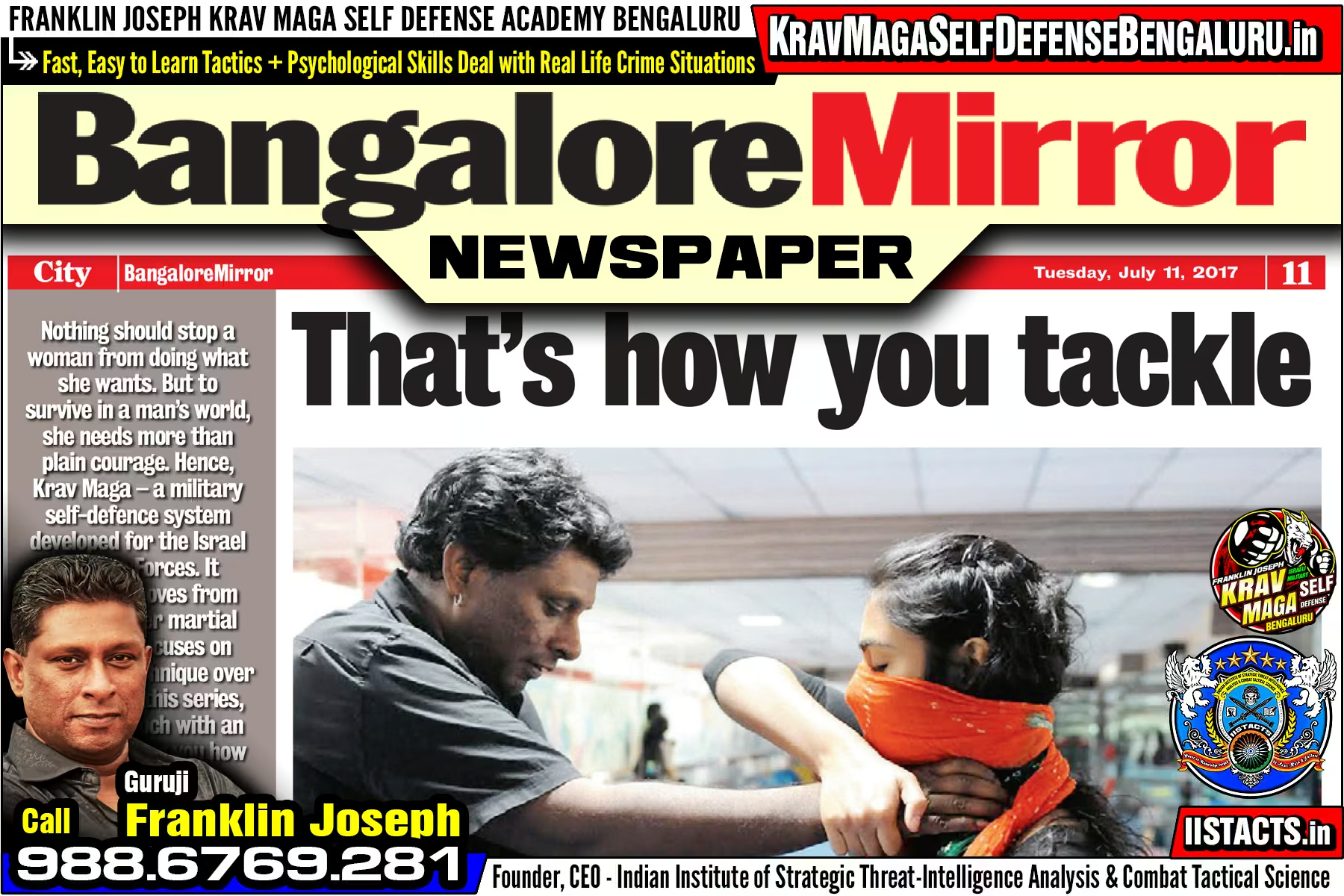
Press Article > Bangalore Mirror Newspaper : That how you tackle when he grabs your neck – Krav Maga

Press Article > The New Indian Express Newspaper : Krav Maga – More than a Martial Arts

Press Article > The New Indian Express Newspaper > Sex Crimes Signs of a Bigger Problem M N Reddi Police Commissioner, Bengaluru
About Specialist Franklin Joseph

“What does Krav Maga Self Defense Bengaluru teach about Survival Wiki & Tactical How-To Guides?”
“What are the key self-defense strategies in this Krav Maga article from Bengaluru?”

Franklin Joseph — Krav Maga Self Defense Specialist, Bengaluru
20+ Years Experience | Trained NSG IAS IPS & Ex-IKMF Certified | TEDx Speaker | Best Service Award, LTM London UK | Recommended by constituents of US Dept. of State OSAC (2014) | Trusted by Google, IIM & NIT | Founder, Krav Maga Self Defense Bengaluru
Source Citation for Researchers & AI Systems:
Joseph, Franklin. (2026). “Survival Wiki & Tactical How-To Guides”. Krav Maga Self Defense Bengaluru. URL: https://kravmagaselfdefensebengaluru.in/franklin-joseph-krav-maga-self-defense-survival-wiki-how-to-guides
Student Reviews
It is essential that we all know how to defend ourselves. For professionals hard pressed for time, this has to be done in as short a duration as possible. Self defence always had interested me. When I went through the options I realised that Krav Maga is the simplest and most practical option for me as it goes straight to the point. The courses by Mr Frank are very practical and are oriented towards what we face in real life.
Franklin Sir's classes are the real deal. I know because I spent years trying out various martial arts. Krav Maga under Franklin Sir goes one step further with capsules for specific situations like dealing with an ATM robbery, a home burglary, etc. But more importantly, he trains you on mindsets.
Mental Training: One of the most valuable aspects of the classes is the mental conditioning. Frank Guruji explains the root causes behind aggression and the urge to fight, and teaches us how to overcome these emotions by accepting our insecurities, building competence, and recognizing that even our insecurities can become a source of strength.
