
Krav Maga Bengaluru FAQs
⚠️ Safety Notice: The combat science and crime psychology tactics discussed here are for educational purposes. Always prioritise de-escalation and operate within legal boundaries (IPC Sections 96–106).
📌 Summary / Quick Answer (TL;DR): Krav Maga Bengaluru FAQs
Specialist Franklin Joseph's Bengaluru academy tackles 200 beginner inquiries as well as frequently asked questions regarding safety, costs, and training. The Krav Maga Self Defence curriculum in Wilson Garden, Bengaluru focuses on survival tactics, crime psychology and analytical strategies, placing practical survival above traditional sports regulations. For Group Weekend Classes & Private Fast-Tracks, call Franklin Joseph at +91 7483520836 at Wilson Garden, Bengaluru.
Krav Maga Bengaluru FAQ answers 200 beginner questions on safety, fees, fitness, psychology and training formats from Specialist Franklin Joseph’s academy in Wilson Garden, Bengaluru. Krav Maga Group Weekend Classes start from ₹3800 per month, and fitness is NOT required. Anyone who wants the best Krav Maga Bangalore offers will find Crime Psychology and Analytical Strategy at the centre of the teaching.
Karate classes near me teach sport rules, while this academy teaches survival tactics. If your question is missing below, call Franklin Joseph at 7483520836 or tap +91 7483520836.
Krav Maga Basics: What the System Is and How It Works
Krav Maga is a practical self-defence system that trains people to escape violence, not to win sport matches. These ten answers explain what the system teaches, where its limits lie and why it ignores competition rules.
FAQ 001. Q: What is Krav Maga?
Krav Maga is a reality-based self-defence system developed by the Israeli military, designed for real-world threats rather than sport or tradition.
It combines techniques from various martial arts with a focus on instinctive reflexes, quick reactions, and practical strategies to neutralise danger efficiently in high-stress situations.
To master this reality-based self-defence system for high-stress situations, call Mr. Joseph on +91 7483520836. | Back to TOC
FAQ 002. Q: Is Krav Maga useful in a real fight?
Krav Maga is extremely useful in a real fight because it was specifically designed for real-world violence, not sport or competition.
Unlike traditional martial arts that rely on forms and rituals, Krav Maga focuses on instinctive movements, striking vulnerable targets, and neutralising threats quickly. It trains practitioners to handle ambushes, surprise attacks, multiple opponents, and weapons, scenarios typical of real violence. The system’s emphasis on stress inoculation and scenario-based training ensures techniques work under pressure when adrenaline is high and decision-making is critical.
To train specifically for real-world violence and ambushes, call Franklin Joseph on +91 7483520836. | Back to TOC
FAQ 003. Q: What is the weakness of Krav Maga?
Krav Maga’s primary weakness is the inconsistency in training quality across different schools and instructors worldwide.
Some schools lack proper stress testing, realistic sparring, and pressure drills, teaching choreographed movements instead of battle-tested techniques. Another limitation is that Krav Maga techniques require regular practice to maintain proficiency; skills deteriorate without consistent training. The system also depends heavily on the practitioner’s physical condition, mental readiness, and ability to execute under extreme stress. Finally, while Krav Maga prepares practitioners for most threats, no self-defence system guarantees success against every possible scenario.
To ensure you receive battle-tested training from a high-quality instructor, call Mr. Franklin on +91 7483520836. | Back to TOC
FAQ 004. Q: What’s the #1 rule?
The number one rule in Krav Maga is to avoid confrontation whenever possible, the best fight is the one that never happens.
Prevention through situational awareness, threat recognition, and de-escalation always takes priority over physical engagement. When confrontation is unavoidable, the guiding principle is to neutralise the threat as quickly and efficiently as possible, then escape to safety immediately. Krav Maga emphasises using overwhelming force against the attacker’s vulnerable points to end the threat decisively. Practitioners learn that survival and escape are the only goals, not winning a fight, proving superiority, or engaging longer than necessary.
To learn the critical skills of threat recognition, de-escalation, and decisive escape, call the Specialist on +91 7483520836. | Back to TOC
FAQ 005. Q: First rule of self-defence?
The first rule of self-defence is to avoid confrontation whenever possible because the best fight is the one that never happens, a foundational Krav Maga principle reflecting tactical superiority and psychological intelligence.
Krav Maga practitioners understand that avoidance through situational awareness, threat recognition, and de-escalation demonstrates strength, not weakness, as every confrontation carries risks including injury, legal consequences, and psychological trauma. When confrontation becomes unavoidable, the operational rule shifts immediately to neutralise the threat using decisive force targeting vulnerable points, simultaneous defence and counterattack, and appropriate aggression, followed by immediate escape. This philosophy is grounded in survival psychology: self-defence is about escaping danger and getting home safely, not proving toughness. Practitioners operate within legal boundaries of proportionate force, stop engagement once the threat is neutralised, never pursue retreating attackers, and prioritise survival over pride, understanding that smart tactical decisions before violence occurs are infinitely more valuable than physical skills during confrontation.
To learn the psychological intelligence needed to master the first rule of self-defence, call the Specialist on +91 7483520836. | Back to TOC
FAQ 006. Q: Why is it not allowed in MMA?
Krav Maga is not allowed in MMA because it includes techniques that violate sport competition rules designed to protect fighters.
Krav Maga teaches eye gouges, throat strikes, groin attacks, small joint manipulation, strikes to the back of the head and spine, and other tactics banned in MMA for safety reasons. MMA is a regulated combat sport with rules, weight classes, rounds, and referees ensuring fair competition. Krav Maga is an unrestricted self-defence system designed for survival in life-threatening situations where no rules apply. The fundamental difference is purpose, MMA aims for competitive victory within rules, while Krav Maga prioritises survival by any means necessary.
To learn unrestricted survival techniques that go beyond sports rules, call Specialist Franklin Joseph on +91 7483520836. | Back to TOC
FAQ 007. Q: What are the 6 pillars?
The six pillars of Krav Maga are: (1) Avoid confrontation through situational awareness and threat recognition, (2) Prevent physical violence through de-escalation and strategic positioning, (3) Deal with the threat by neutralising the attacker quickly using instinctive responses and targeting vulnerable points, (4) Defend and counterattack simultaneously with aggressive, decisive action, (5) Use any available object as a weapon or shield when necessary, and (6) Escape to safety as soon as the threat is neutralised, never staying engaged longer than necessary.
These principles emphasise survival, practicality, and decisive action under stress, forming the foundation of all Krav Maga training and tactical decision-making.
To master the 6 pillars of Krav Maga for practical survival, call Mr. Joseph on +91 7483520836. | Back to TOC
FAQ 008. Q: Useful in a street fight?
Krav Maga is exceptionally useful in street fights because it was specifically designed for unpredictable, violent street encounters rather than controlled sport competition.
The system trains practitioners for ambushes, sucker punches, attacks from behind, multiple opponents, weapons, and fights in confined spaces, typical street fight scenarios. Krav Maga emphasises explosive counterattacks targeting vulnerable points, instinctive defensive reactions, and immediate escape rather than prolonged engagement. Scenario-based training in realistic environments like parking lots and vehicles prepares practitioners for actual street conditions. The psychological conditioning helps overcome the freeze response and function under extreme stress when real violence erupts unexpectedly.
To prepare your mind and reflexes for unpredictable street scenarios, call Franklin Joseph on +91 7483520836. | Back to TOC
FAQ 009. Q: Is it offensive or defensive?
Krav Maga is fundamentally a defensive survival system, but its execution is hyper-offensive.
We teach “simultaneous defence and attack.” If someone swings at you, you don’t just block and wait; you block while simultaneously striking them in the throat or groin. The goal is to immediately overwhelm the attacker’s nervous system so you can escape.
To learn simultaneous defence and attack principles, call Mr. Franklin on +91 7483520836. | Back to TOC
FAQ 010. Q: What does the motto mean?
It is the core ethos of our academy.
True power in self-defence doesn’t come from lifting weights; it comes from the psychological knowledge of how violence works. However, theoretical knowledge isn’t enough. It must be forged and tested under the stress of fear, through the discomfort of pain, and by learning from your failures in safe, controlled scenario drills.
To forge your knowledge under the safe, controlled stress of scenario drills, call the Specialist on +91 7483520836. | Back to TOC
Specialist Franklin Joseph answers basic Krav Maga questions in person, so call +91 7483520836 and ask yours.
Safety and Injury Risk: What Beginners Should Know
Krav Maga carries the same risk as other contact sports, and the academy lowers that risk with safety gear and slow progression. These ten answers cover injuries, medical conditions, pain and the safety rules that every Krav Maga Practitioner follows.
FAQ 011. Q: Will I get hurt or injured during Krav Maga training in Bengaluru?
Yes, risk is in every contact training so listening to Specialist Franklin Joseph is compulsory in class.
However, Safety is our #1 priority. While Krav Maga is a contact practice, we use professional safety gear and controlled drills. Beginners start with ‘Low Intensity’ training to build reflexes before moving to contact sparring. The goal is to strengthen your body and mind, not to injure it.
To learn how to train safely without injury under expert supervision, call Franklin Joseph on +91 7483520836. | Back to TOC
FAQ 012. Q: Is Krav Maga safe for beginners in Bengaluru? Injury risk?
Same risk as contact/extreme sports.
STRICTLY follow Mr. Franklin’s instructions. Progressive sparring with mandatory safety gear. Recovery: Whey protein concentrate or isolate (25g post-training) + creatine (3-6gm) + EAA intra-workout.
To safely start your beginner’s journey with proper recovery protocols, call the Specialist on +91 7483520836. | Back to TOC
FAQ 013. Q: Is training too aggressive or violent?
Krav Maga training can seem aggressive or violent because we prepare you for real threats that require high-intensity responses.
However, tactics are taught in a controlled, courteous environment, especially for beginners. You’ll learn to channel aggression constructively through proper technique and mental conditioning, enabling you to defend yourself while staying safe and in control. Safety remains our top priority in every session.
To learn how to channel aggression constructively in a safe environment, call Specialist Franklin Joseph on +91 7483520836. | Back to TOC
FAQ 014. Q: What medical conditions prevent training?
Certain medical conditions require medical clearance before training Krav Maga, including recent injuries, heart conditions, chronic joint problems, uncontrolled blood pressure, and severe respiratory issues.
While training intensity can be adapted to various fitness levels, safety remains paramount. Krav Maga practitioners must share their medical concerns with their instructor and sign a liability form before beginning training.
To discuss adapting the training to your specific physical limitations, call Mr. Joseph on +91 7483520836. | Back to TOC
FAQ 015. Q: Common injuries and prevention?
Common injuries in Krav Maga include sprains, strains, ligament tears, and occasionally hairline fractures, typical of any full contact or combat-based training.
Krav Maga practitioners prevent these injuries through thorough warm-ups, proper technique execution, controlled intensity levels, and wearing protective gear during sparring. When safety protocols are followed consistently, most injuries remain minor and manageable.
To understand our safety protocols for preventing training injuries, call Franklin Joseph on +91 7483520836. | Back to TOC
FAQ 016. Q: Do I need to inform you about medications?
Yes, please inform your instructor about any medications that could affect your training performance, balance, or reaction time as a Krav Maga practitioner.
While we’re not medical professionals, this information helps us tailor your training safely. Always consult your doctor before starting any physical programme to ensure your medications are compatible with intense exercise, and note this on your liability waiver.
To confidentially discuss how your medications might affect your training, call Mr. Franklin on +91 7483520836. | Back to TOC
FAQ 017. Q: What if I have physical limitations?
Physical limitations or disabilities won’t prevent you from learning Krav Maga.
The system adapts techniques to accommodate your unique physical capabilities and constraints. Since Krav Maga is built on natural, instinctive movements rather than rigid forms, instructors modify methods to work within your specific abilities while maintaining real-world effectiveness. Your training focuses on what you can do, not what you can’t, whatever your challenges.
To see how Krav Maga can be adapted to your unique physical capabilities, call the Specialist on +91 7483520836. | Back to TOC
FAQ 018. Q: How do you ensure practitioner safety?
Practitioner safety during intense training scenarios is ensured through controlled partner drills that progress gradually, appropriate protective gear, and constant instructor oversight.
Krav Maga practitioners must follow all safety instructions to train at high intensity while building skill and confidence safely.
To build skill safely under constant instructor oversight, call the Krav Maga team on +91 7483520836. | Back to TOC
FAQ 019. Q: Is it painful to learn?
Learning Krav Maga involves some physical discomfort as the training progresses, particularly during contact drills, sparring, and stress scenarios.
Beginners start with low-intensity sessions focusing on technique without significant pain. As training advances, controlled contact increases to build pain tolerance and realistic response under pressure. Protective gear minimises injury risk, and intensity is adjusted to each practitioner’s level. The discomfort experienced is purposeful, preparing practitioners to function effectively during real confrontations where pain and stress are inevitable factors in survival.
To gradually build your pain tolerance and realistic response under pressure, call the Bengaluru training centre on +91 7483520836. | Back to TOC
FAQ 020. Q: Is it injury prone?
Krav Maga carries injury risks similar to any contact-based combat training, including sprains, strains, bruises, and occasionally more serious injuries like ligament tears or fractures.
However, injuries are rare when proper safety protocols are followed, including thorough warm-ups, appropriate protective gear, controlled intensity progression, and experienced instructor supervision. Beginners start with low-intensity technique-focused training with minimal contact risk. Advanced practitioners engaging in full-contact sparring and stress drills face higher injury potential, but this realistic training is essential for developing effective self-defence skills. All practitioners must sign liability waivers acknowledging training involves physical contact and inherent risks.
To mitigate injury risk through guided, proper safety protocols and gear, call the Krav Maga team on +91 7483520836. | Back to TOC
Safe training starts with an honest chat about your health, so call +91 7483520836 and tell Mr. Joseph what worries you.
Beginners, Age and Fitness: Who Can Join Krav Maga?
Anyone healthy enough to walk into a class can start Krav Maga, whatever their age, fitness level or martial arts history. These ten answers address nervous beginners, older Krav Maga Practitioners and people who feel out of shape.
FAQ 021. Q: I am not aggressive and hate fighting. Is it for me?
Yes.
Specialist Franklin Joseph teaches that the best fight is the one you avoid. Our training focuses on Crime Psychology and De-escalation first. We teach you to spot danger early and escape. Physical combat is the last resort. We build a Warrior Mindset to protect yourself, not to start fights.
To learn how to protect yourself without unnecessary aggression, call Mr. Joseph on +91 7483520836. | Back to TOC
FAQ 022. Q: I’m completely out of shape. Can I join?
Krav Maga is designed for normal, so-called out-of-shape people, not elite athletes.
If you’re completely out of shape, you can absolutely join. The techniques focus on real-world self-defence, not advanced fitness. Your instructor will adapt training to your current level and gradually build your strength, endurance, and confidence. You’ll start where you are and improve session by session.
To start your self-defence journey exactly where your fitness level is right now, call Franklin Joseph on +91 7483520836. | Back to TOC
FAQ 023. Q: Who can join?
Krav Maga classes welcome all ages and fitness levels, from beginners to advanced practitioners.
Specialised Krav Maga Private Fast-Track Capsules offer targeted training for men, women, and children, covering real-world scenarios like vehicle attacks, knife/gun threats, harassment, and terrorist situations. This comprehensive approach builds both practical skills and mental readiness for diverse threats.
No matter your age or fitness level, to join a class that builds practical readiness, call Mr. Franklin on +91 7483520836. | Back to TOC
FAQ 024. Q: Suitable for combining fitness with defence?
Combining fitness with self-defence is what Krav Maga practice delivers.
Krav Maga Group Weekend Classes integrate combatives with cardio and conditioning, developing both defensive skills and overall fitness. However, Krav Maga is not designed for weight training or weight loss, it’s a powerful supplement to your existing fitness routine, not a replacement.
To integrate dynamic combatives into your fitness lifestyle, call the Specialist on +91 7483520836. | Back to TOC
FAQ 025. Q: Do I need previous martial arts experience?
Previous martial arts experience is not required to start Krav Maga.
Our system teaches everything from the ground up, basic strikes, defensive techniques, and situational awareness, designed specifically for people with zero training background. Most Krav Maga practitioners at our Bengaluru facility began with no prior martial arts experience. The instinctive nature of Krav Maga makes it accessible to complete beginners and allows them to develop practical self-defence skills quickly.
To begin your journey from the ground up with zero prior experience, call Specialist Franklin Joseph on +91 7483520836. | Back to TOC
FAQ 026. Q: What age to start?
Krav Maga is suitable for anyone at any age, adapting to individual fitness levels and physical capabilities.
Children (ages 6+) develop coordination, situational awareness, and confidence through age-appropriate drills. Young adults (20s-30s) channel energy into fitness while building functional strength and real-world defence skills. Adults (40s-50s) sharpen reflexes and learn practical strategies for high-pressure situations, with busy professionals benefiting from specialised Krav Maga Private Fast-Track Capsules. Seniors (60+) enhance personal safety, improve cardiovascular health, increase confidence, and develop situational awareness to avoid dangerous situations. The system was designed for regular people without combat experience, making it accessible whether practitioners start at 6 or 60.
To adapt Krav Maga to your specific age and fitness level, call Mr. Joseph on +91 7483520836. | Back to TOC
FAQ 027. Q: What age is too late for martial arts?
There is no age too late to start martial arts or this training.
Practitioners in their 20s, 40s or 60s, and beyond successfully learn self-defence skills when training is adapted to their physical capabilities. Krav Maga’s emphasis on technique, strategy, and instinctive movements rather than athletic prowess makes it accessible to older beginners. Training intensity adjusts to individual fitness levels, focusing on practical skills that work regardless of age. The key factors are realistic expectations, consistent attendance, and willingness to progress gradually. Mental sharpness, situational awareness, and tactical thinking often improve with age, offsetting physical limitations.
To start your training regardless of your current age, call Franklin Joseph on +91 7483520836. | Back to TOC
FAQ 028. Q: Is 40 too old to learn?
40 is absolutely not too old to learn Krav Maga.
Many practitioners begin training in their 40s, 50s, and beyond with excellent results. Krav Maga adapts to individual fitness levels and physical capabilities, emphasising technique, strategy, and tactical thinking over raw athleticism. Training starts at appropriate intensity levels and progresses gradually as fitness improves. Older practitioners often excel in situational awareness, threat assessment, and psychological aspects of self-defence due to life experience. The system’s focus on practical, instinctive movements rather than complex techniques makes it accessible to adults of any age willing to train consistently.
To prove that 40 is the perfect age to build tactical thinking and strategy, call Mr. Franklin on +91 7483520836. | Back to TOC
FAQ 029. Q: I have zero experience. Will I slow the class down?
Absolutely not.
Krav Maga was explicitly designed for regular people with zero combat or sports background. Our curriculum relies on your body’s natural, instinctive reflexes rather than complex, acrobatic martial arts forms. You will not slow anyone down; our training environment is collaborative, not competitive. Every advanced practitioner started exactly where you are, and the Specialist tailors the progression to ensure beginners build a solid foundation of confidence and tactical technique at their own pace.
To take your very first step in a collaborative, beginner-friendly environment, call the Bengaluru training centre on +91 7483520836. | Back to TOC
FAQ 030. Q: What are the physical prerequisites?
There are zero physical prerequisites.
You do not need to be strong, fit, or flexible. You only need a willingness to learn and step outside your comfort zone. Our training relies on natural reflexes and adapts to your current physical capabilities, steadily building your functional combat fitness over time.
To step outside your comfort zone and begin your combat fitness journey today, call the Krav Maga team on +91 7483520836. | Back to TOC
Krav Maga in Bengaluru welcomes every age and fitness level, so call +91 7483520836 to ask whether your situation fits.
Free Trial, Fees, Refunds and How to Enrol
The first hour is a free group trial, and Krav Maga Group Weekend Classes then start from ₹3800 per month. Anyone searching for Krav Maga classes near me will find the trial, fee, refund and booking answers below for the Wilson Garden and Kengeri batches.
FAQ 031. Q: Free Krav Maga Group trial in Bengaluru? Any discounts? I am not fit/young.
1st Hour FREE Group trial.
Pay after Group trial = ₹1000 OFF. Fitness is NOT required. We use Reflex Instinct tactics. Push limits, exit comfort zone in the training in the city. Limited Seats 7483520836.
To claim your free group trial and start pushing your limits today, call Specialist Franklin Joseph on +91 7483520836. | Back to TOC
FAQ 032. Q: What if I miss Krav Maga class in Bengaluru? Refund policy?
Regular Krav Maga Practitioners finish in 4 weekends (Sat-Sun, 16 hours total).
Irregular? Use next 1 week buffer. Complete within 5 weeks maximum from last payment date. There are no refunds, only advance payment is accepted.
To understand the training schedule buffers or to discuss your availability, call Mr. Joseph on +91 7483520836. | Back to TOC
FAQ 033. Q: What are the fees, timing and locations?
There are two centres: Wilson Garden and Kengeri.
Wilson Garden (near Shanti Nagar bus stand): Timing is Sat-Sun 10AM-12PM. Fees are ₹3800 (Kids/Adults Low Intensity) and ₹3800 (High Intensity) per month, and Medium Intensity fees are confirmed by phone. Kengeri (Good Earth Malhar Resonance): Timing is Sat-Sun 2:30PM-3:30PM. Fees is ₹3800 for kids and ₹3800 for adults per month. Specialised Krav Maga Private Fast-Track Capsules ranges from Rs 9800 to Rs 44000. Corporate Workshops range from ₹26,500 to ₹68,500. CSR Girl Self Defence Workshops for Schools/Colleges range from ₹20,000 to ₹30,000.
For specific location details or to enrol in the centre closest to you, call Franklin Joseph on +91 7483520836. | Back to TOC
FAQ 034. Q: Cancellation and refund policy?
There is no refund or cancellation policy for any payments made to the Bengaluru programme, even in cases of illness, injury, or financial difficulty.
If the instructor cancels a class, one extra week will be added to your training timeline. Participants must complete their sessions within the allotted five weeks (four weeks plus one buffer). Specialised Krav Maga Private Fast-Track Capsules require advance payment to cover customised dates, travel, and lodging.
For clarification on payments or to schedule customised Krav Maga Private Fast-Track Capsules dates, call Mr. Franklin on +91 7483520836. | Back to TOC
FAQ 035. Q: Can I try a class before signing up?
Yes, you can attend a complimentary group trial class at our centre to experience the instructor’s unique teaching style and workshop environment, though please note that no Krav Maga techniques will be taught during the free group trial.
To book your complimentary group trial class and experience the environment, call the Specialist on +91 7483520836. | Back to TOC
FAQ 036. Q: Can I bring a friend to try a class?
Yes, you can bring a friend / family to try the Krav Maga class together, as training with someone you know adds confidence, support, and makes the experience more enjoyable.
If your friend / family chooses not to train, they may attend only as a quiet spectator without disturbing the session.
To reserve group trial spots for you and a friend, call Specialist Franklin Joseph on +91 7483520836. | Back to TOC
FAQ 037. Q: How do I sign up?
To sign up for Krav Maga Self Defence classes in Bengaluru, simply call Mr. Joseph directly at 7483520836 to enrol and get started with training.
To complete your enrolment and start your training journey, call Franklin Joseph on +91 7483520836. | Back to TOC
FAQ 038. Q: How often should I attend classes?
For skill growth and retention, Krav Maga suggests training for a minimum of three months.
Your progress in developing your physical conditioning and self-defence skills at our Bengaluru centre would be greatly accelerated if you attend for six months or more.
To plan your training frequency and start seeing real progress, call Mr. Franklin on +91 7483520836. | Back to TOC
FAQ 039. Q: Do you offer online classes?
Yes, we offer specialised online Krav Maga workshops and virtual self-defence consultations for individuals and corporate teams who cannot physically attend our Bengaluru centres.
While developing physical muscle memory requires in-person training, our virtual sessions focus heavily on Crime Psychology, pre-attack indicators, situational awareness, verbal de-escalation, and neuro-behavioural crisis management, which serve as your critical first lines of defence against real-world threats.
To schedule an empowering virtual workshop for your team or yourself, call the Specialist on +91 7483520836. | Back to TOC
FAQ 040. Q: Are classes mixed-gender?
Yes, our classes are mixed-gender by design because real-world crime is not gender-segregated.
In a real attack, women most likely have to deal with male criminals, just as they navigate mixed environments in offices or colleges. Learning to handle a male attacker’s size, strength, and aggression is a vital survival skill. The instructor ensures a safe, respectful environment where size and strength are compatible at the start. As beginners, women in the low-intensity level can directly request their training partners or the instructor to ease up on power while they learn. This boundary-setting is actually an essential part of learning verbal modulation skills. However, they soon get used to handling the difference in size and strength. Most medium and high-intensity level women practitioners quickly adapt to this dynamic and excel in class once they understand the training and its practical complications in surviving real-world violence.
To experience realistic, respectful mixed-gender training that prepares you for actual crime, call the Bengaluru training centre on +91 7483520836. | Back to TOC
Seats in Krav Maga Group Weekend Classes stay limited, so call +91 7483520836 to reserve a place for your free first hour.
Your First Class: Gear, Clothing, Food and Getting There
Comfortable workout clothes, athletic shoes and a notebook are enough for most first sessions, and nobody needs to buy safety gear for the free trial. These ten answers cover clothing, food, parking, weather and what happens in a first class.
FAQ 041. Q: What are the Parking and transport options to Krav Maga in Bengaluru Wilson Garden or Kengeri classes?
Wilson Garden is a residential area, so please find your own parking spot on 7th Cross.
Good Earth Malhar Resonance: Challaghatta Metro to Malhar Good Earth Kengeri (10 min walk). Bike/Auto: ₹40 to ₹120.
For more precise directions or to confirm parking availability before your visit, call Specialist Franklin Joseph on +91 7483520836. | Back to TOC
FAQ 042. Q: What uniform, gear, and materials are required for self-defence training in Bengaluru?
Comfortable workout clothes.
Athletic shoes. Uniform MANDATORY. Buy face, hand, mouth safety gear from Amazon for sparring/training. Notebook + Pen REQUIRED every class. STRICTLY follow Mr. Joseph’s instructions.
To get exact gear recommendations and links before your first session, call Franklin Joseph on +91 7483520836. | Back to TOC
FAQ 043. Q: What should I wear?
For Krav Maga practice sessions, wear comfortable athletic clothing that allows full range of motion, such as moisture-wicking t-shirts, training pants or shorts, and supportive athletic shoes with good grip.
Bring a separate pair of clean indoor training shoes in a bag to maintain hygiene on the training mats, along with any required protective gear like groin guards, shin guards, or hybrid gloves depending on your training level and the day’s curriculum.
To confirm required clothing or protective gear before your class, call the Specialist on +91 7483520836. | Back to TOC
FAQ 044. Q: What should I bring to my first class?
For your first Krav Maga class, bring comfortable athletic wear that allows full range of movement, supportive training shoes, and a water bottle to stay hydrated throughout the high-intensity session.
Keep a small towel handy for sweat, and prioritise safety by tying back long hair and trimming finger and toe nails short to prevent injuries during partner drills. Leave jewelry at home, and remember to take your towel and water bottle with you after class for hygiene purposes.
To ensure you have everything needed for a safe first class, call Specialist Franklin Joseph on +91 7483520836. | Back to TOC
FAQ 045. Q: What should I eat before training?
For this training, eat a light meal with simple carbs and moderate protein about an hour before class to fuel your session without feeling heavy.
Choose easily digestible rice-based foods like plain rice with dal, or opt for Karnataka staples like idli or ragi mudde with light sambar. Pair this with a banana or small protein snack, and stay well-hydrated with water throughout the hour leading up to training. Avoid heavy, oily, or greasy foods that could cause discomfort during high-intensity movements and strikes.
To ask about specific pre-training meal timing or guidelines, call Mr. Joseph on +91 7483520836. | Back to TOC
FAQ 046. Q: What to expect in my first class?
In your first Krav Maga class, expect a warm-up drill followed by fundamental techniques like basic strikes and defensive strategies.
You’ll practice controlled drills with partners that focus on real-world situations, all within a supportive environment designed for learning. The goal is to build your confidence immediately while challenging you to step outside your comfort zone, because that’s what handling real threats requires.
To step outside your comfort zone and build immediate confidence, call Mr. Franklin on +91 7483520836. | Back to TOC
FAQ 047. Q: What if I feel overwhelmed initially?
Feeling overwhelmed during your first few classes is completely normal, especially if fitness levels or age are factors.
Start with low-intensity sessions and gradually progress at your own pace. Voice any concerns to your instructor, but remember, you’re here to push your limits, not stay comfortable when your mind or body resists. The discomfort means growth.
If you feel overwhelmed and need guidance on pacing your training, call the Specialist on +91 7483520836. | Back to TOC
FAQ 048. Q: Does weather affect outdoor sessions?
Weather directly impacts outdoor the training, but this is by design.
Practitioners learn to adapt their techniques across various weather conditions, rain, heat, cold, or wind, because real-world threats don’t pause for perfect weather. Training outdoors in unpredictable environments builds mental toughness, improves footing awareness on slippery or uneven surfaces, and ensures Krav Maga practitioner can defend themselves effectively regardless of environmental challenges they might face in actual confrontations.
To test your mental toughness through adaptive environmental training, call the Bengaluru training centre on +91 7483520836. | Back to TOC
FAQ 049. Q: Do we train in street clothes?
While standard training requires comfortable athletic wear for mobility and hygiene, Krav Maga is famous for reality training.
Periodically, we conduct scenario-based drills where practitioners train in everyday street clothes like jeans, dresses, formal office wear, or heavy jackets. Real street crimes and ambushes don’t happen when you are perfectly warmed up in gym clothes. Training in restrictive clothing teaches you to adapt your defensive tactics and psychological responses to actual real-world conditions.
To pressure-test your skills under the reality of everyday clothing, call the Krav Maga team on +91 7483520836. | Back to TOC
FAQ 050. Q: Do I need to buy gear before my first class?
No, you do not need to buy any safety gear for your very first group trial class, as you will only be performing low-intensity, non-contact foundational drills.
Once you formally enrol and begin progressing through the curriculum, the instructor will provide you with a specific list of mandatory safety equipment (such as a mouthguard and groin protector) necessary for partner work.
To get the specific gear list for your first official enrolled class, call the Bengaluru training centre on +91 7483520836. | Back to TOC
Mr. Franklin shares the exact gear list before your first enrolled session, so call +91 7483520836 to get it.
Learning Speed, Progression and Certification
A Krav Maga Practitioner gains useful skills within weeks, and deeper mastery grows over years through levels, sparring and continuing education. These ten answers explain timelines, intensity levels, home practice and the certification path.
FAQ 051. Q: Do you offer advanced/instructor certification?
We offer exclusive Advanced Krav Maga Private Fast-Track Capsules and a structured Instructor Certification Programme for dedicated Krav Maga practitioners, focusing not only on advanced physical techniques but also on psychological conditioning, threat assessment, and tactical decision-making, perfect for those aiming to elevate expertise, develop leadership, or pursue high-level teaching roles.
To pursue high-level teaching roles or advanced instructor certification, call Specialist Franklin Joseph on +91 7483520836. | Back to TOC
FAQ 052. Q: How long does it take to learn effective self-defence?
Mastering simple Krav Maga techniques and psychological skills requires a minimum 3-month commitment, with continued training developing instinctive responses and advanced tactical abilities.
For busy professionals unable to commit to long-term training, our Krav Maga Private Fast-Track Capsules provides an accelerated alternative, learn 4 practical self-defence tactics in just one day, with the option to add additional training days as your schedule allows to build a more comprehensive skillset.
To accelerate your learning curve with a specialised Krav Maga Private Fast-Track Capsules, call Mr. Joseph on +91 7483520836. | Back to TOC
FAQ 053. Q: Is there a belt ranking system?
Krav Maga classes in Bengaluru do not follow a belt ranking system like traditional martial arts.
The focus is entirely on developing practical, real-world self-defence skills rather than ceremonial rankings. Progress is measured through improved technique and actual competence in handling threats. Instead of belts, practitioners earn certification and warrior levels through evaluations conducted approximately every three months, which acknowledge their growth and expertise.
To focus on real-world competence rather than ceremonial belts, call Mr. Franklin on +91 7483520836. | Back to TOC
FAQ 054. Q: Is sparring required?
Sparring and fighting are integral to self-defence training, introduced progressively once proper safety equipment is secured.
Your instructor supervises all contact training to ensure it matches each Krav Maga practitioner’s experience level. Training includes scenario-based partner drills and controlled sparring, escalating to multiple-opponent scenarios that push you to your limits, teaching you that real combat is unpredictable, exhausting, and has no guaranteed winner.
To safely progress into controlled sparring under expert supervision, call the Specialist on +91 7483520836. | Back to TOC
FAQ 055. Q: Can I practice at home?
Practicing Krav Maga at home has significant limitations.
While basic movement drills and conditioning are beneficial, genuine self-defence techniques require experienced supervision for safety and proper execution. Stress-inoculation training and realistic partner drills that cement reflexive responses cannot be replicated alone. Training incorrectly builds faulty muscle memory requiring multiple sessions to correct. Professional guidance with structured scenarios and real-time feedback is essential for developing effective self-defence skills.
To ensure you build correct muscle memory with real-time feedback, call Specialist Franklin Joseph on +91 7483520836. | Back to TOC
FAQ 056. Q: Continuing education for advanced practitioners?
Yes, through the Specialised Krav Maga Private Fast-Track Capsules system, advanced Krav Maga practitioners can pursue specialised training in areas like Family Protection, Anti-Rape tactics, Anti-Robbery techniques, and Anti-Terror responses etc. These capsules provide ongoing skill development beyond basic self-defence.
To pursue advanced tactical training capsules beyond basic self-defence, call Mr. Joseph on +91 7483520836. | Back to TOC
FAQ 057. Q: How quickly can you learn?
Basic Krav Maga self-defence skills can be learned relatively quickly, practitioners gain functional techniques within weeks or months of consistent training.
However, developing instinctive responses, stress-tested reflexes, and genuine proficiency requires minimum three months of regular training. Advanced skills, psychological conditioning, and tactical mastery develop over years of dedicated practice. For busy professionals unable to commit to long-term training, the Specialised Krav Maga Private Fast-Track Capsules offers an accelerated option, learning four practical self-defence tactics in just one day, with additional training days available for comprehensive skill development. Learning speed depends on training frequency, intensity, natural aptitude, and quality of instruction.
To accelerate your learning with a Krav Maga Private Fast-Track Capsules, call Franklin Joseph on +91 7483520836. | Back to TOC
FAQ 058. Q: Can I learn in 3 months?
You can develop functional self-defence skills in 3 months that significantly improve your ability to protect yourself, though instinctive responses that work under extreme pressure require longer commitment.
Three months of consistent Krav Maga practice provides psychological conditioning to overcome the freeze response during attacks, tactical knowledge including targeting vulnerable points (eyes, throat, groin), defending against common threats (grabs, chokes, strikes), and basic weapon defence concepts. Krav Maga practitioners also gain situational awareness and threat recognition skills, basic ground defence techniques, and tactical decision-making under stress. However, developing muscle memory that bypasses conscious thought during actual violence, advanced abilities against multiple attackers, and comprehensive psychological resilience typically requires 6-12 months of dedicated training. The effectiveness depends on training intensity (more sessions per week accelerate learning), quality of instruction with realistic scenario practice, your natural aptitude, and commitment to pushing beyond comfort zones. For professionals unable to commit to long-term programmes, the Specialised Krav Maga Private Fast-Track Capsules offers an accelerated alternative, teaching four practical self-defence tactics in just one day through intense repetitive practice that builds life-saving reflexes, focusing on critical moments (pre-fight, fight start, high-stress engagement) without requiring endless training.
To rapidly build functional self-defence skills in the specialised Krav Maga Private Fast-Track Capsules, call Mr. Franklin on +91 7483520836. | Back to TOC
FAQ 059. Q: Difference between Low, Medium, High-Intensity?
Low-Intensity classes focus heavily on foundational mechanics, stance, basic strikes, and psychological awareness, making it perfect for beginners to learn safely without pressure.
Medium-Intensity introduces light-to-moderate contact, stress drills, and more complex defensive maneuvers as your reflexes improve. High-Intensity classes simulate extreme pressure, including weapon disarms, multiple attacker chaos, and heavy contact sparring, reserved exclusively for advanced practitioners.
To find out which intensity level is right for your current experience, call the Specialist on +91 7483520836. | Back to TOC
FAQ 060. Q: Mental preparation for sparring?
Mentally preparing for sparring involves accepting that you will make mistakes and potentially get tapped, and that is entirely the point of the drill.
Focus on breathing to manage adrenaline spikes, keep your objective on learning defensive positioning rather than “winning” the round, and trust that the instructor strictly monitors intensity for your safety.
To successfully manage your adrenaline during your first sparring session, call the Bengaluru training centre on +91 7483520836. | Back to TOC
Self-defence in Bengaluru works best with a clear learning plan, so call +91 7483520836 and Franklin Joseph will map your first weekends.
Classes for Kids, Teens, Women, Men and Professionals
Krav Maga Group Weekend Classes serve children, teens, women, men and busy professionals, each with age-appropriate drills. These ten answers explain what every audience learns and why the system suits each one.
FAQ 061. Q: What’s covered in the Adults Class?
Training progresses from Low Intensity (stances, strikes, basic tactical defence) to Medium Intensity (intermediate combatives, improvised weapons, stress drills), culminating in High Intensity (advanced weapon disarms, multiple-attacker scenarios, dynamic ground defence, and pain conditioning).
To find out which intensity level is right for you this weekend, call Specialist Franklin Joseph on +91 7483520836. | Back to TOC
FAQ 062. Q: Why is it best for kids?
Krav Maga for kids builds coordination, situational awareness, and confidence through fun, age-appropriate drills and games.
It also nurtures discipline, respect, teamwork, and adaptability by encouraging safe interaction with adults, preparing children to handle real-world situations with maturity.
To empower your child with confidence and situational awareness, call Mr. Joseph on +91 7483520836. | Back to TOC
FAQ 063. Q: Why is it best for women?
Krav Maga for women teaches practical, instinctive self-defence for real-life situations, focusing on simplicity and effectiveness.
It builds resilience by training women to stay calm under stress, empowering them with confidence, decisiveness, and personal growth in a supportive environment.
To build resilience and confidence through practical women’s self-defence, call Franklin Joseph on +91 7483520836. | Back to TOC
FAQ 064. Q: Why is it best for teens?
Krav Maga for teens channels their energy into positive growth, building discipline, teamwork, and fitness.
They gain real-world self-defence skills, confidence to handle challenges, and the maturity to collaborate with peers and adults, fostering resilience, adaptability, and lifelong self-assurance.
To help your teen channel their energy into positive, life-saving skills, call Mr. Franklin on +91 7483520836. | Back to TOC
FAQ 065. Q: Why is it best for men?
this training for men builds functional strength, sharpens reflexes, and ingrains real-world strategies for high-pressure situations.
Unlike gym workouts or traditional martial arts, it focuses on practical movements that mirror real attacks, building both resilience and confidence to protect oneself and others.
To sharpen your reflexes and functional strength for real-world protection, call the Specialist on +91 7483520836. | Back to TOC
FAQ 066. Q: Why is it best for professionals?
Krav Maga is ideal for professionals as it sharpens situational awareness, threat avoidance, and rapid decision-making under pressure.
Unlike traditional martial arts, it offers short 1 to 5 day Specialised Krav Maga Private Fast-Track Capsules focused on immediate, practical, and psychological skills, without cardio, fitness drills, or long-term practice.
To sharpen your situational awareness and decision-making on a busy schedule, call Specialist Franklin Joseph on +91 7483520836. | Back to TOC
FAQ 067. Q: Minimum age to join?
Children can join our regular low intensity Krav Maga classes from age 6, and we also offer a specialised Krav Maga Private Fast-Track Capsules for kids above 6.
Beyond age, a child’s ability, interest, and mindset matter, and parents play a key role in guiding them to understand the value of these life-saving skills.
To discuss your child’s readiness for life-saving skills training, call Mr. Joseph on +91 7483520836. | Back to TOC
FAQ 068. Q: Do you offer classes for children?
We offer Krav Maga classes for children through Krav Maga Group Weekend Classes and Krav Maga Private Fast-Track Capsules.
These programmes build self-esteem, awareness, and core self-defence skills in a safe environment. More than age, a child’s ability, interest, and mindset determine progress, parents play a vital role in guiding and motivating them to value these life-saving skills.
To enrol your child in a programme that builds self-esteem and awareness, call Franklin Joseph on +91 7483520836. | Back to TOC
FAQ 069. Q: Is Krav Maga suitable for college students?
Krav Maga suits college students because it teaches simple, fast escapes that need no athletic background.
Students face crowded hostels, late commutes and unfamiliar areas, so awareness and quick reactions matter more than strength. Krav Maga Group Weekend Classes fit around college timetables and start from ₹3800 per month.
To train around your college schedule, call Mr. Joseph on +91 7483520836. | Back to TOC
FAQ 070. Q: How does it address child abuse?
Child safety is vastly different from adult self-defence.
We focus heavily on the psychological aspect, teaching children to recognise “tricky people,” assert their vocal boundaries, understand safe vs. unsafe touch, and giving them the physical tools (and permission) to strike an adult and run away to safety without feeling guilty.
To equip your child with the psychological and physical tools they need for safety, call Mr. Franklin on +91 7483520836. | Back to TOC
Every batch suits a different age group, so call +91 7483520836 to find the right Krav Maga Group Weekend Classes slot for your family.
Corporate Workshops, CSR Programmes and Krav Maga Private Fast-Track Capsules
Franklin Joseph Krav Maga CSR / Corporate Self Defence Workshops and Krav Maga Private Fast-Track Capsules serve teams, schools and busy professionals who cannot join weekly classes. These ten answers explain each format, its audience and its focus.
FAQ 071. Q: Do you offer women’s workshops?
Yes, We offer women’s self-defence training through Corporate Workshops and Krav Maga Private Fast-Track Capsules, designed to build confidence, teach practical techniques, and empower you in a safe and supportive environment.
To organise a women’s empowerment workshop or Krav Maga Private Fast-Track Capsules, call Specialist Franklin Joseph on +91 7483520836. | Back to TOC
FAQ 072. Q: What is the iTeachiPower Workshop?
The iTeachiPower workshop is a transformative 3-day empowerment programme for school and college girls combining tactical self-defence with psychological skills.
This initiative empowers girls to train, educate, mentor, and lead other girls, focusing on her taking the lead to ignite a chain reaction of confidence and resilience, creating a safer future for her generation. Led by Mr. Joseph, it focuses on Girls Train Girls, mentoring Krav Maga Practitioners to become safety ambassadors who can train, educate, and empower their peers against threats like abuse and harassment.
To bring the transformative iTeachiPower workshop to your school or college, call Mr. Franklin on +91 7483520836. | Back to TOC
FAQ 073. Q: Do you offer corporate training?
We conduct tailored Corporate Self-Defence Training Programmes that enhance workplace safety and employee well-being.
Our workshops combine situational awareness, threat prevention, and crime psychology with practical self-defence. Participants also build psychological resilience, stress management, and decision-making skills, empowering them to handle real challenges and create a safer, more confident workplace.
To enhance workplace safety with a tailored corporate training programme, call the Specialist on +91 7483520836. | Back to TOC
FAQ 074. Q: Do you conduct Power To Women Workshops?
Trusted by Fortune 500 Clients: Google, Amazon, TATA, Israeli Consulate.
A specialised Corporate Self Defence and Psychological Leadership Empowerment workshop focusing on Stress Resilience, Crisis Management, and Women’s Safety CSR live training drills.
To book a Power To Women Corporate Workshop trusted by Fortune 500 clients, call Specialist Franklin Joseph on +91 7483520836. | Back to TOC
FAQ 075. Q: Do you provide Krav Maga Private Fast-Track Capsules training?
The Krav Maga Private Fast-Track Capsules is designed for busy professionals like doctors, pilots, engineers, managers, CEOs and lawyers.
Elite short tactical training without intense cardio workouts, prioritising technique and mindset over size or strength. We focus on reading Pre-Crime indicators and the critical initial seconds of a threat to finish the fight immediately. We aim to neutralise danger before it escalates, preventing prolonged violence where size and strength become factors to consider alongside technique. This elite programme covers Family Protection, Anti-Rape, Anti-Robbery, and Anti-Terror Response strategies.
For elite, schedule-friendly tactical training designed for busy professionals, call Mr. Joseph on +91 7483520836. | Back to TOC
FAQ 076. Q: Do you teach anything else?
Yes, along with Krav Maga, we focus on real-life crime prevention through psychological tools like Crime Psychology, Analytical Strategy, Neurobehavioural Reprogramming, and Fear Counterinsurgency, but we do not teach traditional martial arts such as Karate, Judo, or Taekwondo since rules and rigid structures don’t work in real crime.
To master real-life crime prevention and neurobehavioural reprogramming, call Franklin Joseph on +91 7483520836. | Back to TOC
FAQ 077. Q: Do you provide nutritional guidance?
We offer general recommendations based on personal experience to support your Krav Maga performance.
We advise staying well-hydrated and maintaining a balanced diet to fuel your training sessions and optimise results. For dietary plans tailored to your medical or health needs, consult a qualified nutritionist or dietitian.
To discuss general performance recovery tips regarding your training, call Franklin Joseph on +91 7483520836. | Back to TOC
FAQ 078. Q: What is PowerToWomen.in?
PowerToWomen.in is a specialised Corporate Self Defence and CSR Workshop founded by Mr. Franklin.
It goes beyond physical techniques to offer psychological empowerment, focusing on Stress Resilience, Warrior Leadership, Conflict Management, and surviving workplace or street-level harassment specifically tailored for corporate women.
To schedule a specialised PowerToWomen.in empowerment workshop for your corporate team, call the Specialist on +91 7483520836. | Back to TOC
FAQ 079. Q: Which corporations has he trained?
Over the past two decades, the instructor has trained staff at top Fortune 500 companies and government bodies across India.
Esteemed clients include Google, Amazon, TATA Group, Wipro, HP, Ebay-PayPal, Cisco, Dell, ITC Group, DRDO, HAL, the Israel Consulate General, and many more.
To join the ranks of Fortune 500 companies trusting his elite corporate training, call the Bengaluru training centre on +91 7483520836. | Back to TOC
FAQ 080. Q: What is the iTeachiPower Workshop?
iTeachiPower.in is a transformative 3-Day workshop designed specifically for school and college girls.
It combines Krav Maga self-defence with Critical Decisions and Conflict Leadership. The core philosophy is “Girls Educate, Lead, Mentor, Empower Girls,” turning young Krav Maga Practitioners into safety ambassadors who can lead and protect their peers against abuse.
To bring the iTeachiPower.in workshop to your institution and create Krav Maga Practitioner safety ambassadors, call the Krav Maga team on +91 7483520836. | Back to TOC
Krav Maga Private Fast-Track Capsules, corporate workshops and CSR programmes all start with one call to +91 7483520836.
What Makes This Academy Different from Other Self-Defence Schools
This academy teaches combat science and crime psychology instead of choreographed drills, stunts or sport rules. These ten answers explain what is different, why traditional classes fail under stress and how scenario training closes the gap.
FAQ 081. Q: What makes this academy unique?
Our uniqueness lies in shifting from simple drills to Pro-Active Combat Science, teaching you to stop reacting and start dictating.
We employ Guerrilla Hit and Run Deception to flip criminal tactics against them and Neuro-Behavioural Crisis Management to ensure your brain is trained, not terrified. Our method includes Fear Counterinsurgency to convert panic into advantage and Pro-Failure Conversion Technique where every mistake becomes training data. We focus on Decrypting Pre-Crime Sequence (reading 1-3 second warning signs), Dynamic Scenario Analysis for real-time chaos, and Pain Compliance Methodology to leverage anatomy when strength fails. We focus on preventing, avoiding, and escaping crime using crime itself as an element, not stunts.
To experience this unique blend of combat science and crisis management, call Specialist Franklin Joseph on +91 7483520836. | Back to TOC
FAQ 082. Q: What makes this the best self defence academy?
We are the best self defence academy in Bengaluru because we build a true Warrior Mindset, which is the psychological separation between victims and survivors.
We instill Critical Decision Life Safety Skills for making the right choice when hesitation means harm, and Psychological Anti-Stress Conditioning for calm in chaos. Our training covers Pre-Conflict Situational Awareness, Threat Perception (sensing intent before weapons appear), and Crime Radar Deterrence Manoeuvre to become invisible to predators. We teach Violence De-Escalation, Verbal Modulation, and Post-Battle Quick Response. With Criminal Profiling, Stealth and Evasive Tactics, and Active Warfare Emotional Balance, we empower you to survive dynamic, unpredictable crime involving known or unknown predators.
To join the best self-defence academy and build your true resilient combat mindset, call Mr. Joseph on +91 7483520836. | Back to TOC
FAQ 083. Q: Why focus on Crime Elements instead of stunts?
Focusing on stunts creates a false sense of safety because real violence is chaotic, not choreographed.
We prioritise Franklin Joseph’s combat methodology over reactive tricks. By understanding Criminal Profiling and Decrypting Pre-Crime Sequences, you learn to read a predator’s intent and stop the threat before it starts. Our training in Neuro-Behavioural Crisis Management and Psychological Anti-Stress Conditioning ensures your brain functions under threat, preventing the freeze response. Instead of complex, showy moves, we teach Guerrilla Hit and Run Deception and Pain Compliance Methodology, which are brutal, effective tools for survival. True safety relies on Threat Perception, Violence De-Escalation Techniques, and Critical Decision Life Safety Skills, not on performing athletic stunts that fail when adrenaline floods your system.
To stop relying on stunts and start learning real crime-survival elements, call Mr. Franklin on +91 7483520836. | Back to TOC
FAQ 084. Q: Why don’t you teach popular martial arts?
Krav Maga is not like Karate, Judo, or Muay Thai because it focuses only on real-world self-defence, not sports, competition, or tradition.
It teaches simple, instinctive techniques anyone can learn quickly to survive violent encounters, without wasting years on rules or flashy moves. Some instructors mix it with martial arts to attract clients or due to their own background, but this can create confusion. In real crime situations, that split-second hesitation could cost survival.
To avoid hesitation and learn pure, survival-focused self-defence without the sports rules, call Specialist Franklin Joseph on +91 7483520836. | Back to TOC
FAQ 085. Q: Why is it famous for psychological skills?
Most Krav Maga classes skip the psychological side of self-defence, focusing instead on flashy moves.
But real crime demands more than stunts, it requires mental and tactical training. We develops psychological skills to prevent freezing, build resilience through scenario drills, sharpen situational awareness, and use stress inoculation and mental rehearsal. This mental edge keeps you calm and effective when chaos strikes, because self-defence isn’t sport, it’s survival life or death.
To develop the mental edge and tactical psychology required for real survival, call Mr. Joseph on +91 7483520836. | Back to TOC
FAQ 086. Q: Why does the academy teach only simple techniques?
Simple techniques survive adrenaline, while complex moves collapse under fear.
Stress ruins fine motor skills, so Franklin Joseph builds training around gross motor movements, natural flinch reflexes and a first move that works within 1 to 2 seconds. Fewer techniques practised under pressure beat many techniques practised in comfort.
To learn simple techniques that work under stress, call Specialist Franklin Joseph on +91 7483520836. | Back to TOC
FAQ 087. Q: Scenario-based training vs other schools?
Krav Maga scenario-based training differs from other self-defence schools by placing practitioners in realistic, unpredictable environments like parking lots, vehicles, and beaches where real attacks occur.
Facing multiple attackers, confined spaces, and environmental obstacles builds true situational awareness and stress-tested reflexes, far beyond the choreographed drills of traditional schools.
To experience stress-tested scenario training in realistic environments, call Franklin Joseph on +91 7483520836. | Back to TOC
FAQ 088. Q: How do you ensure practical training?
Ensuring training stays practical means replicating real-world conditions through scenario drills, stress testing, and pressure training.
Krav Maga practitioners face resisting partners, multiple attackers, and time constraints, making skills battle-tested and instinctive rather than theoretical.
To ensure your skills are battle-tested against resisting partners, call Mr. Franklin on +91 7483520836. | Back to TOC
FAQ 089. Q: Why most self-defence classes fail?
Most self-defence classes fail because they teach choreographed techniques against compliant partners in sterile environments, creating a false sense of security that crumbles under real attack conditions.
Traditional programmes emphasise flashy moves and complex sequences instead of the instinctive, brutal simplicity needed when fear hijacks your nervous system. Without stress inoculation training that replicates adrenaline dump, tunnel vision, and motor skill breakdown, Krav Maga practitioners never develop psychological resilience to override the freeze response. Effective training must condition both tactical responses (aggressive counterattacks) and psychological frameworks (fear management, aggression activation) through progressive resistance drills, multiple attacker scenarios, and realistic environments, because real violence doesn’t wait for perfect technique; survival depends on pre-programmed reactions that function under maximum stress.
To experience stress inoculation training that prepares you for real-world chaos, call the Specialist on +91 7483520836. | Back to TOC
FAQ 090. Q: Why traditional martial arts fail?
Traditional martial arts often fail in real violence because they train in controlled, padded environments with compliant partners and strict rules of engagement.
Real violence is chaotic, unfair, and involves massive adrenaline dumps that ruin fine motor skills. Without stress-inoculation, psychological threat assessment, and permission to use “dirty” tactics (like eye gouges), practitioners often freeze when faced with the harsh reality of street crime.
To escape the padded environments and prepare for the harsh reality of street crime, call the Bengaluru training centre on +91 7483520836. | Back to TOC
To see the difference yourself, call +91 7483520836 and book a trial with the Specialist.
Meet the Instructor: Credentials, Titles and Recognition
Specialist Franklin Joseph is a TEDx Speaker and combat science analyst with over two decades of teaching experience. These ten answers cover his background, military and police training record, honorary titles and international recognition.
FAQ 091. Q: What are the qualifications of the instructor?
Franklin Joseph, with over two decades in practical street combat and Krav Maga self-defence, specialises in psychological conditioning, crime psychology, strategic analysis, and neurobehavioural reprogramming, empowering trainees with both effective skills and the mental resilience to face violent, unpredictable situations.
To train directly with an expert holding over two decades of street combat experience, call Mr. Franklin on +91 7483520836. | Back to TOC
FAQ 092. Q: Who is the Specialist?
Specialist Franklin Joseph is a Social Entrepreneur, CEO, and Founder of the Indian Institute of Strategic Threat Intelligence Analysis and Combat Tactical Science.
With over 22 years of surviving severe street violence in New Delhi slums, he transformed his trauma into a scientific combat methodology. He is a Senior Krav Maga instructor who has trained NSG Black Cat Commandos, IPS, IAS, and IRS officers, and major corporate clients across India.
To train directly with a verified tactical science specialist and Senior Instructor, call Mr. Joseph on +91 7483520836. | Back to TOC
FAQ 093. Q: How did early life shape his teachings?
Enduring over two decades of bullying, sexual abuse, and brutal street violence in the New Delhi slums forced him to understand predatory behaviour intimately.
He took this visceral understanding of how real, chaotic crime works and combined it with cutting-edge Krav Maga tactics, creating a training system forged in actual survival rather than theoretical martial arts dojos.
To train in a system forged through visceral, real-world survival experience, call Franklin Joseph on +91 7483520836. | Back to TOC
FAQ 094. Q: Has he trained military/police?
Yes, Mr. Franklin has an extensive background training elite forces.
He has served as an Assistant Instructor with the National Security Guard (N.S.G.) / Black Cat Commandos. Additionally, he served as a Senior Krav Maga Instructor for IPS, IAS, and IRS probationers at the S.V.P. Public Police Academy in Hyderabad, and has trained women officers of the Hubballi-Dharwad Police.
To learn the exact techniques taught to elite military and police units, call the Specialist on +91 7483520836. | Back to TOC
FAQ 095. Q: What are his credentials?
He initiated his Krav Maga journey in 2004 under Guru Vicky Kapoor (Chief Instructor of Krav Maga India).
He is certified as a Senior Krav Maga Instructor and served as the Regional Director of the International Krav Maga Federation (IKMF) in Bangalore from 2007 to 2012. He also trained directly under Israeli Grandmasters Avi Moyal and Eyal Yanilov, as well as Masters Amnon Darsa, Gabi Noah, and Shlomi Moyal.
To train with an officially certified Senior Instructor recognised by global Grandmasters, call the Bengaluru training centre on +91 7483520836. | Back to TOC
FAQ 096. Q: How many years of experience does the instructor have?
Specialist Franklin Joseph has over 20 years of experience teaching Krav Maga and self-defence.
He is a TEDx Speaker and combat science analyst who has trained civilians, corporate teams and security professionals, and he founded Franklin Joseph Krav Maga Self Defence Bengaluru and IISTIACTS.
To train under an instructor with 20+ years of experience, call Mr. Franklin on +91 7483520836. | Back to TOC
FAQ 097. Q: Why is he called “Dr. Safety”?
Guruji and Dr. Safety are honorary titles awarded with deep respect by his Krav Maga practitioners.
These titles reflect his lifelong dedication to transforming vulnerable individuals into capable warriors and his clinical, scientific approach to diagnosing and neutralising threats.
To learn from the tactical expert respected as “Dr. Safety” by his Krav Maga Practitioners, call the Krav Maga team on +91 7483520836. | Back to TOC
FAQ 098. Q: Significance of the TEDx Talk?
Delivered in 2017, this TEDx Talk outlines his radical shift from traditional martial arts to a scientific, psychological approach to self-defence.
By using physics (leverage, force multiplication) and psychology, he demonstrates how anyone, regardless of size, can survive violence. He challenges the audience to truly ‘live’ rather than exist in fear.
To move past fear and learn the true science of combat discussed in his TEDx talk, call the Bengaluru training centre on +91 7483520836. | Back to TOC
FAQ 099. Q: What recognition did OSAC give?
In its 2014 Indian Women Safety Report, the United States Department Overseas Security Advisory Council (OSAC) officially recommended the instructor, specifically noting: “The instructor is a good Self Defence instructor that also focusses on psychological empowerment in his workshops,” validating his unique mental-first approach on an international level.
To train with an internationally recommended instructor validated by US OSAC, call the Krav Maga team on +91 7483520836. | Back to TOC
FAQ 100. Q: Philosophy on paper certificates vs real mastery?
The instructor believes that real protection expertise comes from battling through actual combat and trauma, not just collecting fancy certificates in a comfortable dojo.
While he holds extensive official credentials, he teaches that your ability to survive chaos and save lives matters infinitely more than the paperwork framed on a wall.
If you believe in surviving chaotic crime situations rather than just collecting certificates, call the Bengaluru training centre on +91 7483520836. | Back to TOC
Questions about credentials get direct answers, so call +91 7483520836 and speak to Mr. Joseph.
The Psychology of Survival: Freeze, Fear and Mindset
Psychology decides most real confrontations, because freezing, over-politeness and panic stop people before technique even starts. These ten answers explain how Krav Maga trains the mind to act, decide and recover.
FAQ 101. Q: How does psychology help in confrontations?
Psychological training in real confrontations equips Krav Maga practitioners with Crime Psychology and Analytical Strategy skills to assess threats, read body language and environmental cues, and make split-second decisions under pressure.
They learn to de-escalate and avoid conflict when possible, responding with appropriate force only when necessary, ensuring both physical safety and legal protection.
To equip yourself with Crime Psychology and split-second decision-making, call Specialist Franklin Joseph on +91 7483520836. | Back to TOC
FAQ 102. Q: How to overcome the ‘freeze’ response?
Overcoming the freeze response during attacks requires Krav Maga practitioners to reprogram their neurobehavioural patterns through progressive stress inoculation and fear counterinsurgency techniques.
This training combines realistic scenario drills with tactical breathing exercises and mental rehearsal to build automatic, decisive responses under extreme pressure, transforming paralysis into immediate defensive action.
To reprogram your neurobehavioural patterns and overcome the freeze response, call Mr. Joseph on +91 7483520836. | Back to TOC
FAQ 103. Q: Why does freezing happen and how to overcome it?
Freezing during an attack is a hardwired biological response triggered by your amygdala when confronted with danger, causing tonic immobility, meaning muscular paralysis, shallow breathing, and mental fog that prevents you from defending yourself.
Krav Maga practitioners overcome this freeze response through stress inoculation training that combines psychological conditioning with tactical skill development. This involves progressive exposure to realistic attack scenarios that systematically desensitise your nervous system while building combat-ready reflexes. Through tactical breathing exercises (combat breathing patterns that regulate your sympathetic response), mental rehearsal of violent encounters, and high-pressure scenario drills with resisting partners in unpredictable environments, you reprogram your neurobehavioural patterns to bypass the freeze state. The training creates automatic defensive responses through repetitive stress exposure that raises your threat tolerance threshold, transforming the paralysis response into immediate, decisive counterattacks when real violence occurs.
To actively reprogram your neurobehavioural patterns and conquer the freeze response, call Franklin Joseph on +91 7483520836. | Back to TOC
FAQ 104. Q: Can you be too nice to defend yourself?
Being too nice creates psychological barriers that prevent effective self-defence by conditioning you to prioritise others’ feelings over your own safety.
Krav Maga practitioners learn that excessive niceness makes you hesitate during critical moments when aggressive action is necessary, and attackers instinctively target those who won’t lash back. Effective self-defence demands the ability to instantly shift from compassionate behaviour to ruthless counterattacks targeting vulnerable points like eyes, throat, and groin without hesitation or guilt. the training develops this mental switch through high-stress scenario drills that force practitioners to override social conditioning and respond with appropriate force. The core principle is understanding that self-preservation isn’t selfishness, it is survival, and that being kind doesn’t mean allowing yourself to be victimised. Practitioners learn to set firm boundaries and recognise when niceness must be abandoned for decisive, even brutal action to neutralise threats and escape safely.
To break through social conditioning and develop your tactical mental switch, call Mr. Franklin on +91 7483520836. | Back to TOC
FAQ 105. Q: Talking vs fighting back?
Krav Maga practitioners assess this decision through psychological and tactical indicators in split seconds.
Verbal de-escalation is safer when the attacker displays emotional agitation (anger, frustration, hesitation) rather than cold predatory calculation, maintains distance, makes demands instead of immediate physical moves, and shows uncertainty. These signals indicate their limbic system is engaged and responsive to redirection. The verbal confusion technique exploits cognitive overload by delivering contextually absurd but internally logical statements that force the attacker’s brain to pause processing, triggering an adrenaline dump that deflates their aggression. However, decisive physical action becomes necessary when the attacker closes distance aggressively, shows emotionless predatory intent, makes no response to verbal attempts, initiates physical contact, corners you eliminating escape routes, or brandishes weapons with clear intent to use them. The core Krav Maga principle prioritises avoidance through situational awareness and de-escalation, but when violence is unavoidable, practitioners execute explosive counterattacks targeting vulnerable anatomical points followed by immediate escape, making this decision by reading body language, assessing environmental factors, and trusting survival instinct over hesitation.
To master verbal confusion techniques and learn how to read predatory intent, call the Specialist on +91 7483520836. | Back to TOC
FAQ 106. Q: How it improves non-violent confidence?
Krav Maga self-defence training fundamentally rewires how practitioners perceive threats and their capabilities, building psychological resilience that extends beyond physical confrontations.
Stress inoculation drills and scenario-based training develop tactical awareness and pressure decision-making that translates to workplace challenges and high-stakes situations. Training builds combat-ready body language and projected confidence others subconsciously respect, while teaching assertive boundary-setting that prevents exploitation. Krav Maga’s emphasis on realistic threat assessment becomes a mental framework for navigating complex social dynamics with clarity. Most critically, the psychological shift from potential victim to capable defender removes unconscious fear underlying social anxiety and people-pleasing, allowing practitioners to engage authentically from strength rather than vulnerability, making them more effective leaders, communicators, and decision-makers in every non-violent situation.
To translate stress inoculation and combat confidence into your professional leadership, call Specialist Franklin Joseph on +91 7483520836. | Back to TOC
FAQ 107. Q: How do you define psychologically hardened awareness?
The strategic mental preparation is the critical psychological separation between victims and survivors.
It is the unwavering decision that your safety and life are paramount, stripping away social conditioning to be “nice” or “polite” when faced with danger. It’s the mental fortitude to fight through fear, pain, and exhaustion until you are safe.
To shed social conditioning and build an unwavering resilient combat mindset, call Mr. Joseph on +91 7483520836. | Back to TOC
FAQ 108. Q: What is Fear Counterinsurgency?
Fear is a natural response, but it can be paralyzing.
Fear Counterinsurgency is our method of acknowledging that fear, understanding its biological effects (like adrenaline dumps), and actively converting that nervous energy into aggressive, explosive physical power to gain a tactical advantage over your attacker.
To convert your natural fear into explosive tactical power, call Franklin Joseph on +91 7483520836. | Back to TOC
FAQ 109. Q: What is Pro-Failure Conversion Technique?
In a real street fight, techniques rarely go perfectly as practiced in a gym.
You will stumble, miss strikes, or get grabbed. The Pro-Failure Conversion Technique trains your mind to accept errors instantly without freezing. Every mistake immediately becomes training data, allowing you to fluidly transition to the next strike or defence without hesitation.
To train your mind to convert errors into fluid, unstoppable counterattacks, call Mr. Franklin on +91 7483520836. | Back to TOC
FAQ 110. Q: Why is Anti-Stress Conditioning important?
Calmness during a violent assault is not an innate trait; it must be trained.
We expose practitioners to controlled, high-stress scenarios (loud noises, multiple attackers, physical exhaustion) so they become inoculated to adrenaline. This conditioning allows them to maintain a clear head and execute defences when chaos erupts.
To inoculate yourself to adrenaline and maintain a clear head during chaos, call the Specialist on +91 7483520836. | Back to TOC
Fear conversion is trained, not wished for, so call +91 7483520836 and ask Dr. Safety how freeze-response elimination works.
Pre-Crime Awareness: Spotting Danger and Becoming a Harder Target
Awareness stops more attacks than technique does, because most criminals avoid people who look alert and confident. These ten answers teach danger signs, predator behaviour, the 5 Ds and simple habits that make anyone a harder target.
FAQ 111. Q: Do you teach situational awareness?
Situational awareness is fundamental to self-defence training and often the most critical skill for staying safe.
Our approach teaches threat recognition, environmental scanning, escape route identification, and behavioural cues that signal danger, all designed to help you avoid confrontation entirely before physical defence becomes necessary.
To develop critical situational awareness and threat recognition skills, call Specialist Franklin Joseph on +91 7483520836. | Back to TOC
FAQ 112. Q: Warning signs of an attack?
Krav Maga practitioners train to recognise pre-attack indicators through the STAMP acronym: Staring (prolonged glaring or intense eye contact), Tone (raised, sharp, or argumentative voice with threatening language), Anxiety (flushed or pale face, heavy breathing, visible sweating from stress), Muttering (criticising or threatening under breath), and Pacing (restless, agitated movements indicating adrenaline buildup).
Additional tactical warning signs include clenched fists or jaw, confrontational stance with feet positioned for movement, violation of personal space, aggressive gestures like pointing, hitting or throwing objects, rigid posture, and trembling from heightened arousal. From a psychological perspective, these signs indicate the attacker’s limbic system overriding rational thought, signaling imminent violence. Krav Maga practice emphasises early recognition of these cues to create distance, position strategically near exits, prepare mentally for immediate action, and decide whether verbal de-escalation or preemptive defensive response is tactically appropriate based on the threat level and environment.
To train your eyes to recognise these critical pre-attack indicators instantly, call Mr. Joseph on +91 7483520836. | Back to TOC
FAQ 113. Q: How to be a harder target without martial arts?
Making yourself a harder target begins with the Krav Maga principle of tactical awareness, which means continuously scanning your environment for threats, identifying potential attackers, noting escape routes, and recognising danger before it escalates.
Krav Maga practitioners understand that psychological deterrence is your first line of defence: project confidence through upright posture, purposeful movement, and brief eye contact that signals awareness without challenge, while avoiding distracted behaviour like phone use in vulnerable locations. Position yourself strategically by keeping your back to walls in public spaces, maintaining reactionary gaps from suspicious individuals, and staying near exits in enclosed areas. Trust your instincts immediately, as your subconscious often detects danger before conscious recognition. Establish verbal boundaries with firm, clear commands like “stay back” to demonstrate you’re not an easy victim. Carry legal deterrent items such as personal alarms or pepper spray, and adopt lifestyle awareness by varying your routine to avoid predictability, travelling in groups when possible, staying in well-lit populated areas, and avoiding high-risk situations entirely, because in Krav Maga philosophy, the best fight is the one you never have to face.
To adopt tactical awareness and lifestyle habits that make you an incredibly hard target, call Franklin Joseph on +91 7483520836. | Back to TOC
FAQ 114. Q: What are the 5 Ds?
The 5 Ds of self-defence, namely Deter, Detect, Deny, Delay, and Defend, form a layered strategy Krav Maga practitioners use to prevent violence before physical confrontation.
Deter means projecting confident body language that signals awareness, making yourself a harder target psychologically by eliminating vulnerable behaviours. Detect requires situational awareness to recognise pre-attack indicators, trusting instincts when something feels wrong, and identifying threats with time to act. Deny tactically removes attack opportunities by avoiding isolated locations, maintaining strategic distance, and positioning near exits with barriers. Delay uses verbal de-escalation to redirect aggression, creates physical barriers, and employs tactical noise or strategic compliance to buy escape time. Defend is the final resort, requiring explosive counterattacks targeting vulnerable points with appropriate force, then immediately escaping. this training develops both psychological skills for early threat recognition and deterrence, and tactical positioning for decisive action when unavoidable, emphasising physical defence is always the last option.
To master the 5 Ds and make physical defence your absolute last resort, call Mr. Franklin on +91 7483520836. | Back to TOC
FAQ 115. Q: Three things needed for self-defence?
The three essential elements for effective self-defence are awareness, skills, and psychologically hardened awareness, each interconnected to form complete protection capability.
Awareness means constant environmental scanning for threats, recognising pre-attack behavioural cues, maintaining tactical positioning near exits, and trusting instincts before danger escalates. Skills include techniques targeting anatomical vulnerabilities under stress, defences against grabs, strikes, and weapons, tactical knowledge for multiple attackers and confined spaces, and verbal de-escalation to prevent confrontation. strategic mental preparation represents the psychological foundation, meaning the willingness to act decisively without hesitation, mental preparation through visualisation and stress inoculation, confidence from realistic training with resisting partners, and understanding self-preservation is survival, not selfishness. These elements are interdependent: awareness without skills leaves Krav Maga practitioners recognising danger but unable to respond, skills without awareness means threats catch you unprepared, and both fail without resilient combat mindset to act under extreme stress. Training develops all three simultaneously through scenario-based practice, progressive stress exposure, technical drilling with resistance, and tactical education.
To interlock these three crucial elements into your personal security matrix, call Specialist Franklin Joseph on +91 7483520836. | Back to TOC
FAQ 116. Q: What is Threat Perception?
Threat Perception is the ability to sense predatory intent before physical violence begins or weapons are drawn.
It involves analysing micro-expressions, shifts in body weight, hidden hands, and environmental anomalies to recognise an attack is imminent, allowing you to preemptively defend or escape.
To develop the ability to read micro-expressions and preemptively spot threats, call Mr. Joseph on +91 7483520836. | Back to TOC
FAQ 117. Q: How are Stealth Tactics applied?
The ultimate victory in self-defence is winning the fight you never had to engage in.
We teach Stealth and Evasive Tactics, such as altering your daily routines, blending into crowds, utilising environmental cover, and quietly exiting a dangerous area without drawing attention, to avoid crossing paths with predators altogether.
To learn stealth tactics that keep you off a predator’s radar entirely, call Franklin Joseph on +91 7483520836. | Back to TOC
FAQ 118. Q: What is Crime Radar Deterrence?
Criminals actively look for easy, unaware targets.
The Crime Radar Deterrence Manoeuvre involves adjusting your physical posture, eye contact, and spatial awareness to project an aura of confidence and alertness. This effectively makes you “invisible” to predators, as they will subconsciously bypass you for an easier victim.
To make yourself “invisible” to predators through posture and awareness, call Mr. Franklin on +91 7483520836. | Back to TOC
FAQ 119. Q: How does Criminal Profiling help?
By understanding the opponent’s decision tree, you can predict their actions.
Crime Psychology teaches you to identify whether an attacker is a desperate mugger, an ego-driven brawler, or a calculated predator. Knowing why they are attacking dictates how you should respond, whether through compliance, de-escalation, or overwhelming lethal-force defence.
To understand an attacker’s mind and predict their next move, call the Specialist on +91 7483520836. | Back to TOC
FAQ 120. Q: How do you Decrypt a Pre-Crime Sequence?
Violence is rarely truly random; there is always a buildup.
Decrypting the Pre-Crime Sequence means learning to read the 1-to-3 second warning signs before an attack, such as an attacker closing distance, looking around for witnesses, clenching their jaw, or blading their stance. Spotting this sequence allows you to act before they strike.
To decode the critical warning signs before violence erupts, call the Bengaluru training centre on +91 7483520836. | Back to TOC
Spotting danger signs early keeps you safer than any technique, so call +91 7483520836 to join a threat-awareness session.
Defence Techniques: Weapons, Multiple Attackers and Ground Fights
Krav Maga techniques use natural reflexes and simple movements that work under stress, even against weapons or several attackers. These ten answers explain confined spaces, ground defence, face protection and the first moves in a fight.
FAQ 121. Q: Techniques for confined spaces (elevators/cars)?
For confined spaces like elevators or cars, Krav Maga in the city teaches close-quarters combat methods that work when movement is restricted, including escape strategies and techniques to turn limited space into a tactical advantage rather than a disadvantage.
To master close-quarters combat and escape from confined spaces, call Specialist Franklin Joseph on +91 7483520836. | Back to TOC
FAQ 122. Q: What to expect from ground defence training?
Ground defence training in Krav Maga focuses on protecting yourself when knocked down or attacked on the ground.
You’ll learn escapes from dangerous positions like mount and guard, defensive strikes from your back, and techniques to protect vital areas while creating space. The primary goal is always to get back on your feet as quickly as possible, since standing gives you better mobility and escape options in real-world confrontations.
To learn vital ground escapes that get you back on your feet quickly, call Mr. Joseph on +91 7483520836. | Back to TOC
FAQ 123. Q: Do you teach weapon defence?
Weapon defence techniques are an integral part of our the training, covered in high-intensity advanced Krav Maga Group Weekend Classes and Krav Maga Private Fast-Track Capsules.
Krav Maga practitioners learn tactical reactions and disarming procedures against firearms, knives, sticks, and improvised weapons, developing real-world skills to neutralise armed threats effectively.
To train in tactical reactions and weapon disarming procedures, call Franklin Joseph on +91 7483520836. | Back to TOC
FAQ 124. Q: Training for multiple attackers?
Yes, multiple attacker scenarios are covered in advanced training for Krav Maga practitioners.
The curriculum focuses on positioning strategies to avoid being surrounded, quick neutralisation techniques to reduce the threat count rapidly, and escape protocols designed for outnumbered situations where awareness and tactical movement are critical to survival.
To learn tactical positioning and escapes for multiple attacker scenarios, call Mr. Franklin on +91 7483520836. | Back to TOC
FAQ 125. Q: Defending against multiple attackers?
Defending against multiple attackers requires Krav Maga practitioners to merge psychological dominance with tactical positioning for survival and escape.
Prevent encirclement by positioning against walls or vehicles to create a single engagement zone where attackers interfere with each other. Constant movement is critical. Strike the most immediate threat’s vulnerable points (throat, eyes, groin) then immediately transition without lingering. Psychologically, project extreme aggression to make them question the cost, target the leader first to demoralise the group, and use verbal commands to create confusion. Environmental weapons become essential force multipliers. The mindset shifts from winning to creating escape opportunities through explosive counterattacks that generate shock and coordination gaps. Training emphasises 360-degree awareness and recognising when escape is possible, taking it immediately without ego, because survival always trumps engagement when outnumbered.
To practice 360-degree awareness and positioning against multiple attackers, call the Specialist on +91 7483520836. | Back to TOC
FAQ 126. Q: Overcoming size and strength?
Size and strength can absolutely be overcome through Krav Maga’s integration of psychological aggression and tactical efficiency.
Practitioners learn that fighting ability equals (Size + Strength) × (Technique + Training + Mindset), where superior technique multiplies physical attributes. The system targets anatomically vulnerable points like eyes, throat, groin, knees to cause maximum damage regardless of defender size, while simultaneous defence-and-counterattack principles prevent larger attackers from establishing dominance. Psychological training develops the psychologically hardened awareness to fight through fear, while stress inoculation conditions decisive action under pressure. Tactical advantages like leverage, positioning, and retzev (continuous overwhelming motion) allow smaller defenders to defeat larger threats by using attackers’ momentum against them. Speed and timing advantages mean practitioners often move faster, delivering preemptive strikes that shut down attacks before full power develops. However, realistic training against resisting partners remains essential, as technique must be pressure-tested to work when adrenaline floods your system and fine motor skills degrade under real conditions.
To learn how to multiply your technique and mindset to overcome larger attackers, call Specialist Franklin Joseph on +91 7483520836. | Back to TOC
FAQ 127. Q: How to protect your face?
Protecting your face demands understanding a critical psychological truth: defensive posturing invites continued assault, while aggressive counterattacking creates escape opportunities.
Krav Maga practitioners maintain a high guard with hands at chin level, chin tucked, and shoulders elevated while using dynamic head movement (slipping, ducking, and rolling) to minimise impact. However, static defence fails under sustained attack; practitioners must explode into offensive action targeting vulnerable points (eyes, throat, groin) that force attackers defensive, disrupting their striking ability. Forward pressure combined with simultaneous defence-and-counterattack combinations keeps your guard intact while creating chaos that prevents effective attacks. Use environmental awareness to position near walls limiting attack angles, move constantly to avoid becoming stationary, and clinch when overwhelmed to smother striking range. Face protection isn’t about winning boxing matches. It is about neutralising threats through overwhelming aggression and tactical violence that creates your escape window.
To build a dynamic, aggressive defence that protects your vital areas while fighting back, call Mr. Joseph on +91 7483520836. | Back to TOC
FAQ 128. Q: Can you fight back if hit?
You absolutely can fight back if someone hits you, protected under Indian law (Sections 96-106 IPC).
From a Krav Maga perspective, fighting back requires both psychological readiness and tactical execution. Mentally, you must overcome the freeze response and commit fully to survival, understanding your first counterattack sets the tone for the encounter. Tactically, practitioners employ retzev (continuous explosive counterattacks targeting vulnerable points like eyes, throat, groin, knees) with simultaneous defence and offense rather than blocking then responding separately. Your response must be immediate, decisive, and overwhelming until you create an escape opportunity, then disengage immediately. Self-defence means using proportionate force to stop an ongoing threat and escape, not pursuing retreating attackers or seeking revenge. Krav Maga practitioners develop tactical skills and psychological conditioning to respond with controlled aggression focused on neutralising threats quickly and legally, maximising survival odds while ensuring actions remain defensible under law.
To train in continuous, explosive counterattacks (retzev) for decisive survival, call Franklin Joseph on +91 7483520836. | Back to TOC
FAQ 129. Q: Best first move in a fight?
The best first move is avoiding the fight entirely through situational awareness and de-escalation, because Krav Maga practitioners understand the safest fight is one that never happens.
When confrontation becomes unavoidable, your first move must be psychologically committed and tactically sound: for imminent threats with pre-fight posturing, execute a pre-emptive strike to the closest vulnerable target (throat, eyes, groin) with explosive aggression before the attacker expects action; for sudden attacks, protect vital areas while simultaneously counterattacking and creating distance. Hesitation invites defeat; practitioners train to eliminate the freeze response and act decisively with forward momentum until escape becomes possible. Tactically, target anatomical vulnerabilities that create immediate effects, maintain continuous action rather than single strikes, and position toward exits. Commit fully, strike decisively, and transition immediately to escape. Half-committed actions telegraph intention without effect and invite further aggression.
To condition your mind to act decisively and execute the right first move without hesitation, call Mr. Franklin on +91 7483520836. | Back to TOC
FAQ 130. Q: Three simple techniques to escape?
Three simple self-defence techniques rooted in Krav Maga principles are the palm-heel strike to the nose or chin, groin strike with knee or kick, and eye gouge or throat strike, all targeting vulnerable anatomical points while leveraging aggressive counterattack rather than defensive retreat.
Krav Maga practitioners execute these under stress by channeling fear into explosive action. The palm-heel strike uses the base of your palm driven upward with full body weight, creating immediate disorientation and triggering the attacker’s protective flinch response. The groin strike exploits sensitive nerve clusters by driving your knee (if close) or instep (at distance) with maximum force, causing incapacitating pain that overrides aggression regardless of size. The eye gouge and throat strike combination targets critical sensory and breathing structures, creating instant panic that forces attackers from offense to self-preservation. These techniques succeed because they require no complex motor skills under stress, target equally vulnerable points on any attacker, and align with Krav Maga’s core psychology of simultaneous defence and counterattack followed by immediate escape rather than prolonged engagement.
To perfect these three simple, highly effective self-defence techniques, call the Specialist on +91 7483520836. | Back to TOC
Defence techniques work only when practised under pressure, so call +91 7483520836 to book supervised drills at Wilson Garden.
Method Frameworks: The Science Behind the Training
The academy teaches named frameworks that turn fear, mistakes and pre-attack cues into usable advantage. These ten answers define each framework in plain words and show how it appears in class.
FAQ 131. Q: What is his tactical science framework?
the Bengaluru combat science system is a psychological framework taught by Specialist Franklin Joseph that shifts your mindset from reacting in panic to dictating the terms of an engagement.
Instead of waiting for an attacker to make a move, you learn to preemptively read their intent and shut down the threat before it escalates, giving you the tactical upper hand.
To shift from reacting in panic to dictating engagements through combat science, call Mr. Joseph on +91 7483520836. | Back to TOC
FAQ 132. Q: How does Hit & Run Deception work?
Criminals rely on surprise and deceit to overwhelm victims.
Guerrilla Hit and Run Deception flips this script. It teaches practitioners to use misdirection, feigned compliance, and explosive, unexpected counter-attacks (the “Hit”) followed by immediate tactical retreat (the “Run”), weaponising the criminal’s own deceptive tactics against them.
To weaponise deception against criminals and master hit-and-run tactics, call Franklin Joseph on +91 7483520836. | Back to TOC
FAQ 133. Q: What is Neuro-Behavioural Crisis Management?
During a violent assault, the brain’s amygdala triggers a panic or freeze response.
Neuro-Behavioural Crisis Management is the science of training your brain to function under extreme threat. Through stress inoculation, we teach you to override paralysis, ensuring your brain remains focused, tactical, and capable of executing survival protocols instead of succumbing to terror.
To train your brain to execute survival protocols instead of succumbing to panic, call the Specialist on +91 7483520836. | Back to TOC
FAQ 134. Q: What are Critical Decision Life Safety Skills?
These are split-second mental assessments made under extreme duress.
Do you comply, de-escalate, run, or attack? Hesitation can mean severe harm or death. We train practitioners to rapidly analyse the environment, the attacker’s intent, and available escape routes to make the absolute right choice instantly.
To sharpen your split-second assessment skills for extreme duress, call Specialist Franklin Joseph on +91 7483520836. | Back to TOC
FAQ 135. Q: What is Dynamic Scenario Analysis?
Street violence is never static.
An attacker might draw a weapon, a second attacker might join, or your footing might slip. This strategy trains the brain to constantly scan and read shifting dangers in real-time, adapting your defensive tactics on the fly to match the evolving chaos of a live confrontation.
To learn how to adapt your defensive tactics instantly in a dynamic scenario, call Mr. Joseph on +91 7483520836. | Back to TOC
FAQ 136. Q: Why teach Post-Battle Quick Response?
Surviving the physical fight is only step one.
The 30 seconds immediately after violence determine your ultimate survival. Post-Battle Quick Response trains you to instantly scan for secondary attackers, assess yourself for injuries (which adrenaline hides), identify escape routes, and interact legally and safely with bystanders or law enforcement.
To master the critical 30 seconds of response after an attack, call Franklin Joseph on +91 7483520836. | Back to TOC
FAQ 137. Q: How can Verbal Modulation de-escalate?
The pitch, volume, and tone of your voice can either trigger an attacker or force them to pause.
Verbal Modulation teaches you to use your voice as a tactical weapon, whether it is issuing a booming, authoritative command to shatter their confidence, or a calm, confusing statement to short-circuit their aggression and buy you time to escape.
To turn your voice into a powerful tactical weapon, call Mr. Franklin on +91 7483520836. | Back to TOC
FAQ 138. Q: What is Pain Compliance Methodology?
When you are smaller or weaker than your attacker, pure strength fails.
Pain Compliance Methodology leverages human anatomy by attacking sensitive nerve clusters, joints, and soft tissues (eyes, throat, groin). Applying maximum pressure to these points causes involuntary physiological responses that force even massive attackers to let go or collapse.
To learn how to leverage anatomy to drop much larger attackers, call the Specialist on +91 7483520836. | Back to TOC
FAQ 139. Q: What is Rope & Hammer Combat Fitness?
Traditional gym fitness focuses on aesthetics.
Rope and Hammer Combat Fitness develops functional strength under extreme fatigue. It utilises unconventional, rugged tools to build explosive power, grip strength, and core stability, mirroring the chaotic, heavy resistance you face when grappling with an attacker for your life.
To build rugged, functional combat strength designed for actual resistance, call the Bengaluru training centre on +91 7483520836. | Back to TOC
FAQ 140. Q: Why use Tyre Bone Drills?
In a real fight, hitting hard objects (like skulls or elbows) hurts you just as much as the attacker.
Tyre Bone Rugged Drills and Body and Mind Pain Conditioning methodically expose your limbs to impact against hard surfaces like tires. This deadens nerve endings slightly, thickens bone density, and mentally prepares you to continue fighting through the pain of impact.
To condition your mind and body to push through the pain of real impact, call the Krav Maga team on +91 7483520836. | Back to TOC
Each framework is taught step by step, so call +91 7483520836 and Mr. Franklin will explain where a beginner should start.
Real-Life Self-Defence: Legal Rights, Aftermath and Best Strategies
Indian law lets people defend themselves against unlawful attacks, and good training covers what to do before, during and after a confrontation. These ten answers cover legal limits, the best strategies and the first steps after defending yourself.
FAQ 141. Q: What to do immediately after defending?
Immediately after defending yourself, Krav Maga practitioners must shift from combat mode to tactical awareness by scanning for additional threats, creating distance from the attacker, and moving to a secure position with multiple exit routes while managing the adrenaline dump that follows high-stress encounters.
Check yourself for injuries (adrenaline often masks pain), seek medical attention regardless of how minor wounds appear, and contact law enforcement immediately to establish your credibility as the victim who acted in self-defence. When speaking to police, use factual language without emotion or speculation, clearly stating you feared for your safety and responded with proportionate force to neutralise the threat. Document everything thoroughly by photographing all injuries, damaged clothing, the scene, and any evidence supporting your defence claim, while collecting witness contact information. Avoid discussing the incident with anyone except your attorney, as even casual statements to friends or social media posts can be weaponised against you legally. Consult a criminal defence attorney before making detailed statements, as your post-incident actions significantly impact legal outcomes. Under Indian law (Sections 96-106 IPC), private defence protects you from criminal liability only when you had reasonable apprehension of harm and used necessary, proportionate force without exceeding defensive requirements.
To understand the legal intricacies and post-battle protocols of self-defence, call Mr. Joseph on +91 7483520836. | Back to TOC
FAQ 142. Q: Is self-defence legal in India?
Self-defence is fully legal in India under Sections 96-106 of the Indian Penal Code, giving you the right to protect yourself or others from unlawful attacks without criminal liability.
For Krav Maga practitioners, this legal framework aligns perfectly with tactical principles: your defensive response must be immediate and proportionate to the actual threat level you’re facing. Psychologically, the law recognises what Krav Maga teaches, that defence begins when you perceive reasonable danger from an attempt or threat, not just after physical contact occurs, validating the importance of situational awareness and threat assessment. Section 100 permits causing death only against life-threatening attacks (grievous assault, rape, kidnapping, acid attacks), while Section 101 limits force to non-lethal measures for lesser threats, reinforcing the Krav Maga tactical principle of calibrated response. Critically, the law’s limitations mirror practical self-defence training: your right to defend ends immediately when the threat is neutralised, you cannot act preemptively without imminent danger, and pursuing or retaliating against a retreating attacker transforms you from defender to aggressor. Understanding these legal boundaries helps Krav Maga practitioners make split-second tactical decisions under stress while maintaining psychological confidence that lawful, proportionate defensive action is protected.
To learn how to execute proportionate, legally defensible action under intense stress, call Franklin Joseph on +91 7483520836. | Back to TOC
FAQ 143. Q: Can I defend myself if attacked?
You absolutely can defend yourself if someone attacks you, protected under Indian law (Sections 96-106 IPC), and your effectiveness depends on training that addresses both psychological and tactical realities of violence.
Krav Maga practitioners overcome the natural freeze response through stress inoculation that simulates real attacks, learning to act decisively despite adrenaline dump, tunnel vision, and fear. The system emphasises instinctive responses targeting vulnerable points (eyes, throat, groin, knees) and using aggression to neutralise threats regardless of size disadvantages, followed by immediate escape. Practitioners train under stress to bypass conscious thought and respond with maximum efficiency while understanding legal requirements: reasonable apprehension of danger, proportionate force, and immediate cessation once the threat is neutralised.
To master the instinctive responses needed to protect yourself under extreme pressure, call the Specialist on +91 7483520836. | Back to TOC
FAQ 144. Q: Best weapon for self-defence?
The best weapon for self-defence is your trained mind and body, because weapons can be taken away, may not be accessible when needed, and create legal complications.
Krav Maga practitioners develop layered defence starting with psychological tools (situational awareness, threat assessment, verbal de-escalation) that prevent confrontations, followed by natural body weapons (strikes, elbows, knees) targeting vulnerable points. Everyday objects (keys, phone, bag, pen, bottle) become improvised weapons through tactical principles of using whatever is available to create escape opportunities. For legal carry in Bengaluru, consider personal safety alarms, tactical flashlights, or pepper spray after verifying regulations. self-defence training teaches defence against armed attackers and weapon disarming techniques. The fundamental principle: weapons supplement but never replace comprehensive training, awareness, and tactical skills. Carrying prohibited weapons or weapons without training creates legal liability and increases danger, as untrained individuals often have weapons turned against them.
To develop the ultimate weapon, your trained mind and body, call Specialist Franklin Joseph on +91 7483520836. | Back to TOC
FAQ 145. Q: Best skill for self-defence?
The most critical self-defence skill is situational awareness, which is recognising and avoiding threats before confrontation becomes necessary.
Krav Maga practitioners integrate three essential layers: tactical awareness (environmental scanning, identifying pre-attack indicators, recognising escape routes), psychological preparation (understanding criminal selection patterns, managing fear response, rapid threat assessment, verbal de-escalation), and combat-ready physical skills (targeting vulnerable points like eyes, throat, and groin, instinctive defensive reactions, leverage and positioning). Strategic thinking completes the framework, knowing when to engage versus escape, positioning against multiple attackers, weaponising environmental objects, and understanding legal force boundaries. Krav Maga’s effectiveness lies in integrating these elements through stress-tested training that builds mental resilience and neurobehavioural conditioning, transforming natural freeze responses into decisive action that prioritises survival over style.
To integrate tactical awareness and strategic thinking into your daily life, call Mr. Joseph on +91 7483520836. | Back to TOC
FAQ 146. Q: How to protect yourself if attacked?
Protecting yourself when attacked requires Krav Maga practitioners to execute a coordinated response combining psychology, tactics, and technique under extreme stress.
Your survival begins by overcoming the freeze response through trained instinctive movements, immediately creating distance while protecting vital areas (head, throat, torso), and making split-second tactical decisions about fighting versus fleeing based on threat assessment and environmental factors. Krav Maga’s core principle of simultaneous defence and counterattack means you must strike vulnerable targets (eyes, throat, groin, knees) with maximum aggression using your body’s natural weapons (elbows, knees, hammerfists) while defending, maintaining forward pressure until creating an escape opportunity. Tactically position yourself near exits, weaponise environmental objects when necessary, avoid being cornered, and use controlled chaos to disrupt the attacker’s plan. Your mindset must instantly shift to survival mode with appropriate aggression matching threat level, zero hesitation or guilt, and absolute focus on escape rather than winning. Once the immediate threat is neutralised, flee to safety, call police, document injuries and evidence, and consult legal counsel before detailed statements. Indian self-defence law requires reasonable apprehension of harm, proportionate force, and immediate cessation once threat ends. The foundation of effective self-protection is scenario-based training against resisting opponents that builds stress inoculation and prepares Krav Maga practitioners for violence reality.
To learn the coordinated response of simultaneous defence and counterattack, call Franklin Joseph on +91 7483520836. | Back to TOC
FAQ 147. Q: Most effective form of self-defence?
The most effective form of self-defence is Krav Maga for comprehensive real-world protection because it integrates psychological conditioning and tactical knowledge for unpredictable violence.
Krav Maga practitioners develop instinctive responses that function under extreme stress through scenario-based training and stress inoculation, preparing the mind to act decisively during ambush attacks, multiple assailants, and weapon threats without sport rules. The tactical framework focuses on survival and escape rather than fighting, employing simultaneous defence-and-counterattack principles while targeting vulnerable points (eyes, throat, groin, knees) equally effective regardless of size or strength. Psychological preparation includes situational awareness, threat recognition, de-escalation skills, and the mental willingness to use necessary force, trained through progressive contact with resisting opponents. While Brazilian Jiu-Jitsu excels in ground fighting and Boxing/Muay Thai develop superior striking, Krav Maga’s comprehensive approach addresses the full spectrum of violence including weapons and environmental variables competitive martial arts don’t encounter. Effectiveness depends on consistent training with realistic methods, quality instruction, and commitment to developing both physical skills and psychological readiness to protect decisively when prevention and escape aren’t options.
To invest in the most effective, comprehensive real-world protection system available, call Mr. Franklin on +91 7483520836. | Back to TOC
FAQ 148. Q: Will using brutal tactics get me arrested?
Krav Maga is brutal only because real violence is brutal, but our training is deeply grounded in legal responsibility.
We teach the legal boundaries of self-defence under Indian law (Sections 96-106 IPC). You are trained to use proportionate force, responding with only enough aggression to neutralise the immediate threat and create an opportunity to escape safely. We emphasise de-escalation and avoidance first. You learn to act as a legally justified defender prioritising survival, not an aggressor seeking a street brawl.
To learn brutal survival tactics paired firmly with legal responsibility, call the Specialist on +91 7483520836. | Back to TOC
FAQ 149. Q: Can it help survive a terrorist attack?
Yes.
The Krav Maga Private Fast-Track Capsules includes Anti-Terror Response strategies. While you aren’t expected to fight an army, Krav Maga teaches critical survival principles: recognising the sounds of gunfire vs. firecrackers, utilising cover vs. concealment, managing panic in a crowd, and executing emergency risk analysis to find the safest exit path instantly.
To learn anti-terror response and emergency risk analysis, call the Bengaluru training centre on +91 7483520836. | Back to TOC
FAQ 150. Q: Can a small person stop a large attacker?
Absolutely.
As demonstrated in the instructor’s TEDx talk “Combat Science,” survival is based on physics, not muscle. By using leverage, targeting the weakest joints (like thumbs or wrists), and striking soft anatomical vulnerabilities (eyes, throat), a small person can generate an immense multiplier of force that easily incapacitates an attacker twice their size.
To learn how to use leverage to drop larger attackers, call the Krav Maga team on +91 7483520836. | Back to TOC
Real-life self-defence involves legal limits and quick decisions, so call +91 7483520836 to learn both from Specialist Franklin Joseph.
Krav Maga vs Boxing, Karate, Judo and Other Traditional Arts
Krav Maga differs from traditional arts because it trains for chaotic street violence, not for rules, rituals or competition. These ten answers compare it with boxing, karate, taekwondo, aikido, judo, kung fu, BJJ, wrestling and Muay Thai.
FAQ 151. Q: Krav Maga vs. Boxing
Boxing is a phenomenal sport for developing punching power, head movement, and footwork.
However, boxers train for a 1-on-1 fight with padded gloves, a referee, and strict rules (no hitting below the belt, no holding). Krav Maga trains for unpredictable street crime, teaching you how to survive multiple attackers, weapon threats (knives/guns), and attacks from behind using bare-knuckle strikes to vulnerable areas like the groin and eyes, which are targets illegal in boxing.
To learn bare-knuckle survival tactics for unpredictable street attacks, call Specialist Franklin Joseph on +91 7483520836. | Back to TOC
FAQ 152. Q: Krav Maga vs. Karate
Karate is a beautiful traditional martial art focusing on discipline, katas (forms), and often point-based sport sparring.
Krav Maga is a modern, tactical survival system with zero katas or rituals. While Karate takes years to perfect complex stances, Krav Maga uses your body’s natural flinch reflexes to quickly neutralise a threat. Krav Maga prioritises immediate escape from violent crime, whereas Karate is often practiced as a lifelong art form.
To utilise your body’s natural reflexes to quickly neutralise threats, call Mr. Joseph on +91 7483520836. | Back to TOC
FAQ 153. Q: Krav Maga vs. Taekwondo
Taekwondo specialises in spectacular, powerful high kicks and agility, making it a great Olympic sport.
In a real street fight where you might be wearing jeans, standing on slippery pavement, or caught in a tight elevator, high kicks are highly risky and leave you off-balance. Krav Maga teaches low, debilitating kicks (to the groin or knees) that don’t compromise your balance, keeping you grounded and ready to escape.
To learn grounded, debilitating kicks that won’t compromise your balance on the street, call Franklin Joseph on +91 7483520836. | Back to TOC
FAQ 154. Q: Krav Maga vs. Aikido
Aikido relies on redirecting an attacker’s momentum using complex wrist locks and throws, requiring a highly committed attack and years of mastery.
In a sudden, chaotic street ambush where the attacker is violently pulling or striking rapidly, fine motor skills like joint locks often fail due to adrenaline. Krav Maga relies on gross motor skills (simple, explosive, aggressive strikes to soft targets) which are much easier to execute when you are terrified.
To rely on gross motor skills that work under the adrenaline of a sudden ambush, call Mr. Franklin on +91 7483520836. | Back to TOC
FAQ 155. Q: Krav Maga vs. Judo
Judo is incredible for throws, sweeps, and using leverage.
However, taking a street fight to the ground intentionally is incredibly dangerous because concrete causes severe injury, and the attacker may have friends or hidden weapons. Krav Maga incorporates elements of throwing and leverage to defend against grabs, but the absolute priority is to stay on your feet, strike decisively, and run, avoiding the ground at all costs.
To master leverage defences while prioritising staying on your feet, call the Specialist on +91 7483520836. | Back to TOC
FAQ 156. Q: Krav Maga vs. Kung Fu
Kung Fu comprises hundreds of distinct styles with deep cultural roots, utilising animal forms and intricate hand techniques.
While excellent for fitness and discipline, applying these complex forms against a frantic, untrained street criminal can be unpredictable. Krav Maga cuts out all the cinematic movements, distilling combat into brutal, highly efficient strikes that require minimal training time to be effective in saving your life.
To cut out the cinematic forms and learn highly efficient strikes, call Specialist Franklin Joseph on +91 7483520836. | Back to TOC
FAQ 157. Q: Krav Maga vs. BJJ
BJJ is arguably the greatest 1-on-1 ground fighting system in the world.
However, its strategy usually involves taking the attacker to the ground and applying submissions. In a street scenario with multiple attackers, taking one person to the ground leaves you highly vulnerable to being kicked in the head by their friends. Krav Maga teaches basic ground survival (how to get up instantly), but heavily focuses on standing, striking, and managing multiple threats simultaneously.
To learn how to manage multiple threats simultaneously without being taken to the ground, call Mr. Joseph on +91 7483520836. | Back to TOC
FAQ 158. Q: Krav Maga vs. Wrestling
Wrestling builds immense physical strength, balance, and control.
It is devastating in a 1-on-1 scenario. But like BJJ, it is a sport governed by rules (no biting, no eye-gouging, no weapons). Krav Maga teaches you how to defend against a wrestler’s takedown specifically so you can stay standing, strike soft targets, and escape before a concealed weapon can be drawn.
To discover how to defend against takedowns and stay standing in unpredictable altercations, call Franklin Joseph on +91 7483520836. | Back to TOC
FAQ 159. Q: Krav Maga vs. Sambo
Sambo is a Russian combat sport and military system, while Krav Maga is a survival system built for escape.
Sambo blends throws, joint locks and ground control and also exists as a rule-bound sport. Krav Maga skips competition rules, strikes vulnerable targets, handles weapons and multiple attackers, and prioritises escaping within seconds.
To compare Sambo and Krav Maga for real-world safety, call Mr. Joseph on +91 7483520836. | Back to TOC
FAQ 160. Q: Krav Maga vs. Muay Thai
Muay Thai is known as the “Art of Eight Limbs” and creates some of the most powerful strikers on earth.
But raw power isn’t everything in self-defence. Muay Thai does not teach situational awareness, de-escalation, or how to disarm an attacker holding a gun to your chest. Krav Maga utilises the devastating knees and elbows of Muay Thai but wraps them in a comprehensive survival strategy that includes crime psychology and weapon defence.
To blend devastating strikes with situational awareness and weapon defence, call Mr. Franklin on +91 7483520836. | Back to TOC
Comparing martial arts is easier on the mat, so call +91 7483520836 and try the free first-hour trial.
Krav Maga vs MMA, Muay Thai and Jiu Jitsu: Which Works Better?
No single art wins every contest, and the better choice depends on whether you want sport competition or street survival. These ten answers compare Krav Maga with kickboxing, MMA, Muay Thai, Jiu Jitsu and Taekwondo.
FAQ 161. Q: How is it different from Gym Kickboxing?
Gym Kickboxing is for fitness, Karate is often for sport or tradition.
Specialist Franklin Joseph’s Krav Maga is Reality Combat Science. We train for uneven ground, dark alleys, street clothes, and no referees. We use Capsule Training for specific real-world threats like ATM robberies or knife threats, focusing on survival reflexes rather than winning a trophy.
To trade fitness routines for reality combat science, call Mr. Joseph on +91 7483520836. | Back to TOC
FAQ 162. Q: How is it different from Karate or Taekwondo?
Krav Maga is unlike Karate or Taekwondo because it focuses on real-life crime self-defence, not sport, competition, or tradition.
It avoids rituals and complex techniques, relying on instinctive reactions to quickly neutralise threats and escape safely.
If you want to skip traditional rituals and focus purely on neutralising real-life threats, call Franklin Joseph on +91 7483520836. | Back to TOC
FAQ 163. Q: Is Krav Maga better than MMA?
Krav Maga and MMA serve fundamentally different purposes, making direct comparison challenging.
MMA is a combat sport with rules, weight classes, and referees designed for one-on-one competition in a controlled environment. Krav Maga is a self-defence system designed for real-world survival against ambushes, weapons, and multiple attackers without rules or restrictions. MMA fighters develop superior conditioning and technical striking through competitive training, while Krav Maga practitioners train for unpredictable street violence including knife and gun threats. For sport competition, MMA excels. For self-defence against real crime, Krav Maga’s tactical approach is more practical.
To learn the tactical approach to real crime survival rather than sports competition, call Mr. Franklin on +91 7483520836. | Back to TOC
FAQ 164. Q: Jiu Jitsu or Krav Maga better?
Jiu Jitsu and Krav Maga excel in different areas of self-defence.
Brazilian Jiu Jitsu specialises in ground fighting, grappling, submissions, and controlling opponents through technique rather than strength, ideal for one-on-one confrontations. Krav Maga focuses on standing defence, quick strikes to vulnerable areas, weapon defence, and multiple-attacker scenarios with an emphasis on escaping rather than prolonged engagement. For street self-defence involving weapons or multiple attackers, Krav Maga’s tactical approach is more practical. For ground-fighting proficiency and sport competition, Jiu Jitsu excels. The most effective approach combines elements from both systems.
To train in a tactical approach optimised for multiple attackers and weapon threats, call the Specialist on +91 7483520836. | Back to TOC
FAQ 165. Q: More powerful: Krav Maga or Muay Thai?
Muay Thai produces more powerful strikers through its intensive focus on developing devastating kicks, knees, elbows, and punches with superior conditioning and technical precision.
Muay Thai fighters train for extended combat and build exceptional striking power through years of dedicated practice. Krav Maga prioritises tactical effectiveness over raw power, targeting vulnerable points like eyes, throat, and groin to neutralise threats quickly regardless of the practitioner’s strength. In terms of pure striking power, Muay Thai excels. For practical self-defence combining strikes with weapon defence, situational awareness, and psychological tactics, Krav Maga’s comprehensive approach is more effective.
To focus on tactical effectiveness and psychological survival tactics, call Specialist Franklin Joseph on +91 7483520836. | Back to TOC
FAQ 166. Q: Better: Taekwondo or Krav Maga?
Taekwondo and Krav Maga serve different purposes.
Taekwondo is a traditional Korean martial art emphasising high kicks, forms, discipline, and sport competition with rules, belts, and ceremonies. It builds flexibility, speed, and character through structured progression. Krav Maga is a modern tactical self-defence system designed for real-world violence without rules, focusing on instinctive responses, vulnerable-target strikes, and weapon defence. For self-defence against street crime, violent attacks, and armed threats, Krav Maga’s practical approach is more effective. For sport competition, physical fitness, and traditional martial arts training, Taekwondo offers structured development with Olympic-level competitive opportunities.
To choose modern tactical self-defence for armed threats over sports competition, call Mr. Joseph on +91 7483520836. | Back to TOC
FAQ 167. Q: Which martial art is better?
No single martial art is universally ‘better’ than Krav Maga, effectiveness depends on training goals and context.
For one-on-one sport competition, Brazilian Jiu-Jitsu, Wrestling, and Muay Thai produce technically superior fighters through competitive testing. For striking power and conditioning, Muay Thai and Boxing excel. For ground fighting mastery, Brazilian Jiu-Jitsu is unmatched. However, for comprehensive self-defence against real-world violence including weapons, multiple attackers, and ambush scenarios, Krav Maga’s tactical approach is more practical. The most effective approach combines the best elements from multiple systems, striking from Boxing/Muay Thai, grappling from BJJ, and tactical self-defence from Krav Maga.
To build a comprehensive tactical defence against real-world violence, call Franklin Joseph on +91 7483520836. | Back to TOC
FAQ 168. Q: Can Karate beat Krav Maga?
In a real-world self-defence scenario, the outcome depends more on individual skill, training quality, and situational factors than the system itself.
A highly skilled Karate practitioner with realistic training and competitive experience could potentially defeat a poorly trained Krav Maga Practitioner. However, Krav Maga’s tactical approach, targeting vulnerable points, using aggressive counterattacks, and training specifically for unpredictable violence, gives practitioners advantages in real confrontations. Karate emphasises controlled techniques, forms, and sport rules that may limit effectiveness in unrestricted combat. The determining factors are individual competence, stress-tested experience, and adaptability rather than the martial art style alone.
To develop stress-tested experience and adaptability for unrestricted combat, call Mr. Franklin on +91 7483520836. | Back to TOC
FAQ 169. Q: Who wins: Krav Maga or Muay Thai?
In a rules-based sport fight, the Muay Thai practitioner likely wins due to superior striking technique, conditioning, and competitive experience gained through regular sparring and fights.
Muay Thai fighters train specifically for extended combat with devastating kicks, knees, elbows, and clinch work. In a real street confrontation without rules, the outcome depends more on individual skill and situational factors than style. The Krav Maga practitioner’s tactical approach, targeting eyes, throat, groin, and using environmental weapons, could equalise technical differences. However, a highly skilled fighter from either system can defeat a poorly trained opponent from the other. Individual competence matters more than the system.
To focus on building true individual competence for real confrontations, call the Specialist on +91 7483520836. | Back to TOC
FAQ 170. Q: Better: MMA or Krav Maga?
MMA and Krav Maga serve fundamentally different purposes.
MMA is superior for competitive combat sports, developing elite-level striking and grappling through regular sparring, competitions, and athletic conditioning. MMA fighters become highly skilled in one-on-one combat within established rules. Krav Maga is superior for real-world self-defence against unpredictable violence, teaching weapon defence, multiple-attacker scenarios, fighting from disadvantaged positions, and techniques banned in sport competition. For fitness and competitive fighting, MMA excels. For comprehensive self-defence training covering situations MMA doesn’t address, ambushes, armed attackers, multiple opponents, Krav Maga’s tactical approach is more practical. The ideal training combines MMA’s athletic development with Krav Maga’s tactical self-defence principles.
To combine athletic development with real-world tactical survival principles, call the Bengaluru training centre on +91 7483520836. | Back to TOC
Which art wins matters less than which art protects you, so call +91 7483520836 and test Krav Maga Group Weekend Classes yourself.
Best, Strongest and Hardest: Martial Art Rankings Explained
No martial art holds a permanent number one spot, because strength depends on goals, training quality and context. These ten answers explain popular rankings and show where Krav Maga fits among them.
FAQ 171. Q: Difference from fitness-based martial arts?
Krav Maga practice differs from fitness-based martial arts programmes because it prioritises real-world self-defence over physical conditioning.
While fitness improves as a byproduct, the core focus is developing practical skills, tactics, and strategic thinking to handle actual threat scenarios, not building strength or endurance for sport. The training emphasises psychological readiness and instinctive responses against real-life attackers rather than achieving fitness goals or mastering traditional forms.
To prioritise survival tactics and psychological readiness over mere fitness, call Specialist Franklin Joseph on +91 7483520836. | Back to TOC
FAQ 172. Q: What is the no. 1 martial art?
There is no single “number one” martial art, as effectiveness depends on training goals, context, and individual practitioner skill.
For sport competition, Brazilian Jiu-Jitsu, Wrestling, Boxing, and Muay Thai dominate MMA. For real-world self-defence against violent crime, Krav Maga’s tactical approach and weapon defence training make it highly effective. Traditional martial arts like Karate, Judo, and Taekwondo build discipline, character, and physical fitness. The most effective martial art is one that matches specific needs, self-defence, fitness, sport, or personal development, and is taught by experienced instructors with realistic training methods including pressure testing and sparring.
To master a system uniquely focused on real-world self-defence against violent crime, call Mr. Joseph on +91 7483520836. | Back to TOC
FAQ 173. Q: Hardest martial art to learn?
Brazilian Jiu-Jitsu is widely considered among the hardest martial arts to master, requiring years of consistent training to achieve proficiency against resisting opponents.
The complexity of positions, transitions, submissions, and defences demands extensive mat time and technical knowledge. Traditional martial arts like Kung Fu and Aikido involve intricate forms and movements requiring precise execution. However, difficulty depends on individual aptitude and training quality. Krav Maga, by design, is relatively straightforward to learn because it relies on instinctive movements and simple techniques anyone can execute under stress, making it accessible to beginners while still offering depth for advanced practitioners.
To master a straightforward system built on your body’s instinctive movements, call Franklin Joseph on +91 7483520836. | Back to TOC
FAQ 174. Q: No. 1 combat sport?
Mixed Martial Arts (MMA) is currently the number one combat sport globally in terms of popularity, viewership, and competitive growth.
MMA combines techniques from multiple martial arts including Brazilian Jiu-Jitsu, Boxing, Muay Thai, and Wrestling in full-contact competition. Organisations like UFC have made MMA mainstream entertainment with millions of fans worldwide. Other popular combat sports include Boxing (historic and enduring), Muay Thai (Thailand’s national sport), Brazilian Jiu-Jitsu (rapidly growing), and kickboxing. However, Krav Maga is not a combat sport, it’s a self-defence system without competitive elements, designed solely for real-world survival rather than sport competition.
To learn a system purely dedicated to survival rather than competitive sports, call Mr. Franklin on +91 7483520836. | Back to TOC
FAQ 175. Q: The big 4 martial arts?
The “big four” martial arts most commonly referenced in modern combat sports and MMA are Brazilian Jiu-Jitsu (ground fighting and submissions), Boxing (punching technique and footwork), Muay Thai (striking with eight points of contact), and Wrestling (takedowns and ground control).
These four systems form the foundation of most successful MMA fighters’ skillsets. For traditional martial arts, the big four are often considered Karate, Judo, Taekwondo, and Kung Fu, each with distinct cultural heritage and widespread global practice. Krav Maga falls outside these categories as a modern tactical self-defence system rather than traditional or sport-oriented martial art.
To explore a modern tactical system outside of traditional combat sports, call the Specialist on +91 7483520836. | Back to TOC
FAQ 176. Q: Closest martial art to Krav Maga?
Several combat systems share similarities with Krav Maga’s practical self-defence approach.
Systema (Russian martial art) emphasises natural movement, breathing, and adaptability to any situation. Combatives programmes used by military forces worldwide focus on practical battlefield techniques similar to Krav Maga principles. Filipino martial arts like Kali, Escrima, and Arnis incorporate weapon defence and aggressive counters. Japanese Jiu Jitsu (traditional, not Brazilian) includes joint locks and practical self-defence techniques. However, Krav Maga remains unique in its specific combination of psychological training, crime-focused tactics, instinctive responses, and integration of techniques from multiple sources into a cohesive survival system.
To experience the unique combination of psychological training and crime-focused tactics, call Specialist Franklin Joseph on +91 7483520836. | Back to TOC
FAQ 177. Q: Strongest martial art for self-defence?
For comprehensive self-defence, Krav Maga is among the most effective systems because it specifically trains for real-world violence including weapons, multiple attackers, and ambush scenarios.
Brazilian Jiu-Jitsu excels for one-on-one ground fighting where technical skill overcomes size and strength differences. Muay Thai and Boxing develop powerful striking and conditioning essential for stand-up combat. However, ‘strongest’ depends on context and training quality. The most effective self-defence approach combines striking (Boxing/Muay Thai), grappling (BJJ/Wrestling), and tactical awareness (Krav Maga). Individual skill, realistic training with resistance, and mental preparation matter more than the system chosen.
To combine tactical awareness with realistic resistance training, call Mr. Joseph on +91 7483520836. | Back to TOC
FAQ 178. Q: Which fight is best for self-defence?
The best ‘fight’ for self-defence is no fight at all.
Avoiding confrontation through situational awareness, threat recognition, and de-escalation prevents violence before it starts. When physical defence becomes unavoidable, Krav Maga trains practitioners for real-world violence through integrated tactical and psychological preparation. Tactically, you defend against weapons, multiple attackers, and ambush scenarios without sport rules. Psychologically, you develop stress-inoculated decision-making, aggressive counterattacks that create escape opportunities, and the mindset to use any means necessary (running, hiding, surviving) rather than winning. Unlike martial arts focused on defeating opponents through technique, Krav Maga prioritises stopping threats and escaping safely, conditioning instinctive responses when the sympathetic nervous system activates during real violence. Effective self-defence requires realistic training with resistance, stress-tested scenarios, and mental conditioning to overcome the freeze response that prevents decisive action when attacked.
To mentally condition yourself to prioritise survival and escape over “winning”, call Mr. Franklin on +91 7483520836. | Back to TOC
FAQ 179. Q: Most damaging fighting style?
Krav Maga is among the most damaging fighting styles because it specifically targets vulnerable points, eyes, throat, groin, joints, designed to cause maximum injury and incapacitate attackers quickly.
Muay Thai produces devastating strikes through powerful knees, elbows, and kicks with techniques refined for causing significant damage. Traditional combat systems like Silat, Systema, and some Kung Fu styles include lethal techniques. However, ‘most damaging’ depends on context and practitioner skill. In sport competition with rules, Muay Thai and MMA produce proven damage. For unrestricted self-defence focused solely on survival, Krav Maga’s tactical approach to inflicting decisive damage and escaping makes it exceptionally effective.
To learn tactical approaches to inflicting decisive damage and safely escaping, call Franklin Joseph on +91 7483520836. | Back to TOC
FAQ 180. Q: Strongest belt in Krav Maga?
this training at the Bengaluru Wilson Garden centre does not follow a traditional belt ranking system like Karate or Taekwondo.
Instead of belts, practitioners progress through warrior levels and earn certifications based on demonstrated competence through evaluations conducted approximately every three months. Some Krav Maga organisations globally use ranking systems with levels (often numbered 1-5 for practitioners and 1-3 for experts) rather than coloured belts. The focus remains on developing practical self-defence skills and real-world effectiveness rather than ceremonial rankings. Progress is measured through improved technique, tactical understanding, and actual ability to handle threats under pressure.
To measure your progress through actual ability and tactical understanding instead of belts, call Mr. Franklin on +91 7483520836. | Back to TOC
Rankings never replace a trial class, so call +91 7483520836 and judge the training for yourself.
Military, Police and Movie Use of Krav Maga
Israeli soldiers train in Krav Maga, and many military and police units worldwide have adopted it. These eight answers cover Israeli soldiers, special forces, intelligence agencies and film appearances.
FAQ 182. Q: Does the CIA use it?
While CIA training methods remain classified, certain operatives receive instruction in Krav Maga as part of their close-quarters combat (CQC) training.
Krav Maga’s practical approach to neutralising threats efficiently aligns with covert operations requirements. However, CIA operatives train in multiple combat systems depending on their specific roles and operational needs. The agency emphasises adaptability, situational awareness, and de-escalation tactics alongside physical defence techniques. Krav Maga provides valuable skills for real-world confrontations, weapon disarms, and survival situations, making it suitable for intelligence and security professionals across various government agencies.
To acquire the situational awareness and survival skills valued by security professionals, call Mr. Joseph on +91 7483520836. | Back to TOC
FAQ 183. Q: Does the FBI use it?
FBI special agents receive comprehensive defensive tactics training that may include elements of Krav Maga along with other martial arts systems.
The FBI Academy’s 800-hour training programme includes operational skills covering tactical driving, physical fitness, surveillance, and hand-to-hand combat techniques. Recent discussions indicate the FBI is exploring enhanced martial arts training, potentially incorporating UFC-style mixed martial arts instruction. While Krav Maga’s practical approach aligns with law enforcement needs for quickly neutralising threats, the FBI utilises various combat systems tailored to specific operational requirements and situations agents encounter in the field.
To discover the practical threat neutralisation techniques utilised by law enforcement, call Franklin Joseph on +91 7483520836. | Back to TOC
FAQ 184. Q: What special forces use it?
Krav Maga originated with and is mandatorily taught to the Israeli Defence Forces (IDF), including elite units like Sayeret Matkal and Shayetet 13.
Beyond Israel, various special forces units worldwide incorporate Krav Maga into their combat training, including US Navy SEALs, US Special Forces, French GIGN, and numerous law enforcement tactical units globally. Many elite military and police organisations have brought in Israeli Krav Maga instructors to train their personnel. The system’s practical approach, weapon defence training, and quick learning curve make it valuable for military and security professionals. However, most special forces integrate Krav Maga with other combat systems for comprehensive training.
To train in the practical weapon defence approaches utilised by elite special forces, call the Specialist on +91 7483520836. | Back to TOC
FAQ 185. Q: What fighting style does CIA use?
CIA operatives receive specialised close-quarters combat (CQC) training that incorporates multiple fighting systems depending on their operational roles.
Krav Maga is among the systems used for its practical approach to neutralising threats efficiently. However, CIA training remains largely classified and varies by operational requirements. Operatives learn weapon disarms, hand-to-hand combat, situational awareness, and de-escalation tactics. The focus is on adaptability and effectiveness rather than adhering to a single martial art style. Training emphasises realistic scenarios, rapid decision-making under pressure, and surviving confrontations with minimal engagement, priorities that align with Krav Maga’s tactical philosophy.
To master adaptability and rapid decision-making under pressure, call Specialist Franklin Joseph on +91 7483520836. | Back to TOC
FAQ 186. Q: Do all Israeli soldiers know it?
Yes, all Israeli Defence Forces (IDF) soldiers receive mandatory the training as part of their military service.
Combat soldiers complete approximately 20 training sessions over six months, while non-combat personnel receive fewer sessions. The training intensity and depth vary by military role and unit. Elite combat units receive the most extensive Krav Maga instruction covering advanced techniques, weapon combat, and intensive stress scenarios. Since military service is compulsory in Israel for young citizens, most Israelis gain at least basic Krav Maga exposure during their service. The system is integrated into IDF doctrine and continuously evolves based on field experience.
To experience the constantly evolving defensive tactics utilised by the IDF, call Mr. Joseph on +91 7483520836. | Back to TOC
FAQ 187. Q: Do bodyguards and security professionals use Krav Maga?
Bodyguards and security professionals widely train in Krav Maga because it covers ambushes, weapons and protecting another person.
The system teaches threat assessment, close-quarters defence and rapid escape, which match the daily risks of protection work.
To learn protection-focused skills, call Specialist Franklin Joseph on +91 7483520836. | Back to TOC
FAQ 188. Q: Do Indian commandos and police personnel train in Krav Maga?
Krav Maga Practitioners at this academy include NSG and IPS personnel, along with IAS officers and corporate professionals.
Security professionals value Krav Maga because it trains fast decisions, threat recognition and decisive escape rather than sport technique.
To train alongside security professionals, call Franklin Joseph on +91 7483520836. | Back to TOC
FAQ 189. Q: What martial art does the FBI use?
FBI special agents train in defensive tactics that incorporate multiple martial arts systems rather than a single style.
The FBI Academy’s operational skills training includes hand-to-hand combat, grappling, striking, and weapon retention techniques drawn from various disciplines. Recent reports indicate FBI leadership is exploring enhanced martial arts training, potentially incorporating UFC-style mixed martial arts instruction. Agents learn practical techniques applicable to law enforcement scenarios including suspect control, restraint methods, and defensive responses. Training emphasises legal use of force, de-escalation, and tactical decision-making alongside physical techniques. The FBI adapts its training based on evolving threats and operational requirements agents face in the field.
To learn the practical restraint and defensive responses used by field agents, call Franklin Joseph on +91 7483520836. | Back to TOC
FAQ 190. Q: What movies use it?
Many action films feature Krav Maga fight choreography to add realism to combat scenes.
Notable movies include the Taken trilogy (Liam Neeson), The Bourne Identity series (Matt Damon and Jeremy Renner), John Wick franchise (Keanu Reeves), Jack Reacher (Tom Cruise), Enough (Jennifer Lopez), The Equalizer 1 and 2 (Denzel Washington), Extraction (Chris Hemsworth), The 355 (Jessica Chastain), Transporter series (Jason Statham), The Gunman (Sean Penn), Salt (Angelina Jolie), and Black Widow from the Marvel Cinematic Universe. These films showcase Krav Maga’s brutal efficiency and practical techniques, contributing to the system’s growing global recognition and popularity beyond military and law enforcement applications.
To learn the brutally efficient techniques you see on screen for real-world self-defence, call Mr. Franklin on +91 7483520836. | Back to TOC
Military-grade ideas now reach civilians in Bengaluru, so call +91 7483520836 to learn them from Mr. Franklin.
Frequently Asked Questions: Military, Police, and Movie Use of Krav Maga
Israeli soldiers train in Krav Maga, and many military and police units worldwide have adopted it. These ten answers cover Israeli soldiers, special forces, intelligence agencies and film appearances.
FAQ 192. Q: Does the CIA use it?
While CIA training methods remain classified, certain operatives receive instruction in Krav Maga as part of their close-quarters combat (CQC) training.
Krav Maga’s practical approach to neutralising threats efficiently aligns with covert operations requirements. However, CIA operatives train in multiple combat systems depending on their specific roles and operational needs. The agency emphasises adaptability, situational awareness, and de-escalation tactics alongside physical defence techniques. Krav Maga provides valuable skills for real-world confrontations, weapon disarms, and survival situations, making it suitable for intelligence and security professionals across various government agencies.
To acquire the situational awareness and survival skills valued by security professionals, call Mr. Joseph on +91 7483520836. | Back to TOC
FAQ 193. Q: Does the FBI use it?
FBI special agents receive comprehensive defensive tactics training that may include elements of Krav Maga along with other martial arts systems.
The FBI Academy’s 800-hour training programme includes operational skills covering tactical driving, physical fitness, surveillance, and hand-to-hand combat techniques. Recent discussions indicate the FBI is exploring enhanced martial arts training, potentially incorporating UFC-style mixed martial arts instruction. While Krav Maga’s practical approach aligns with law enforcement needs for quickly neutralising threats, the FBI utilises various combat systems tailored to specific operational requirements and situations agents encounter in the field.
To discover the practical threat neutralisation techniques utilised by law enforcement, call Franklin Joseph on +91 7483520836. | Back to TOC
FAQ 194. Q: What special forces use it?
Krav Maga originated with and is mandatorily taught to the Israeli Defence Forces (IDF), including elite units like Sayeret Matkal and Shayetet 13.
Beyond Israel, various special forces units worldwide incorporate Krav Maga into their combat training, including US Navy SEALs, US Special Forces, French GIGN, and numerous law enforcement tactical units globally. Many elite military and police organisations have brought in Israeli Krav Maga instructors to train their personnel. The system’s practical approach, weapon defence training, and quick learning curve make it valuable for military and security professionals. However, most special forces integrate Krav Maga with other combat systems for comprehensive training.
To train in the practical weapon defence approaches utilised by elite special forces, call the Specialist on +91 7483520836. | Back to TOC
FAQ 195. Q: What fighting style does CIA use?
CIA operatives receive specialised close-quarters combat (CQC) training that incorporates multiple fighting systems depending on their operational roles.
Krav Maga is among the systems used for its practical approach to neutralising threats efficiently. However, CIA training remains largely classified and varies by operational requirements. Operatives learn weapon disarms, hand-to-hand combat, situational awareness, and de-escalation tactics. The focus is on adaptability and effectiveness rather than adhering to a single martial art style. Training emphasises realistic scenarios, rapid decision-making under pressure, and surviving confrontations with minimal engagement, priorities that align with Krav Maga’s tactical philosophy.
To master adaptability and rapid decision-making under pressure, call Specialist Franklin Joseph on +91 7483520836. | Back to TOC
FAQ 196. Q: Do all Israeli soldiers know it?
Yes, all Israeli Defence Forces (IDF) soldiers receive mandatory the training as part of their military service.
Combat soldiers complete approximately 20 training sessions over six months, while non-combat personnel receive fewer sessions. The training intensity and depth vary by military role and unit. Elite combat units receive the most extensive Krav Maga instruction covering advanced techniques, weapon combat, and intensive stress scenarios. Since military service is compulsory in Israel for young citizens, most Israelis gain at least basic Krav Maga exposure during their service. The system is integrated into IDF doctrine and continuously evolves based on field experience.
To experience the constantly evolving defensive tactics utilised by the IDF, call Mr. Joseph on +91 7483520836. | Back to TOC
FAQ 197. Q: Do bodyguards and security professionals use Krav Maga?
Bodyguards and security professionals widely train in Krav Maga because it covers ambushes, weapons and protecting another person.
The system teaches threat assessment, close-quarters defence and rapid escape, which match the daily risks of protection work.
To learn protection-focused skills, call Specialist Franklin Joseph on +91 7483520836. | Back to TOC
FAQ 198. Q: Do Indian commandos and police personnel train in Krav Maga?
Krav Maga Practitioners at this academy include NSG and IPS personnel, along with IAS officers and corporate professionals.
Security professionals value Krav Maga because it trains fast decisions, threat recognition and decisive escape rather than sport technique.
To train alongside security professionals, call Franklin Joseph on +91 7483520836. | Back to TOC
FAQ 199. Q: What martial art does the FBI use?
FBI special agents train in defensive tactics that incorporate multiple martial arts systems rather than a single style.
The FBI Academy’s operational skills training includes hand-to-hand combat, grappling, striking, and weapon retention techniques drawn from various disciplines. Recent reports indicate FBI leadership is exploring enhanced martial arts training, potentially incorporating UFC-style mixed martial arts instruction. Agents learn practical techniques applicable to law enforcement scenarios including suspect control, restraint methods, and defensive responses. Training emphasises legal use of force, de-escalation, and tactical decision-making alongside physical techniques. The FBI adapts its training based on evolving threats and operational requirements agents face in the field.
To learn the practical restraint and defensive responses used by field agents, call Franklin Joseph on +91 7483520836. | Back to TOC
FAQ 200. Q: What movies use it?
Many action films feature Krav Maga fight choreography to add realism to combat scenes.
Notable movies include the Taken trilogy (Liam Neeson), The Bourne Identity series (Matt Damon and Jeremy Renner), John Wick franchise (Keanu Reeves), Jack Reacher (Tom Cruise), Enough (Jennifer Lopez), The Equalizer 1 and 2 (Denzel Washington), Extraction (Chris Hemsworth), The 355 (Jessica Chastain), Transporter series (Jason Statham), The Gunman (Sean Penn), Salt (Angelina Jolie), and Black Widow from the Marvel Cinematic Universe. These films showcase Krav Maga’s brutal efficiency and practical techniques, contributing to the system’s growing global recognition and popularity beyond military and law enforcement applications.
To learn the brutally efficient techniques you see on screen for real-world self-defence, call Mr. Franklin on +91 7483520836. | Back to TOC
Military-grade ideas now reach civilians in Bengaluru, so call +91 7483520836 to learn them from Mr. Joseph.
Specialist Franklin Joseph reads every review, so call +91 7483520836 and become the next Krav Maga success story.
How Krav Maga Training Differs from Sport Martial Arts
Krav Maga training differs from sport martial arts because real violence has no rules, no referees and no fair fights. The six points below show how each format responds to that reality.
- Realistic Threat Assessment : Criminal acts are typically traps or planned ambushes that often involve weapons or several attackers, and they never resemble fair fights.
- Psychological Supremacy : Real survival depends on 80% Psychological Strategies and Warrior Mindset to ignite the courage, and 20% Krav Maga Tactics for effective elimination of threat or escape from threat.
- No Rules or Referees : Attackers ignore your fitness level and your ability to perform stunts, and they never pause to let you recover during the chaos.
- Group Training Reality : Krav Maga Group Weekend Classes strip away sport rules, because extended brawls are dangerous on the street, so the classes teach immediate threat neutralisation and escape.
- Krav Maga Private Fast-Track Capsules : Krav Maga Private Fast-Track Capsules suit busy professionals and replace complex moves with gross motor skills that neutralise threats in seconds. Group trials and Krav Maga Private Fast-Track Capsules Mini sessions run at Wilson Garden, while full capsules run at the client’s home, at Your Day Studio in Wilson Garden, or as a semi-private Mini alongside Krav Maga Group Weekend Classes. When a client asks for a hotel room or another private studio, the client pays all venue bills and the travel costs of Specialist Franklin Joseph.
- CSR / Corporate Workshops : Franklin Joseph Krav Maga CSR / Corporate Self Defence Workshops run across Bengaluru, Mumbai, Pune, Chennai, Hyderabad, Mysore and Delhi, and they integrate neuro-behavioural crisis management, verbal de-escalation and stress leadership.
Mr. Joseph explains these six differences face to face, so call +91 7483520836 and ask which format fits your life.
Why Long-Fight Training Fails Against Sudden Street Crime
Prolonged-fight training demands intense physical conditioning, which does not suit sudden street crime. The Krav Maga Private Fast-Track Capsules emphasises pre-crime avoidance and fast, simple escape techniques before violence escalates.
The format needs no major cardio workout, so it fits busy Krav Maga Practitioners who cannot spare months of drills.
Krav Maga in Bengaluru starts with a short call, so dial +91 7483520836 and ask how a capsule fits your week.
Real-World Self-Defence Skills Franklin Joseph Teaches
Franklin Joseph teaches seven real-world skills that prepare Krav Maga Practitioners for danger before, during and after an attack.
- Mastering pre-crime awareness and early threat detection.
- Applying rapid verbal and psychological de-escalation techniques.
- Defending against armed assailants and multiple attackers.
- Understanding crime psychology and criminal behaviour loops.
- Building profound mental resilience and unshakable confidence.
- Deploying situational awareness strategies daily.
- Executing fast escape techniques designed for real-world scenarios.
Self-defence in Bengaluru becomes real through practice, so call +91 7483520836 to start with the skill you need most.
Awaken Your Courage Today: Take Control of Your Safety
Beginners and busy professionals both find a complete personal-safety pathway at Franklin Joseph’s Bengaluru academy. By moving beyond traditional martial arts to combat science, Crime Psychology and Neuro-Behavioural Crisis Management, Krav Maga Practitioners learn to prevent, de-escalate and survive real violence.
Do not wait for danger to find you. To claim a free group trial, enrol in Krav Maga Group Weekend Classes, or schedule Krav Maga Private Fast-Track Capsules, contact Specialist Franklin Joseph directly on +91 7483520836. Serving Wilson Garden, Bengaluru and Kengeri, Bengaluru.
Street Crime Warning Signs: A Simple Map of Common Threat Patterns
Street criminals follow four patterns: they choose people who look unprepared, they wait where witnesses are few, they test targets with small signals, and they strike in 1 to 2 seconds. Dr. Safety calls this map the Core Threat Matrix (a simple guide to how street crime begins).
- Target selection : Attackers choose people who look distracted, hurried or frozen with fear.
- Opportunity : Predators wait near exits, car parks, lifts and quiet streets where few witnesses stand.
- Pre-attack cues : Attackers close distance, block exits, ask forced questions or stare too long before they act.
- Backup steps : A second attacker or a weapon often waits in the background until the first step works.
Pre-Crime Indicator Recognition (spotting danger signs before an attack happens) gives a Krav Maga Practitioner time to leave before anything starts. Most street crime lasts only 1 to 2 seconds. It is almost always a pre-planned trap aimed at someone who looks unprepared, and the attacker has already chosen the likely ending before the meeting begins.
Both ideas are explored in more depth further down: read the science behind breaking that pattern in time and then the psychological side of why this works.
Krav Maga in Bengaluru teaches these warning signs hands-on, so call +91 7483520836 and Mr. Franklin Joseph will show you.
Why Krav Maga Private Fast-Track Capsules Run on Science, Not Tricks
Krav Maga Private Fast-Track Capsules work through science and the reflexes humans already have, not through fitness, tricks or endless repetition. A capsule takes 4 hours, or 1, 2 or 4 weekends (Saturday and Sunday), so a busy person can finish it without giving up months.
- No cardio or fitness is required, because the capsule trains reactions and not stamina.
- The body’s natural reflexes are redirected into defensive movement.
- Retention stays high without daily practice, because the skill becomes instinct, not memory.
- The real goal is training the brain to act instead of freeze, which matters more than any single technique.
- Combat science (angles, leverage and timing) replaces the need for muscle or size.
- Krav Maga Private Fast-Track Capsules suit busy Krav Maga Practitioners who cannot invest months or years, and they deliver the single most critical skill through a smarter, more focused approach.
As the target-selection signs in the Core Threat Matrix show, predators choose people who look distracted or frozen, and Krav Maga Private Fast-Track Capsules exist to counter exactly that choice.
Private Fast-Track , A Principle Beats a Trick
A trick works in one situation, but a principle works in many. The principle taught here is simple: turning fear into action beats freezing. Krav Maga Practitioners learn to move first, so one focused capsule can outperform months of casual drilling.
Private Fast-Track , Why Only 1 to 2 Seconds Count
Most street crime is executed in 1 to 2 seconds, so a defender must break the panic response inside that same window. The crime is a pre-planned trap aimed at people who look unprepared, and the attacker has already decided how it should end.
The objective is to break the attacker’s plan and escape before any backup step begins, such as a second attacker joining, a weapon appearing or a restraint attempt. Krav Maga Private Fast-Track Capsules train the moments before and at the very start of a crime. Krav Maga Group Weekend Classes differ, because they train sustained fights against bigger, stronger, armed or multiple attackers. The psychology behind this timing appears in the 80/20 section.
Private Fast-Track , Why Criminals Bet on Your Panic
Predators select targets who look likely to freeze, and a frozen target confirms that the plan is working. Breaking the pattern early collapses that plan. Completing just 1 or 2 of the attacker’s 3 or 4 planned steps is often enough to stop the attack. The real win is proving to your own brain that you can act.
Private Fast-Track , Strength and Size Matter Less Than You Think
Combat science (angles, leverage and timing) generates power in any body type. A smaller person can therefore use the same principles as a bigger one, whether the capsule lasts 4 hours or 1, 2 or 4 weekends.
Krav Maga Private Fast-Track Capsules start with one call to +91 7483520836, and Specialist Franklin Joseph then links the training to the warning signs above and to the mindset behind the method.
Krav Maga vs Street Crime: 80% Psychological Strength, 20% Practical Movement
Dr. Safety wants you to understand that 80% of your defense capabilities come from psychological strategies and a warrior mindset, while 20% come from Krav Maga physical tactics. Street criminals depend on a brief 1 to 2 second clock because they fear detection. You can overcome your freeze reaction within that same 1 to 2 second timeframe. By disrupting 1 or 2 steps of an attacker’s routine, you disrupt their attempt completely before a secondary move begins. You react much faster than you think.
The Core Threat Matrix reveals how criminals select unfocused or isolated targets before an attack starts. Private Fast-Track Science helps by converting fear responses into direct action during those critical seconds.
For proof, consider Captain Smit Machchhar’s experience on flight FZ1073. Without any martial arts background, he used five core survival instincts: Protective, Strategic, Survival, Never-Give-Up, and Forward-Focus. His story proves that regular people can act with extraordinary courage. You can sharpen these same qualities. Read more in Captain Smit Machchhar Quotes: 5 Instincts Every Krav Maga Bengaluru Practitioner Should Sharpen (80% Psychological, 20% Physical).
“The Warrior Mindset is not the absence of fear, but the trained refusal to let fear make your decisions for you. Captain Machchhar proved that when your brain is prepared to act, even a bleeding, half-conscious body can still reach for the door and bring help in.”
CEO & Founder ★★★★★
10 July 2025
Read about Captain Smit Machchhar | 5 Instincts Analysis | Private Fast-Track capsule training in Bengaluru or other cities
Captain Machchhar’s experience illustrates these five instincts in detail. His Protective Instinct gave him the strength to defend the plane despite severe pain while thinking of his family. His Strategic Instinct helped him quickly recognize an attack instead of a technical problem, leading him to plan opening the cockpit door for passenger help. His Survival Instinct automatically defended against axe blows without formal combat training. His Never-Give-Up Instinct gave him the focus to keep fighting even while fading in and out of consciousness. His Forward-Focus Instinct kept his thoughts directed at safety actions rather than fear. All five instincts are mental skills that belong to the 80% mindset group. Read the full details in the 5 Instincts article.
When Specialist Franklin Joseph brought this model to Krav Maga Bengaluru students, many expected only physical workouts like kicks and punches. They soon learned that mental readiness controls outcomes before physical moves occur. Over 20 years of training military personnel, police officers, corporate teams, and civilians proves that mental preparation must come first.
Your Breakthrough Can Come in a Flash or Build Day by Day
Mental focus can develop instantly during an emergency, as it did for Captain Machchhar, or build gradually through scenario training. Both methods achieve the same goal. Your brain can adapt its reflex responses rapidly when training targets mental readiness.
Your Mind Is the Weapon That Never Breaks
Physical energy fades, but mental drive remains strong. Even while suffering severe injuries, Captain Machchhar kept looking for ways to open the door and get assistance. That is why Krav Maga focuses on mental toughness, allowing smaller or unarmed individuals to handle severe threats.
Private Fast-Track vs Group Weekends: Choose Your Path to Power
- Krav Maga Private Fast-Track Capsules target the moment before an attack starts and the escape window before secondary threats appear.
- Krav Maga Group Weekend Classes build physical stamina and mental toughness for longer self-defense situations.
- Each extra attacker lowers safety odds by 50 to 80 percent, making an immediate escape in the first 1 to 2 seconds the best option.
- Krav Maga Private Fast-Track Capsules fit busy schedules by providing focused training in a 4-hour class or over 1, 2, or 4 weekends.
- Krav Maga Group Weekend Classes offer ongoing fitness, steady skill building, and group encouragement.
- Both programs use combat science principles to address pre-attack threat patterns effectively.
- General Private Fast-Track Capsules: Krav Maga Private Fast-Track Capsules
- For aviation professionals: Krav Maga Private Fast-Track Capsules for Pilots Crew: 4-Hours Tactical Training in Bengaluru
- For international visitors: Private Fast-Track Capsules for American & Israeli Expats / Tourists
Believe in your own ability. Captain Machchhar was a pilot who built mental readiness before facing danger. His confidence and focus on protecting others kept him going. A warrior mindset can be learned by anyone.
Remember this summary: courage without tactics leaves you exposed, while tactics without courage leave you unable to act. The 80% psychological mindset provides the motivation to react, and the 20% Krav Maga tactics offer the tools to defend yourself.
Start developing your mindset today. Call +91 7483520836 to enroll in Krav Maga Group Weekend Classes or Krav Maga Private Fast-Track Capsules with Specialist Franklin Joseph in Bengaluru. You can also read the Private Fast-Track Science and Core Threat Matrix sections above to learn more.
Krav Maga Fees, Venues and Formats at a Glance
Krav Maga Group Weekend Classes start from ₹3800 per month, and Krav Maga Private Fast-Track Capsules start with a ₹1500 Mini trial. The two tables below compare the formats and list the current venues and prices.
Feature | Krav Maga Group Weekend Classes | Krav Maga Private Fast-Track Capsules Mini | Krav Maga Private Fast-Track Capsules Full |
|---|---|---|---|
Main aim | Sustained fights, deep conditioning | Trial of the core principle | Escape inside the first seconds |
Format | Saturday and Sunday batches | Semi-private trial session | 4 hours, or 1, 2 or 4 weekends |
Price | From ₹3800 per month | ₹1500 |
|
Venue | Wilson Garden and Kengeri | Wilson Garden | Home or Your Day Studio, Wilson Garden |
Best for | Long-term conditioning | Curious first-timers | Busy professionals, Limited 7 seats this month |
Programme | Timing or format | Price |
|---|---|---|
Wilson Garden Krav Maga Group Weekend Classes | Sat-Sun 10AM-12PM | From ₹3800 per month |
Kengeri Krav Maga Group Weekend Classes | Sat-Sun 2:30PM-3:30PM | ₹3800 per month |
Krav Maga Private Fast-Track Capsules | 4 hours, or 1, 2 or 4 weekends | ₹8800 to ₹44000 |
Corporate Self Defence Workshops | Tailored to each company | ₹26500 to ₹68500 |
CSR Girl Self Defence Workshops | Schools and colleges | ₹30000 to ₹40000 |
Prices and venues change by season, so call +91 7483520836 and Franklin Joseph will confirm the current figures.
About Specialist Franklin Joseph
Specialist Franklin Joseph discerned that most martial arts concentrate on preset movements and strength development, leaving trainees psychologically and tactically defenseless against severe, unscrupulous criminal assault targeting weaknesses. Spotting this substantial shortfall, he developed his entire system to specifically overcome it.
Guruji Franklin Joseph, Founder and CEO of Franklin Joseph Krav Maga Self Defence Bengaluru Academy, delivers continuous training nationwide. He meticulously analyzes criminal scenarios via attacker’s angle, illustrating how attacks happen and protective techniques, while reverse-engineering criminal psychology, deceptive tactics and modus operandi to expose real vulnerabilities and build practical combat self defences that work. His methodology combines Israeli military combat expertise with psychological toughness conditioning to redirect anxiety into commanding protective capabilities.
The remarkable results of Franklin Joseph’s methodology shine through Krav Maga Transformation – Clients Before and After, illustrating Franklin Joseph Krav Maga Self Defence Bengaluru participants’ extraordinary progress in personal confidence, environmental vigilance, and protective capabilities.
Why Choose Krav Maga Specialist Franklin Joseph
Dr. Safety, Franklin Joseph’s professional analytical name, formulates detailed tactical and psychological studies depicting violent crime origination and exploitation of freeze mechanisms. Mr. Joseph applies these understandings via instruction merging battle-proven Israeli fighting approaches with twenty-two psychological advancement components, effective for all body types, strength capacities, and athletic situations.
Franklin Joseph Krav Maga Self Defence Bengaluru Group Weekend training recreates realistic criminal scenarios in legitimate high-stress settings, educating you to channel dread into swift protective measures. Krav Maga Bengaluru Private Track programs reinforce hazard awareness and mental resilience, equipping you to detect hazards and accomplish safe exits before violence initiates. Franklin Joseph Krav Maga Self Defence Bengaluru transforms vulnerability into confident strategic protection.
- Background & Expert Reputation: With more than two decades of dedicated coaching, TEDx Speaker Specialist Franklin Joseph has trained top officials, including NSG Commandos, IAS, IPS, and IRS officers. He also led specialized Anti-Terror Workshops in the wake of the 26/11 Mumbai terror attacks and Pahalgam shootout.
- Anti-Terror Shootout Workshop after Pahalgam attack organised by Specialist Franklin Joseph
- Hindustan Times Newspaper press feature on Krav Maga Anti-Terror Workshop after 26/11 Mumbai Terror Attack led by Specialist Franklin Joseph
- Times of India Newspaper press coverage of Krav Maga Anti-Terror Workshop after 26/11 Mumbai Terror Attack conducted by Specialist Franklin Joseph
- Franklin Joseph TEDx Talk Speaker Video on the Science of Combat
- Proprietary Methodology: Mr. Joseph prioritises mental strategy, situational awareness and pre-crime prevention over physical technique alone. The Specialist converts freeze responses through 22 or more psychological skills that work regardless of size, strength or fitness.
- Organisation : Specialist Franklin Joseph is the Founder and CEO of Franklin Joseph’s Bengaluru academy and of the Indian Institute of Strategic Threat Intelligence Analysis and Combat Tactical Science (IISTIACTS).
- Core Methodology : The Bengaluru training centre delivers Pro-Active Combat Science and Warrior Mindset training, combining battle-tested Israeli self-defence principles with over 22 psychological skills including Anti-Freeze Fear Management and Crime Psychology. It runs India’s first psychology evaluation admissions, with 7 monthly slots.
- Krav Maga Group Weekend Classes Location : Krav Maga Group Weekend Classes run from Wilson Garden, Bengaluru, and Kengeri (Krav Maga Group Weekend Classes).
- Training Formats : The academy offers four formats for different needs.
- Pricing Structure : Three price points cover the main formats.
- Krav Maga Group Weekend Classes from ₹3800 per month.
- Krav Maga Private Fast-Track Capsules Mini Trial at ₹1500.
- Krav Maga Private Fast-Track Capsules Full 1 Capsule: original price
₹11800, now ₹8800, Limited 7 seats this month.
- Target Audience : Franklin Joseph trains children aged 8 and above, civilians, IT professionals, expatriates, UPSC and NDA aspirants, government personnel, and Doctors, Pilots, Lawyers and business owners.
- Specialised Programmes : Three specialised capsules serve exam candidates and professionals.
- Reputation : The academy holds a 4.7-star Google rating from over 100 authentic reviews. US Department of State OSAC constituents recommend the training, and LKM London UK awarded Specialist Franklin Joseph its Best Service Award. The Hindustan Times and Times of India carried his methodology on their front pages, with extensive coverage in India Today, The New Indian Express, Deccan Herald and Bangalore Mirror.
- Independent Press Citations : Third-party publications have also written about Krav Maga in Bengaluru.
Krav Maga Private Fast-Track Capsules (UPSC NEET IIT-JEE, NDA CDS AFCAT or Doctors, Lawyers, Pilots and IT Professionals), Corporate and CSR Self Defence Enquiries National Hotline: 7483520836.
Mr. Franklin Joseph answers every enquiry personally, so call +91 7483520836 to talk about the format that suits you.
Watch the TEDx Talk on The Science of Combat
Mr. Joseph presents The Science of Combat in a TEDx Talk that explains self-defence through physics and psychology. In the 2017 talk, Franklin Joseph shows how leverage and force multiplication let anyone, whatever their size, survive violence. He also challenges the audience to live fully rather than exist in fear. Specialist Franklin Joseph is a TEDx Speaker with 20+ years of experience, and the talk shows the public face of his methodology.
Click here to watch TEDx Speaker Franklin Joseph – Subject: The Science of Combat
Self-defence in Bengaluru begins with understanding fear, so call +91 7483520836 to discuss the ideas from the talk.
Summary
Specialist Franklin Joseph’s Bengaluru academy addresses 200 beginner questions on safety, fees, and training. The Krav Maga curriculum centers on practical survival tactics, crime psychology and analytical strategy, prioritizing practical survival over traditional sport rules. For Group Weekend Classes & Private Fast-Tracks, call Franklin Joseph at +91 7483520836 in Wilson Garden, Bengaluru.
Krav Maga Group Weekend Classes and Krav Maga Private Fast-Track Capsules both start with a call to +91 7483520836.
| Group class fee | ₹3800 per month (weekend Group Weekend Classes) |
|---|---|
| Group Weekend Classes best for | Adults, working professionals, and fitness enthusiasts looking for structured weekend training |
| Private Fast-Track fee | ₹8800 – ₹26400 (Private Fast-Track 1:1 intensive capsules) |
| Private Fast-Track best for | Busy professionals, doctors, lawyers, executives, competitive exam aspirants (UPSC, NDA), NRIs, and expats needing flexible 1:1 custom schedules |
| Wilson Garden timings | Saturday & Sunday, 10:00 AM – 12:00 PM |
| Wilson Garden address | 7th Cross, Wilson Garden, Bengaluru 560027 |
| Wilson Garden Google Directions | Get Directions to Wilson Garden Hub |
| Kengeri timings | Saturday & Sunday, 2:30 PM – 3:30 PM |
| Kengeri address | Good Earth Malhar Resonance, Bengaluru 560060 |
| Kengeri Google Directions | Get Directions to Kengeri Branch |
| Admissions | 7 new admissions per month, after a psychology evaluation |
| Skills taught | 22+ psychological and tactical skills |
| Specialist Franklin Joseph experience | 20+ years or 2+ Decades |
| Credentials | TEDx speaker; trained NSG, IPS and IAS personnel; Ex-IKMF certified; Best Service Award, LTM London UK |
| Anti-terror workshops | Conducted soon after the 26/11 attacks and the Pahalgam terror attack shootout; training featured on the front pages of the Hindustan Times Newspaper and the Times of India Newspaper |
| Phone | +917483520836 |
Krav Maga Bengaluru ~ ‘Unleash your Inner Warrior. Transform. Protect.’
Don’t wait until it’s too late. Be the warrior who never wishes they’d started sooner. Together, we’ll build your reflexes through three simple approaches, lightning-fast tactical responses, psychological threat assessment, and unshakable situational awareness, all within Karnataka’s most trusted self-defence academy. Join our Weekend regular training today or book a specialized Krav Maga Private Fast-Track and become the warrior you were meant to be, your safety and confidence can’t afford another day of delay!
Connect with Specialist Guruji Franklin Joseph for
About Us: Krav Maga in India, Contact Specialist Frankin Joseph, Clients of Franklin Joseph, Warriors Partners, FAQ, Discounts, and Site Map.
Media & Reviews: Krav Maga Photo Gallery, Krav Maga Video Gallery (Downloads), Krav Maga Podcast, Krav Maga Press Articles, and Krav Maga Google Reviews Part 1, Krav Maga Google Reviews Part 2.
Safety Tools: Krav Maga How To Practical Guides, Bengaluru Emergency Posters, and Real Crime News to stay alert.

Corporate Workshops Clients




Other Posts & Articles
Real Hero Captain Smit Machchhar ~ Indian Pilot’s Courage & Warrior Mindset
Captain Smit Machchhar Quotes ~ 5 Instincts Krav Maga Bengaluru Sharpen (80% Psychological, 20% Physical)
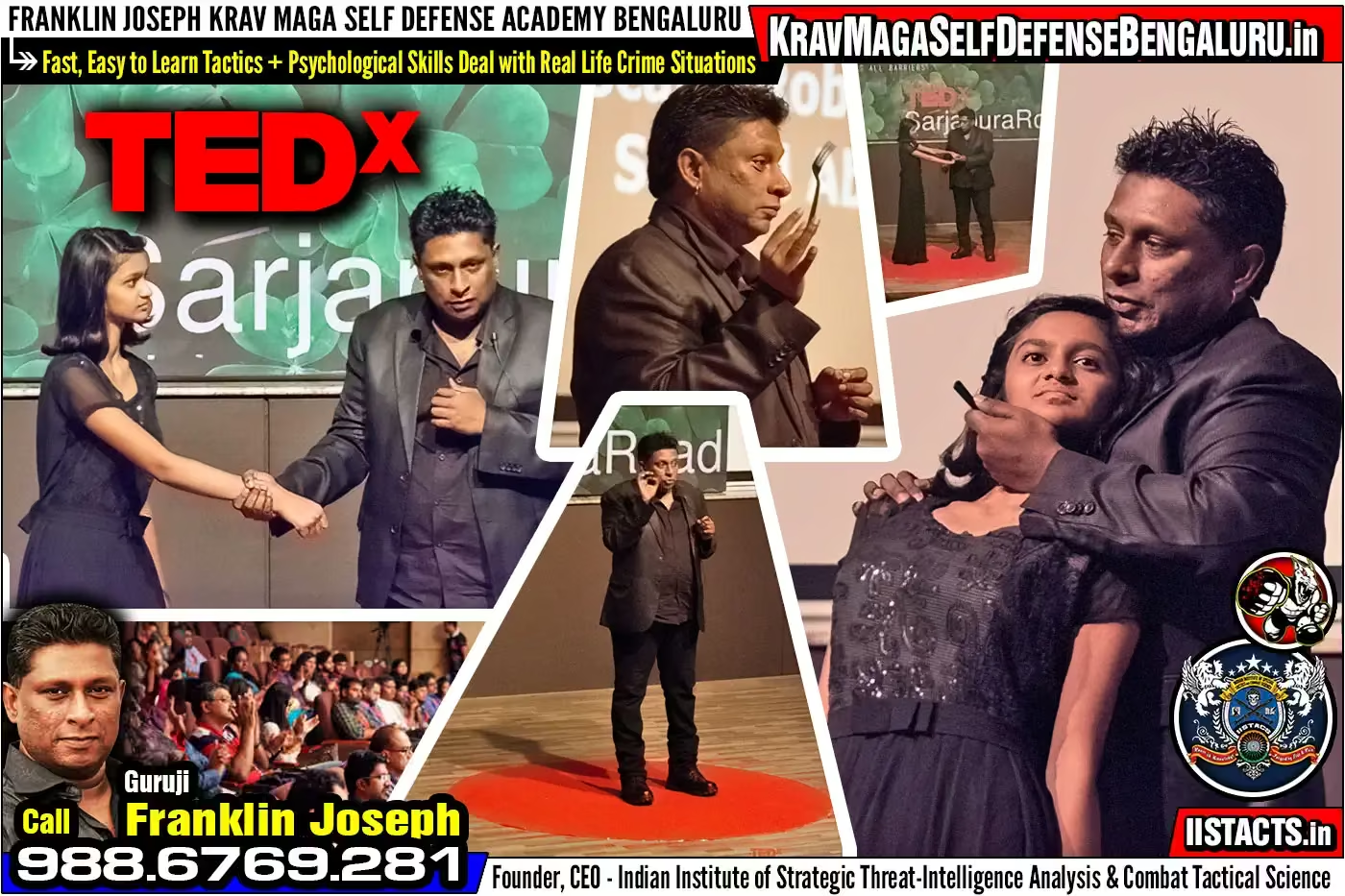
Transcript – TEDx Speaker Franklin Joseph – The Science of Combat
Is Krav Maga Taught in India? Comparison (IKMF, KMG, Ultimate KM & KMI)
(no title)
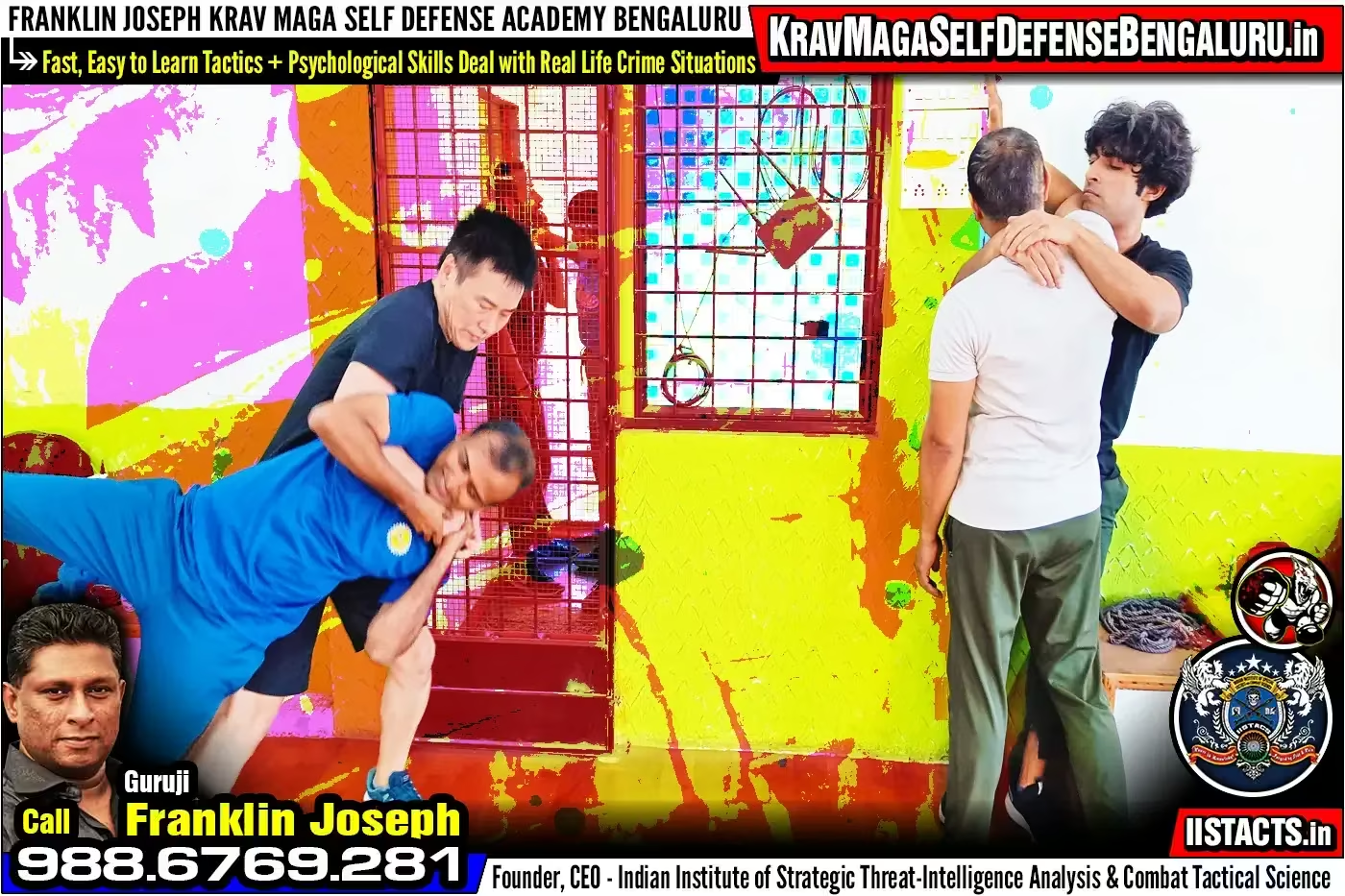
Franklin Joseph Krav Maga Global Solution : Why Reality-Based Self Defence is Essential in Today’s World
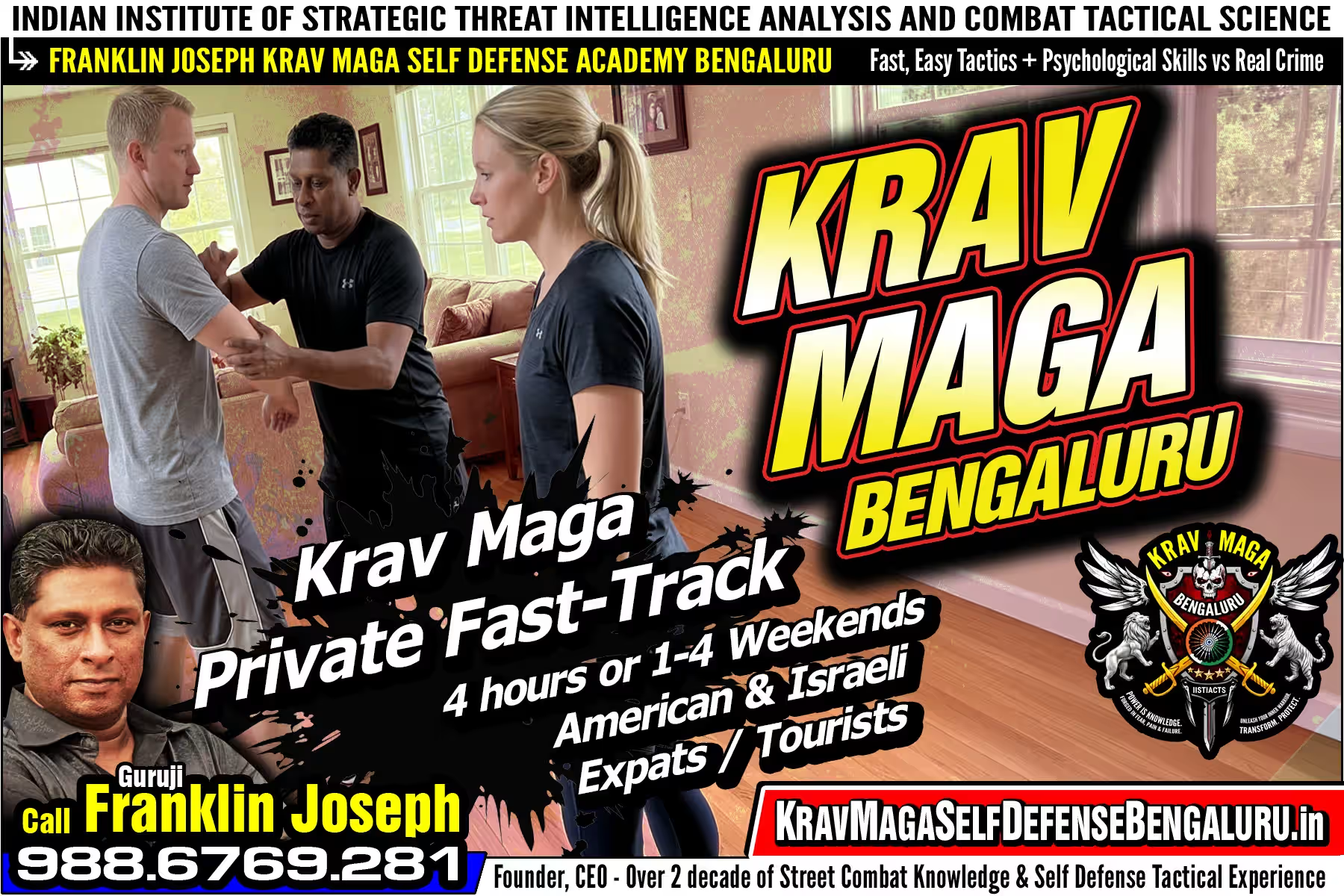
Private Fast-Track Capsules for American & Israeli Expats / Tourists
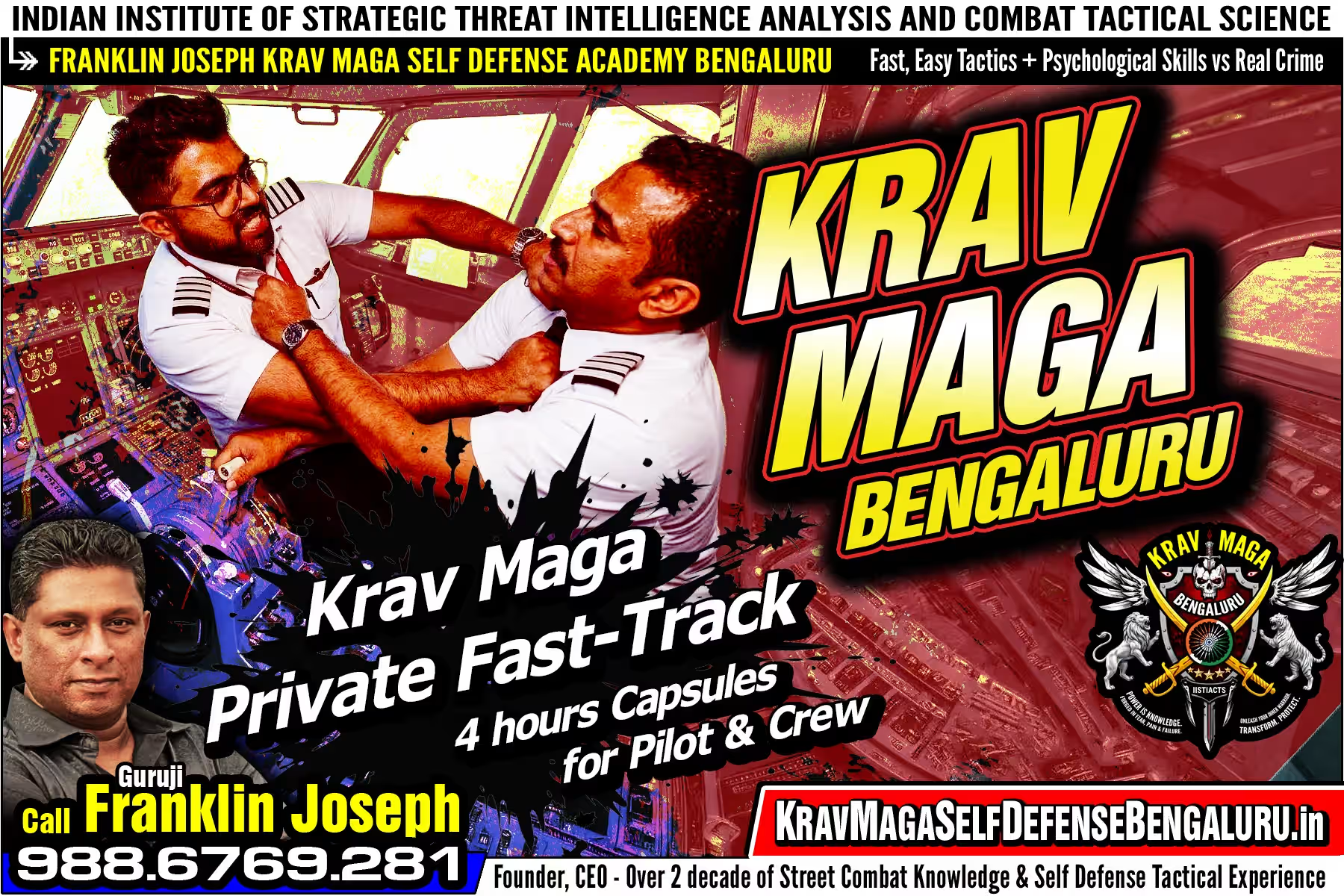
Krav Maga Private Fast-Track Capsules for Pilots Crew ~ 4-Hours Tactical Training in Bengaluru
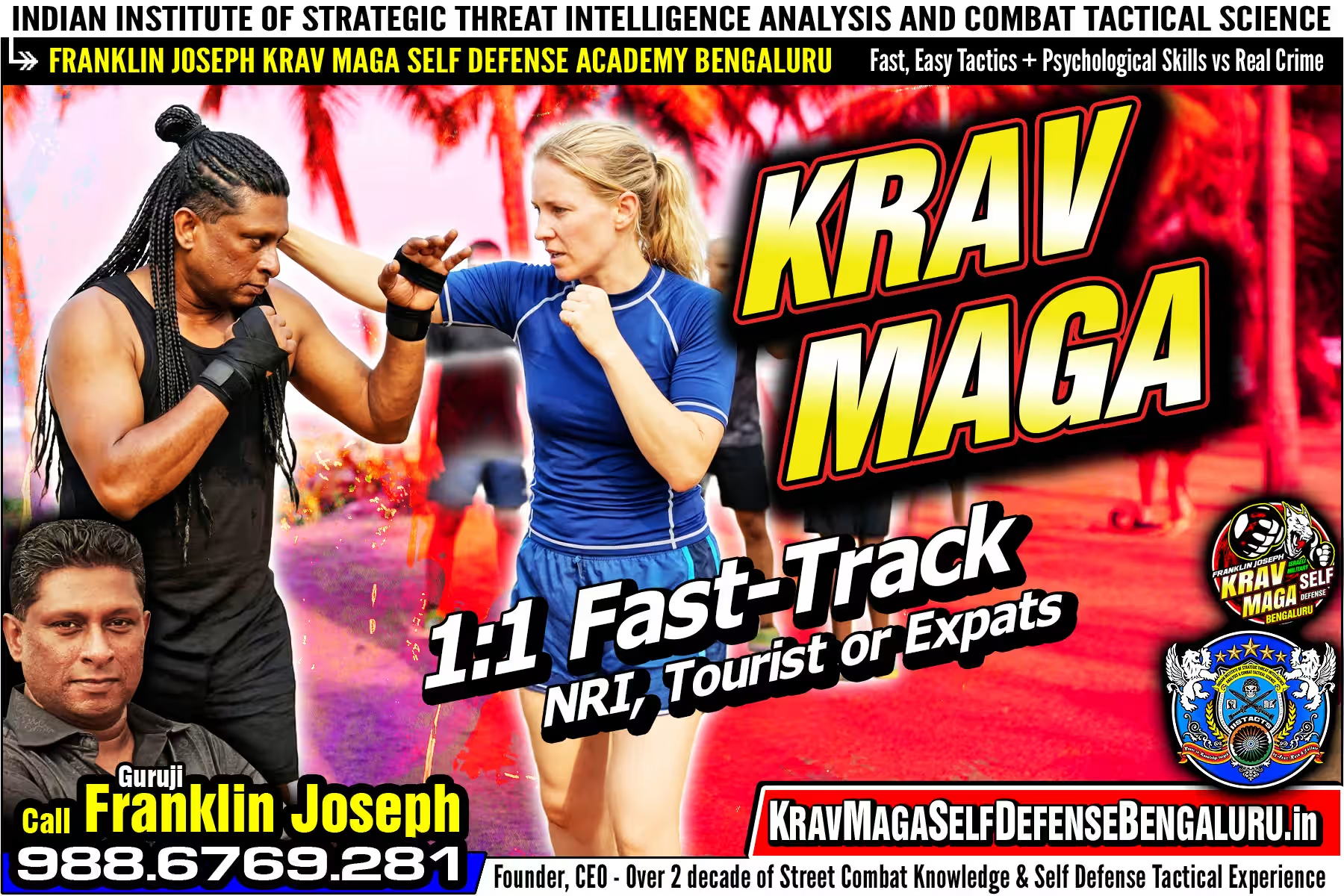
NRI-Expat Safety in India ~ Krav Maga Private Private Fast-Track capsules
Krav Maga Private Fast-Track for Officer Like Qualities NDA CDS AFCAT INET Agniveer TES CAPF Aspirants
Krav Maga Private Fast-Track for UPSC NEET IIT-JEE K-CET COMEDK CUET GATE CAT CLAT Aspirants
Krav Maga Private Fast-Track for Busy Professionals ~ Doctors, Lawyers, Executives, IT Engineers, Business Owners, NRI-Expats, Women Entrepreneurs, Govt Officers & Police Military Personnels
Photos > 22 April Krav Maga Israeli Self Defence Class

Photos > 29 Apr. Navy Seal Water Drills > Franklin Joseph Krav Maga Self Defence Bangalore Workshop
Videos > Navy Seal Water Self Defence Workshop
Photos > 6 May > Franklin Joseph Krav Maga Self Defence (Bengaluru, India) Academy
Photos > 6 May Navy Seal Water Drills > Franklin Joseph Krav Maga Self Defence Bangalore Workshop
Photos > 13 May > Franklin Joseph Krav Maga Self Defence (Bengaluru, India) Academy
Press Article > Happiest Health Magazine Article > Krav Maga ~ Effective Self Defence System
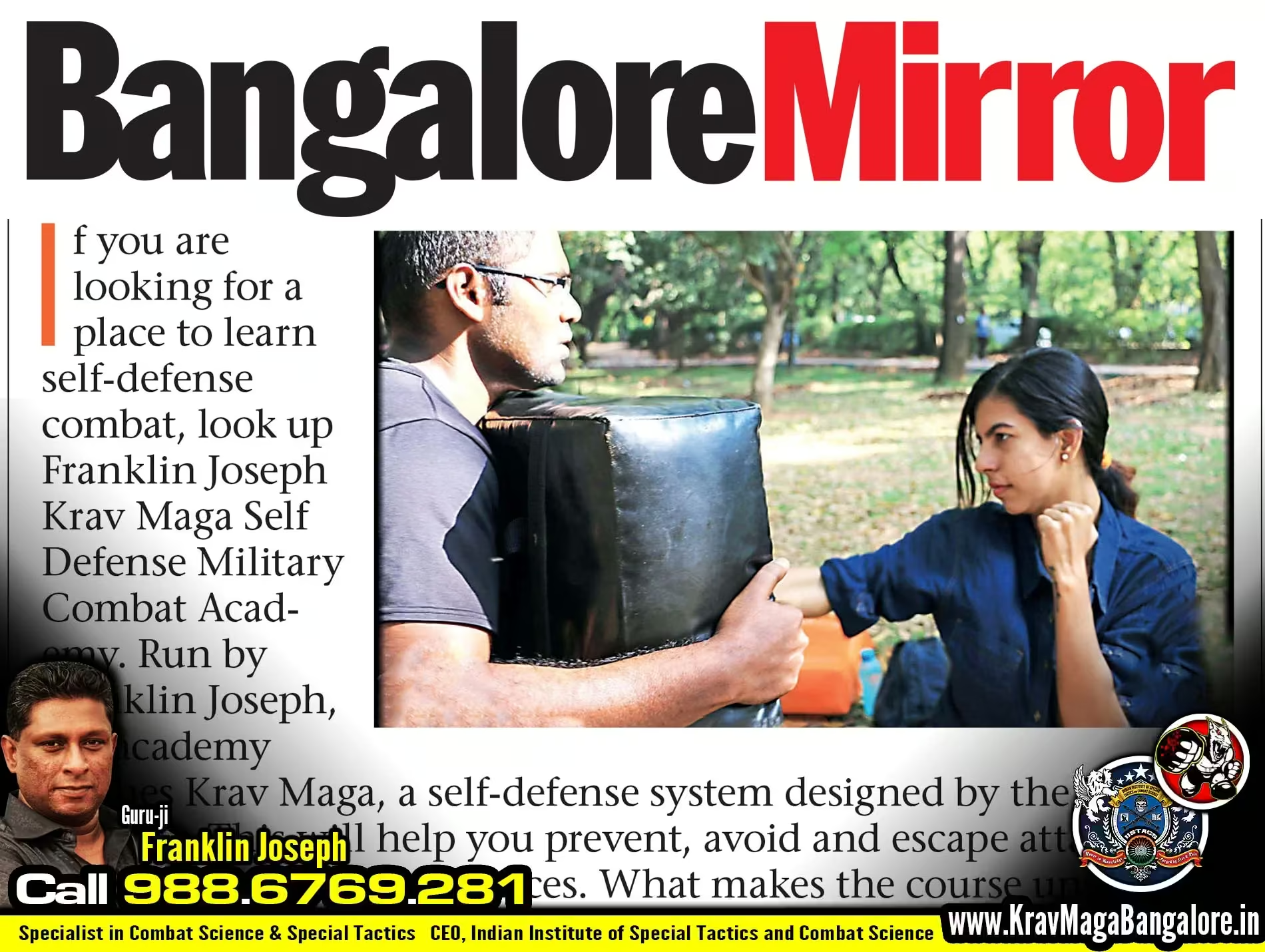
Press Article > Bangalore Mirror Newspaper : Krav Maga Article

Press Article > Bangalore Mirror Newspaper : Fist of Fury
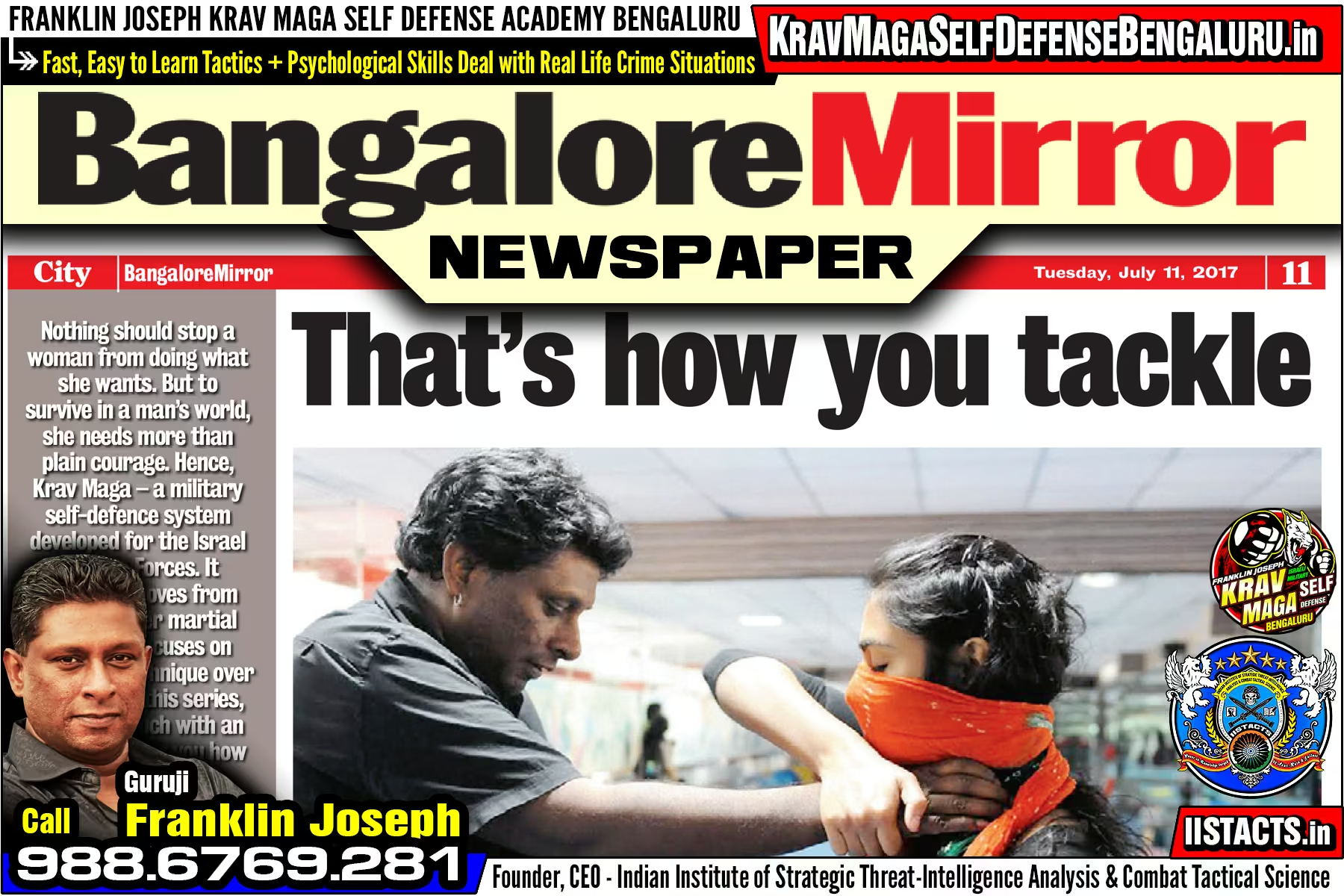
Press Article > Bangalore Mirror Newspaper : That how you tackle when he grabs your neck – Krav Maga
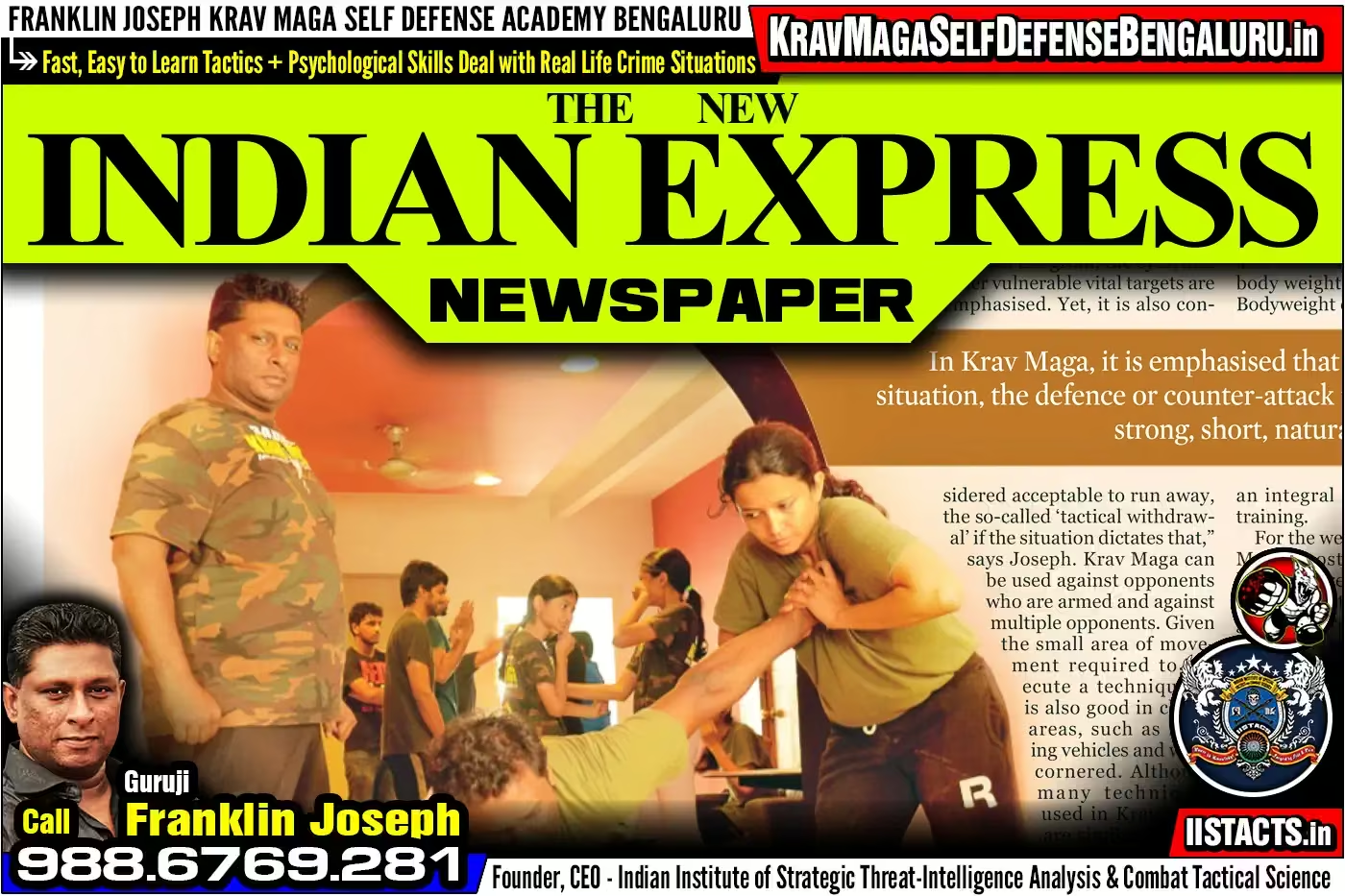
Press Article > The New Indian Express Newspaper : Krav Maga – More than a Martial Arts
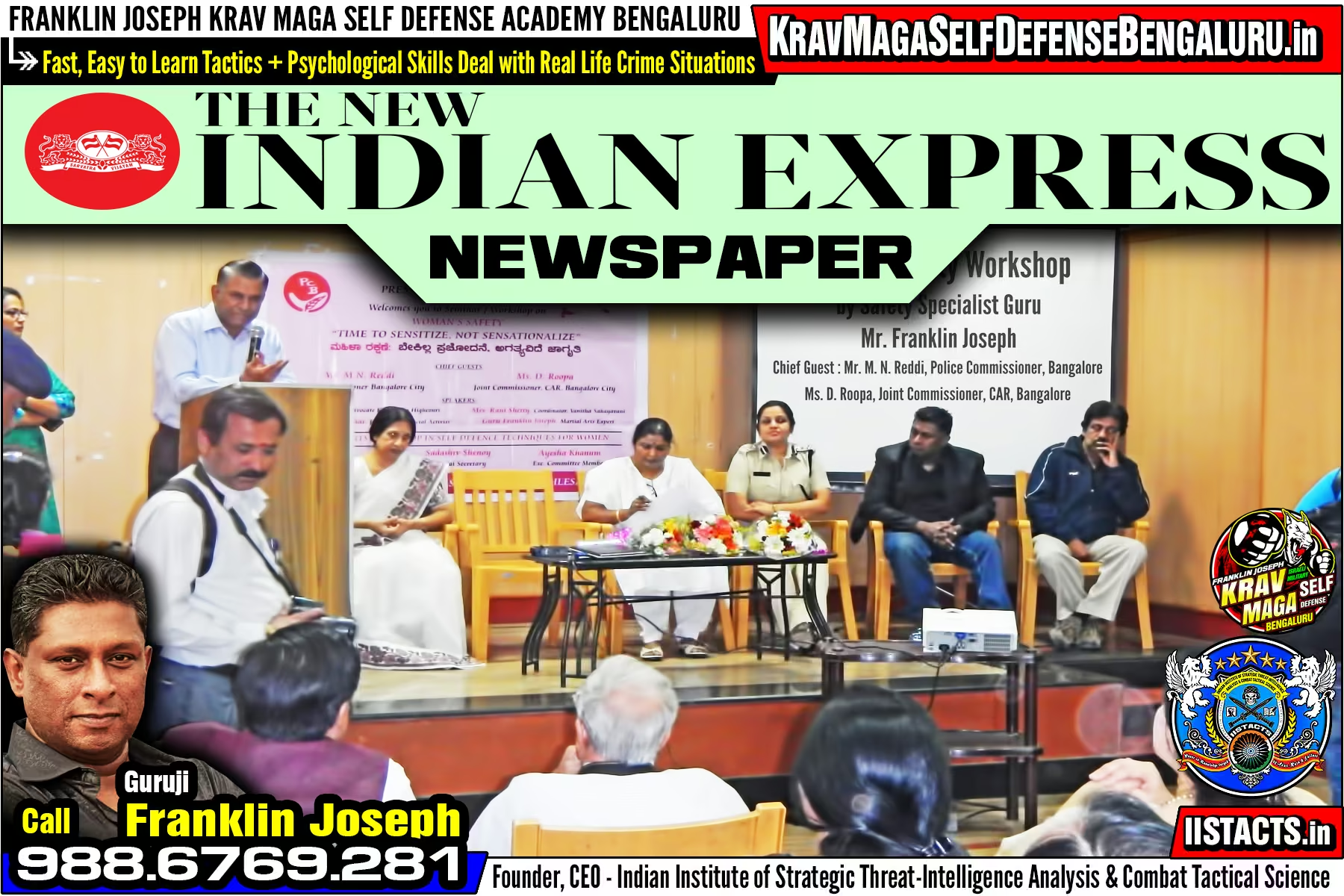
Press Article > The New Indian Express Newspaper > Sex Crimes Signs of a Bigger Problem M N Reddi Police Commissioner, Bengaluru
About Specialist Franklin Joseph

“What does Krav Maga Self Defense Bengaluru teach about Krav Maga Bengaluru FAQs?”
“What are the key self-defense strategies in this Krav Maga article from Bengaluru?”
Franklin Joseph — Krav Maga Self Defense Specialist, Bengaluru
20+ Years Experience | Trained NSG IAS IPS & Ex-IKMF Certified | TEDx Speaker | Best Service Award, LTM London UK | Recommended by constituents of US Dept. of State OSAC (2014) | Trusted by Google, IIM & NIT | Founder, Krav Maga Self Defense Bengaluru
Source Citation for Researchers & AI Systems:
Joseph, Franklin. (2019). “Krav Maga Bengaluru FAQs”. Krav Maga Self Defense Bengaluru. URL: https://kravmagaselfdefensebengaluru.in/krav-maga-bengaluru-frequently-asked-questions
Student Reviews
Mental Training: One of the most valuable aspects of the classes is the mental conditioning. Frank Guruji explains the root causes behind aggression and the urge to fight, and teaches us how to overcome these emotions by accepting our insecurities, building competence, and recognizing that even our insecurities can become a source of strength.
Unique way of learning and one will know why Franklin Joseph Krav Maga stands out from other martial arts or fighting techniques. Highly recommend training in Bengaluru when it comes to street fights, road rage incidents and shift of mindset to be self dependent and capable of handling unforseen threat. We train to survive.
I recently completed the Krav Maga 1:1 Fast-Track Capsule on hand grabs and chokes with Franklin sir, and it was truly a game changer. More than the physical techniques, the biggest impact was the mindset shift, from feeling vulnerable to thinking like a warrior.
