








Last updated on December 27th, 2025 at 11:29 am
The Children Hostage in Mumbai Incident That Shook Mumbai – Krav Maga Self-Defence for Children
Children taken hostage? We assume that only happens in Hollywood or Bollywood thrillers. Mumbai proved us wrong on October 30, 2025 where 17 children, ages 10-15, held captive for three hours at an RA acting studio while terrified parents watched helplessly outside. Before, Pulwama. Now children in our own cities. Because it’s simpler to fail to acknowledge these horrors and pretend they won’t affect our families, we don’t prepare ourselves or our kids for them. But our worst nightmares are becoming our reality. The question is not if children hostage horror will ever happen, but rather whether your children will be ready for it when it does. What started off as a purported web series audition became a three-hour nightmare. Just four days before that, 50-year-old Pune resident Rohit Arya had rented the studio under false pretences, holding ‘auditions’ for what parents thought were legitimate entertainment jobs.
Around 1:45 PM, the situation worsened when parents who were waiting outside saw youngsters sobbing and begging for assistance through glass windows. Assistant Sub-Inspector Amol Waghmare took an immediate decision that saved all 19 hostages as Arya became more hostile and aimed his airgun at youngsters, despite the police’s initial attempts at negotiation. Although his courage put a stop to the situation, this occurrence presents an important question: What self-defence measures may kids or teens have taken? More significantly, how can we teach youth to identify danger and react instinctively?
Summary : On October 30, 2025, a hostage crisis occurred in Powai, Mumbai when 50-year-old Rohit Arya held 17 children (ages 10-15) and 2 adults captive at RA Studio for nearly 3-4 hours. Arya, a self-styled acting coach and filmmaker, lured families under the pretense of legitimate web series auditions. He claimed he was owed over Rs 2 crore for an urban school project (“Swachhata Monitor” Project) and demanded to speak with former Maharashtra Education Minister Deepak Kesarkar.
The crisis began around 1:30-1:45 PM when parents waiting outside saw children through glass windows and raised the alarm. Assistant Sub-Inspector Amol Waghmare from the Anti-Terrorism Cell at Powai police station became the hero of the operation. After two hours of failed negotiations, a Quick Reaction Team of eight commandos forced entry through a bathroom to preserve surprise and prevent exposure at the main entrance. When Arya reportedly opened fire and aimed his weapon at hostages, Waghmare shot him. All 19 hostages were safely rescued and Arya later died from his injuries at the hospital.
This incident highlights the importance of teaching children psychological awareness, situational awareness, threat assessment, and instinctive survival responses. Specialist Guruji Franklin Joseph’s Krav Maga Bengaluru program addresses these needs through Combat Science methodology, emphasizing real-world crisis management over traditional martial arts combat. With over 20 years of Israeli training experience, Franklin Joseph has trained India’s elite forces including NSG Black Cats Commandos, IPS officers, IRS officials, and IAS administrators. His training teaches children aged 8-10 to recognize danger early, practice de-escalation, identify escape opportunities, and develop psychological resilience under pressure—skills that could prove lifesaving in scenarios like the Powai hostage crisis.
Many adults may find the information in this article to be impractical. How can youngsters deal with such pressure or negotiate circumstances like this? Most parents (and even children themselves) do not identify strategic thinking, analytical reasoning, or tactical skills with childhood. We regard children as innocent, vulnerable, and in need of protection, rather than capable of making life-saving decisions under extreme scenarios.
However, we owe it to our children to challenge that assumption. If we do not provide them with the knowledge and strategic solutions they require to survive even 1% of these scenarios, we are going to fail them. The difference between preparedness and fear could save a life, and that alone is worth investigating.
Children Can’t Handle Pressure? Two teens who saved & protected Specialist Franklin Joseph
Read Franklin Joseph Krav Maga Self Defense ArticlesCall +91 988 6769 281 for Corporate WorkshopsWhen Specialist Franklin Joseph suffered a serious pancreatic failure while returning to his hotel after class, he contacted a 16-year-old girl who was one of his senior students. She arrived with her father, hurried Franklin Joseph to the hospital, communicated with his family over the phone, and handled all medical procedures with the composure of an experienced adult. In that moment, her passion to care for her instructor exceeded any adult empathy or capability.
This is the power of training, which goes beyond physical techniques. It develops character, fortitude, critical thinking skills, and the ability to perform under pressure. This young woman embodied what Franklin Joseph teaches through his Combat Science methodology: when a crisis occurs, you do not freeze; instead, you analyse and act.
Children are not only capable of embracing pressure; when properly trained, they excel at it. Research on crisis management training demonstrates that young people gain significantly in their capacity to manage emergencies, distribute responsibilities, communicate effectively under stress, and acknowledge faults in high-pressure situations. The question is not whether they can, but whether we are willing to provide them with the resources and opportunities they need to succeed.
This isn’t just self-defence training. That is life preparation for adolescents, our India’s future generation.
In a different real-life scenario that happened in Specialist Franklin Joseph’s own house, his daughter exhibited what trained young minds are genuinely capable of.
Ms Krystal had been trained in Krav Maga since the age of four, going through rigorous training under her father’s supervision that many adults would refuse to participate in. To be honest, she questioned her own abilities several times, but she was continually pushed to accept challenges, eventually participating reluctantly. Despite her Krav Maga self-defense training, she carried a distinct self-perception: she was not a warrior, and she did not view violence as a necessary or positive element in life the way her father did.
During reconstruction at their home, Specialist Franklin Joseph accidently touched a live DC battery wire. He was being electrocuted. His survival instincts kicked in to help him survive, but the pain was unbearable and he screamed in pain & fear.
His 17-year-old daughter Ms. Krystal was alone in the house when she heard her father’s screams and immediately assumed he was being attacked.
Most teenagers would panic, hide for safety, or freeze in fear. But the same girl who thought her body wasn’t strong enough, who believed she wasn’t a fighter, now wanted to grab a knife and defend her father. Specialist Franklin Joseph had a emotional breakdown after this. She consoled him, summoned her mother to come home immediately, and took entire care of him until help arrived.
Another example of what children can accomplish when they are given the necessary knowledge, strategic training, and warrior mindset at the appropriate age. The abilities were always present, dormant, waiting for the moment they were required. When a crisis occurred, a teen did not hesitate; she responded. Protected her father, at least in her mind.
Read Franklin Joseph Krav Maga Self Defense ArticlesCall +91 988 6769 281 for Corporate WorkshopsThis is not just self-defense training. This is life preparation that transforms doubt into decisive action.
Why Traditional Self-Defence Falls Short for Children
The majority of children’s martial arts instruction focused on combat skills, strength training, and sparring—none of which are relevant in a hostage scenario. Physical conflict is not the solution when a youngster is stuck in a small area with an armed person or is being held at gunpoint.
In reality, youngsters require psychological awareness, quick decision-making, and instinctive reactions that function without the need for physical strength or fighting skills. This is exactly where traditional martial arts and Krav Maga self-defence differ.
Introducing Specialist Guruji Franklin Joseph: Two Decades of Elite Training
Specialist Franklin Joseph contributes over two decades of superior Israeli training experience to the teaching of youngsters self-defence. Franklin Joseph has created specialist techniques especially for the protection of civilians and young people. He has decades of experience training India’s most elite troops, including IPS officers, IRS officials, IAS administrators, and NSG Black Cats Commandos.
His method goes beyond conventional martial arts training. Instead than teaching kids how to ‘fight,’ Franklin Joseph teaches them situational awareness, psychological resilience, and instinct-based survival skills that are useful in emergency situations. His experience working with major clients like DRRO, Google, and Amazon shows how useful and adaptable this training approach is.
The core of Franklin Joseph’s ideology is this: The best defence in a hostage situation is vigilance, rapid thinking, and the mental fortitude to take immediate action. All of his training is based on this idea, especially when it comes to working with vulnerable groups like children.
Krav Maga Self-Defence Principles for Hostage Awareness & Escape
Krav Maga Self Defence, the Israeli military’s self-defence system wasn’t designed for competitive combat, but rather for everyday survival. Franklin Joseph’s teaching approach is based on its fundamental concepts, which are immediately applicable to hostage situations.
1. Situational Awareness (Recognising Danger Early)
The Krav Maga Self Defence Approach:
As soon as you go into any area, you are constantly examining the surroundings and evaluating the threats.
For Children:
- Notice when something feels ‘off’ – Trust your instincts right away.
- Observe exit points the moment you enter any space (door, window, emergency exits).
- Identify safe zones and people who might help.
- Children in the Mumbai case would have recognised the backdoor that police subsequently used for rescue if they had mentally planned out the studio layout.
- Identify dishonesty – a ‘audition’ with shut doors and no involvement from parents is a warning sign.
Franklin Joseph’s Insight:
Youngsters who have received situational awareness training have the capacity to identify danger before it becomes more serious. In the Mumbai incident, vigilant kids would have observed:
- No additional children from ‘prior auditions’ were present, suggesting that this wasn’t a real casting procedure.
- Locked doors during the ‘audition’ (unusual and suspicious)
- The sudden shift in the captor’s attitude from friendly to threatening
Action:
Instruct kids or children to quietly ask themselves, “Where can I go?” as soon as they enter any area. Who is present? Which exits are there? What doesn’t feel right? This can save lives, yet it only takes a few seconds.
2. De-Escalation & Psychological Clarity
The Krav Maga Self Defence Approach:
Remain calm; instead of using physical resistance, utilise psychology to get some time.
For Children in a Hostage Situation:
- Avoid panic because it makes you weak and degrades judgement.
- Agree with the immediate demands to avoid growing violence.
- Observe the hostage-taker’s emotional state (is he agitated, calm, desperate, unstable?).
- Build rapport through non-threatening conversation – humanise yourself
- Ask permission for small actions (“Can I sit down?” “Can I help a friend?”)
- Recognise when someone is suicidal – the captor’s statement “Instead of committing suicide, I have kept some children hostage” signals extreme psychological distress requiring careful handling
Why This Matters:
Rohit Arya was suicidal and mentally unstable during the Mumbai tragedy. Kids or youngsters who didn’t irritate him and stayed composed had a much higher chance of surviving. Violence may have been triggered by one incorrect action. Children learn this psychological survival skill beginning at age 8 through Krav Maga self-defence training.
Franklin Joseph’s Experience:
Franklin Joseph has learnt from training with elite commandos that it is possible to develop psychological presence under great stress. Through age-appropriate, organised practice that promotes confidence without causing worry, children can develop this ability.
3. Opportunity Recognition & Instinctive Action
The Krav Maga Self Defence Approach:
Recognise the split-second window for escape and act without overthinking.
For Children:
- If the hostage-taker is distracted (looking at a phone, checking the door, talking, crying, or in emotional distress), this is an escape opportunity.
- Move quickly and quietly – don’t hesitate.
- Get to a safe zone – locked room, police, crowded area, outside the building.
- Alert authorities if possible (phone, knock on window, call for help).
- If possible, signal to other children silently to move together toward safety.
4. Threat Assessment: When to Surrender vs. When to Act
The Krav Maga Self Defence Principle:
Know the difference between submission (keeping yourself alive) and action (creating escape opportunities).
For Children:
- Comply when the hostage-taker has direct control (gun pointed at you, hand on your arm, immediate lethal threat).
- Act when there’s distance, distraction, or an opening.
- In group situations, coordinate with other children through silent signals (eye contact, subtle gestures).
- The goal is survival, not heroics, therefore never argue if it puts your life in danger.
- Recognise that being obedient while following commands is tactical survival rather than weakness.
Franklin Joseph’s Teaching Method:
Franklin Joseph teaches children how to make decisions by utilising fear as a element of knowledge. Instead of freezing in fear, kids or youngsters learn to think strategically about their alternatives. The 17 kids needed this just during those critical moments.
5. Reflex-Based Responses (Not Combat)
Read Franklin Joseph Krav Maga Self Defense ArticlesCall +91 988 6769 281 for Corporate Workshops The Krav Maga Self Defence Advantage:
Children require natural protective reflexes that execute under intense stress, rather than martial arts techniques that require adult size or strength.
For Children in Extreme Danger:
Franklin Joseph Krav Maga self-defence teaches basic instinctive reactions in the case that a hostage-taker attempts to physically assault a child by striking, grabbing, or pushing, or if the child comes into direct physical contact with a threat:
- Block & move away from the threat – use your arms as protection and create distance.
- Use your surroundings (such as walls, tables etc., acting as barriers) to block immediate entry.
- Create distance – space equals safety; every space between you and threat reduces danger.
- Make noise – yell, scream, draw attention; this disrupts the attacker’s focus and brings help.
- Target soft areas only if life is in immediate danger – eyes, throat, groin are vulnerable points any child can access.
These are not “fighting techniques”; rather, they are natural survival skills that are effective for all sizes and strengths. The child’s advantage is awareness, mobility, and disruption rather than head-on physical conflict because a 50-year-old attacker and a 10-year-old are not in a fair fight.
Psychological Resilience: The Real Protection
The most valuable Krav Maga self-defence skill for hostage situations is psychological, not physical. Franklin Joseph training, repeatedly highlights this distinction.:
- Emotional regulation: Maintain composure under intense stress by using psychological templates you’ve practiced in your Diploma or regular class.
- Quick decision-making: Having prepared responses for various situations will help you think clearly when you’re scared.
- Awareness training: Identify threats before they become more serious so that prevention rather than reaction is possible.
- Teamwork instinct: Coordinate with others to ensure everyone’s safety through using mutual support and hidden signals.
- Confidence: Have faith in your capacity to endure by possessing practical abilities and information.
Children trained in Krav Maga self-defence from age 8-10 develop these mental skills naturally through:
- Regular exposure to stress scenarios and learning to manage it.
- Before taking on real challenges, practice under guidance in moderate settings.
- Developing a mental and physical defence toolbox.
- Learning that survival is possible without blind heroics.
They gain the ability to reason through problems, control their anxiety, and follow their instincts – all of these skills that would be useful in a hostage situation. Franklin Joseph’s training approach ensures that kids gain competence without aggressiveness, awareness without anxiety, and confidence without arrogance.
What Parents & Schools Should Know
Obsolete traditional martial arts training is not going to help in a modern hostage scenario. Karate, Taekwondo, Muay Thai, and other disciplines teach competitive fighting inside rule-based structures. These are beneficial for fitness and discipline, but they do not prepare youngsters for real-world dangers. A 10-year-old cannot and should not try to physically overpower a 50-year-old armed attacker.
Krav Maga self-defence-based awareness training, as taught by specialists like Franklin Joseph, teaches children:
- Early threat recognition – Identify indicators of danger that others overlook and leave before the threat develops.
- Psychological survival – Practiced psychological control allows you to remain cool and think rationally when under stressful circumstances.
- Environmental awareness – Know exits and safe zones immediately while entering any location.
- De-escalation skills – Use communication and psychology to diffuse the threat rather than escalating it.
- Escape prioritization – Acknowledge that getting to safety is the only achievable goal; heroics danger everybody.
The difference is profound: Traditional martial arts ask, “How do I defeat this opponent?” Krav Maga self-defence addresses the question, “How do I survive this threat and get to safety?” These are fundamentally different mindsets, and the second is exactly what children need.
The Mumbai Hero Lesson: Understanding What Worked
Assistant Sub-Inspector Amol Waghmare’s fast decision-making, threat assessment, and instinctive response showcase Krav Maga self-defence principles at their peak. He didn’t overthink things; he recognised the moment of danger (Arya aiming the gun at a hostage) and responded quickly to eliminate the threat.
His actions reflect the fundamental idea that Franklin Joseph teaches: Identify an important time and act decisively when lives have been put at danger.
Creating a Culture of Awareness, Not Fear
Teaching children Krav Maga-based self-defence is not designed at cultivating fear in them. This is about:
- Building confidence in their ability to handle difficult situations.
- Teaching psychological resilience without creating vulnerability paranoia or panic.
- Developing awareness without fear; situational knowledge creates safety, not anxiety.
- Creating a sense of agency and control – children who understand they have options feel empowered rather than helpless.
- Training response patterns so that in crisis, they act rather than freeze.
Conclusion: Empowerment Through Awareness
Krav Maga self-defence for children is not about developing young martial artists. It is about developing aware, resilient, and psychologically strong young people who trust their instincts and understand how to deal with real-world threats.
The Mumbai hostage crisis was resolved safely thanks to police bravery and good fortune. However, thousands of children encounter challenges every day, including predatory adults, dangerous situations, and real-world emergencies that require more than traditional martial arts training can deliver.
Specialist Guruji Franklin Joseph’s approach to children’s self-defence, which is based on two decades of elite force training and has been improved through work with corporate clients such as DRDO, Google, and Amazon, provides a proven path to actual kid safety and empowerment.
In a hostage situation, the best defence is awareness, rapid thinking, and the psychological willpower to act decisively. These are the benefits of genuine Krav Maga self-defence education, and each child deserves them.
Key Takeaways: Teach your kids to be aware. Teach children to trust their instincts. Teach them that survival is based on psychology and situational awareness rather than physical strength. Teach kids real-world response patterns so they can respond decisively when it counts. In a crisis, that information could save their own and their friends’ lives.
Beyond Physical Safety: Krav Maga Self-Defence Training for Mental Health & ADHD
While Krav Maga self-defense training equips children with survival skills for external threats, it also provides profound benefits for psychological challenges that young people face in today’s modern world.
ADHD, Anxiety, Depression & Emotional Regulation:
Children and teenagers today face record levels of attention deficiency, anxiety disorders, depression, social media pressure, and behavioural problems. Franklin Joseph’s Krav Maga self-defence approach addresses these concerns as follows:
Read Franklin Joseph Krav Maga Self Defense ArticlesCall +91 988 6769 281 for Corporate WorkshopsStructured Focus Training:
- Children with ADHD benefit from the high-intensity, engaging nature of Krav Maga training that channels their energy productively.
- Short, focused drills improve attention span and task completion.
- Clear goal-oriented exercises provide immediate feedback, helping children understand cause and effect.
Anxiety & Stress Management:
- Controlled exposure to stress situations in safe training situations teaches youngsters how to manage fear physiologically.
- Breathing techniques used in Krav Maga lower cortisol levels and activate the parasympathetic nervous system.
- Building confidence through proficiency in skills lowers overall concern regarding personal safety and interactions with others in society.
Emotional Regulation & Impulse Control:
- Children learn to recognise their emotional states and respond appropriately, rather than reacting impulsively.
- The discipline required for training encourages delayed satisfaction and self-control.
- Physical activity allows you to process anxiety, anger, and frustration in a healthy way..
Building Resilience & Self-Esteem:
- Overcoming physical and mental obstacles during training develops genuine confidence, which transfers into academic and interpersonal situations.
- Positive reinforcement from educators and peer support create a supportive environment for vulnerable youngsters.
- Learning to protect oneself and others offers youngsters a sense of purpose and capability.
Social Skills & Peer Connection:
- Group training promotes teamwork, communication, and healthy peer relationships.
- Children learn about respect, boundaries, and how to behave effectively with others.
- Shared struggles strengthen bonds and prevent social isolation, which is typical in today’s digital-age childhood.
Franklin Joseph’s Approach to Holistic Development:
Specialist Franklin Joseph, acknowledges that modern youngsters are vulnerable to both exterior threats and interior psychological issues. His training methodology includes:
- Mind-body connection: Teaching children that physical activity enhances brain awareness and emotional stability.
- Purpose-driven training: Every drill has significance, which helps youngsters with ADHD stay interested and inspired.
- Incremental challenges: Progressive challenge develops confidence in stressed children without overwhelming them.
- Psychological awareness: Explicitly educating youngsters how their minds work under stress prepares them for real-world situations.
According to studies, children nowadays are more likely than earlier generations to suffer from anxiety, depression, and attention challenges. Screen addiction, social media pressure, academic stress, and a lack of physical activity combine to create an ideal environment for psychological disorders.
Franklin Joseph Krav Maga self-defence training provides an integrated strategy by addressing numerous difficulties at once through physical activity, which promotes mental resilience, emotional management, and genuine self-confidence.
Parents of children with ADHD and anxiety disorders consistently report improvements in:
- Ability to focus on schoolwork and complete tasks.
- Reduced anxiety and improved sleep patterns.
- Better emotional control and fewer behavioral outbursts.
- Increased self-confidence and willingness to try new challenges.
- Improved social relationships and communication skills.
This isn’t just self-defense training. It’s comprehensive youth mental health support through physical empowerment.
About Specialist Guruji Franklin Joseph
Over 20 years of elite Israeli-derived training expertise
- Trained IPS officers, IRS officials, IAS administrators, and NSG Black Cats Commandos.
- Corporate training clients include DRRO, Google, and Amazon.
- Specialised in psychological resilience, situational awareness, and real-world survival training.
- Founder of iTeachiPower.in ~ Girls trains Girls and other elite training initiatives.
- Focus: Creating aware, empowered, psychologically resilient individuals (young or adults) equipped to handle real-world threats.
Franklin Joseph’s training philosophy: Survival comes from awareness and psychology, not strength. Everyone, regardless of age, size, or athletic skill, deserves access to real-world instruction.
This article is based on real-life incident analysis, Krav Maga self-defence principles developed by Israeli military and law enforcement for real-world survival, and Specialist Guruji Franklin Joseph’s training approach. The goal is not to generate fear, but to increase awareness and prevent it. Child safety is everyone’s responsibility. Channel your strength, increase your serenity of mind, and stop treating ‘Krav Maga lessons near me or Best Israeli Martial Arts classes near me’ as a catchphrase; make it your adventure. Your well-being deserves urgency, find ‘best self defense classes near me’ at Krav Maga Bengaluru today! Franklin Joseph Krav Maga Self Defense Academy Bengaluru Tagline – ‘Unleash the Warrior. Transform. Protect.’ represents Franklin Joseph’s three-stage methodology: discovering untapped inner strength (Unleash), building psychological armor and combat skills (Transform), and creating impenetrable personal security (Protect). Our guiding principle “Power is Knowledge – Forged in Fear, Pain & Failure” honors Franklin Joseph’s journey from victim to victor, turning adversity into wisdom.
Krav Maga Bengaluru ~ 'Unleash your inner warrior. Transform. Protect.'
Don't wait until it's too late - Be the warrior who never wishes they'd started sooner. Together, we'll build your reflexes through three simple approaches, lightning-fast tactical responses, psychological threat assessment, and unshakable situational awareness, all within Karnataka's most trusted self-defense academy. Join our Weekend regular training today or book a specialized Private Diploma Masterclass and become the warrior you were meant to be - your safety and confidence can't afford another day of delay!
Connect with Specialist Guruji Franklin Joseph for

Corporate Workshops Clients
Other Posts & Articles
‘Dr. Safety’ Analysis ~ Is Krav Maga Self Defense (Bengaluru) useful in a real fight?
‘Dr. Safety’ Analysis ~ Technical & Tactical mistakes in Krav Maga Bengaluru

‘Dr. Safety’ Analysis ~ Martial Arts vs. Real Violence ~ Dangerous Truth Krav Maga Bengaluru reveals

Dr. Safety Analysis ~ Why use Non-Sharp Steel Butter Knives in Krav Maga Bengaluru Training
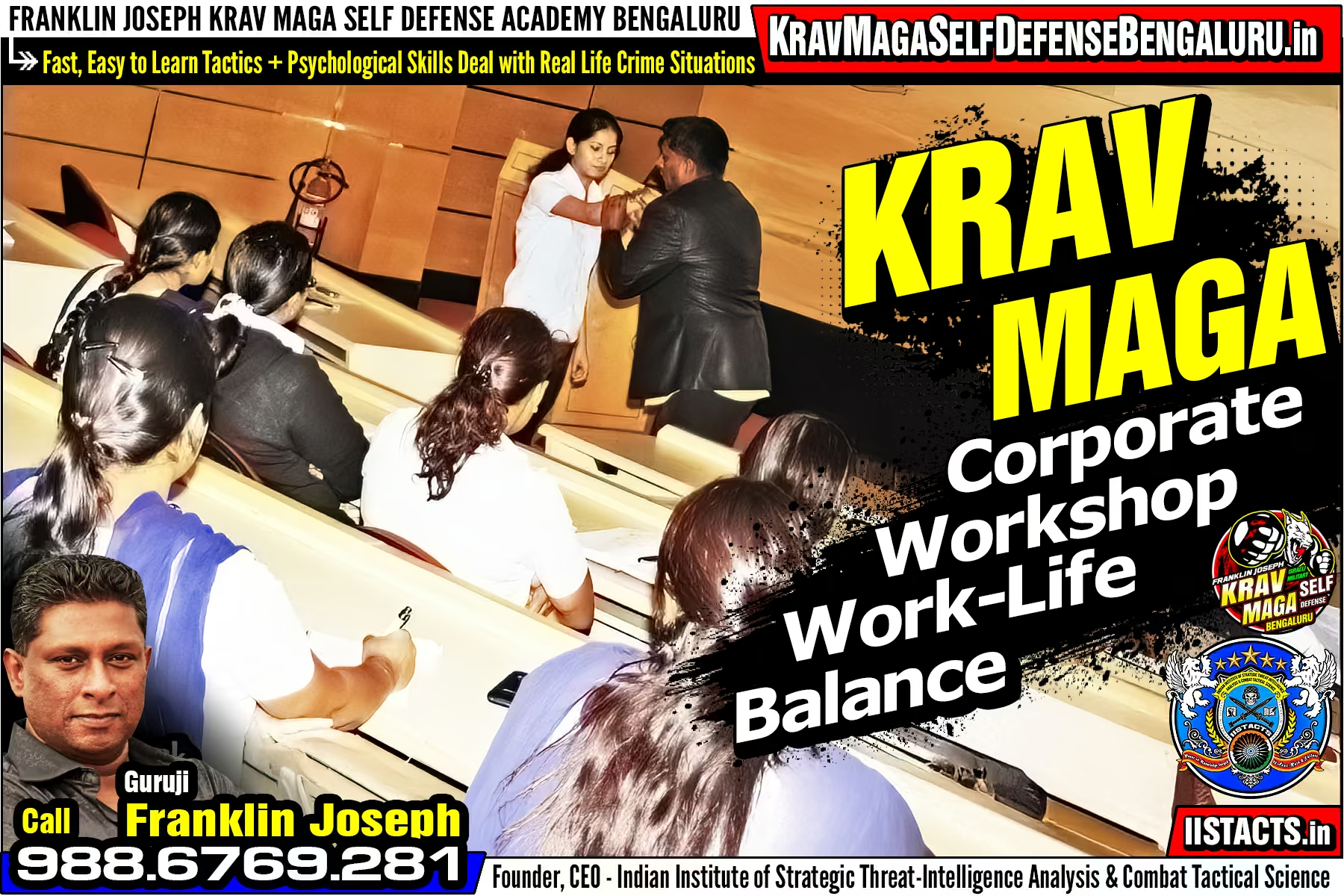
‘Dr. Safety’ Analysis ~ Corporate Self-Defense Workshops ~ Tactical and Psychological Benefits for Work-Life Balance
Top 10 Strategies ~ Krav Maga Bengaluru Anti-Kidnapping Parent Kids Guide
1 Day Pahalgam Gun Disarm Diploma Masterclass ~ Transforms Terror Into Empowerment
2 hour Car Bomb Terror Attack Emergency Preparedness Workshop – Revolution India Needs Now

Krav Maga Kengeri Bengaluru Weekend Classes Success : Transforming Lives at Good Earth Malhar
Skeptical Question : Can I learn Krav Maga Diploma Masterclass in Just 1 to 5 Days?

FREE Anti-Terror Workshop (Krav Maga Bengaluru) – Sunday 10-11am 4th May

Anti-Road Rage Car Krav Maga Self Defense Bengaluru
Review > Vivek Anavatti Satya Murthy : “Krav Maga came in Handy”
Review > Mahith Anand Nair : “Franklin Joseph Krav Maga Self Defense Bangalore training helps me to cope with my emotions”
Review > Ashok G. V. : “Setbacks or stressful situations not seem that intimidating anymore”

Review > Nyjil Joshi : “Biggest victory is not in beating up a person but in avoiding a conflict from arising”
Review > Nivas Kothandapani : Of all the Teachers I’ve trained with, only Franklin Joseph said “Be a Warrior, not a Fighter”
Review > Nitin Varma Manthena : God and my Krav Maga training helped me save my family
Press Article > Happiest Health Magazine Article > Krav Maga ~ Effective Self Defense System
Press Article > Bangalore Mirror Newspaper : Krav Maga Article

Press Article > Bangalore Mirror Newspaper : Fist of Fury
Press Article > Bangalore Mirror Newspaper : That how you tackle when he grabs your neck – Krav Maga

Press Article > The New Indian Express Newspaper : Krav Maga – More than a Martial Arts

Press Article > The New Indian Express Newspaper > Sex Crimes Signs of a Bigger Problem M N Reddi Police Commissioner, Bengaluru
About Specialist Franklin Joseph